
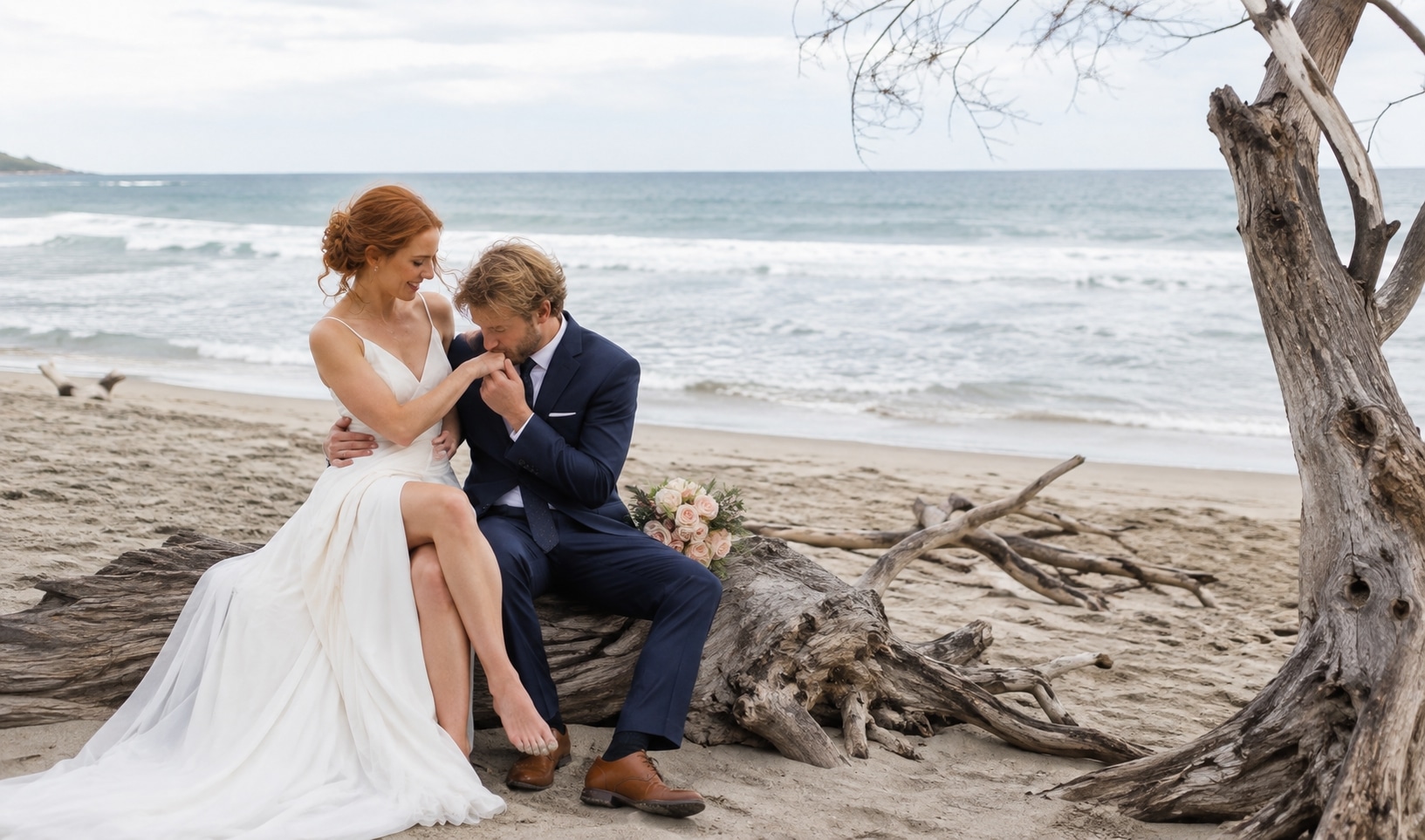
A courthouse ceremony or destination elopement calls for a different kind of wedding dress. A full ball gown can be difficult to manage on city streets, in a taxi, or inside a small ceremony room, while a standard white cocktail dress may not feel special enough for the occasion.
The solution is often a simpler bridal silhouette with better fabric and sharper construction. Tea-length dresses, halter gowns, and satin slip or column styles all work well for smaller weddings—but each comes with practical considerations that are worth thinking about before you buy.
Tea-Length Dresses Work Especially Well for City Hall
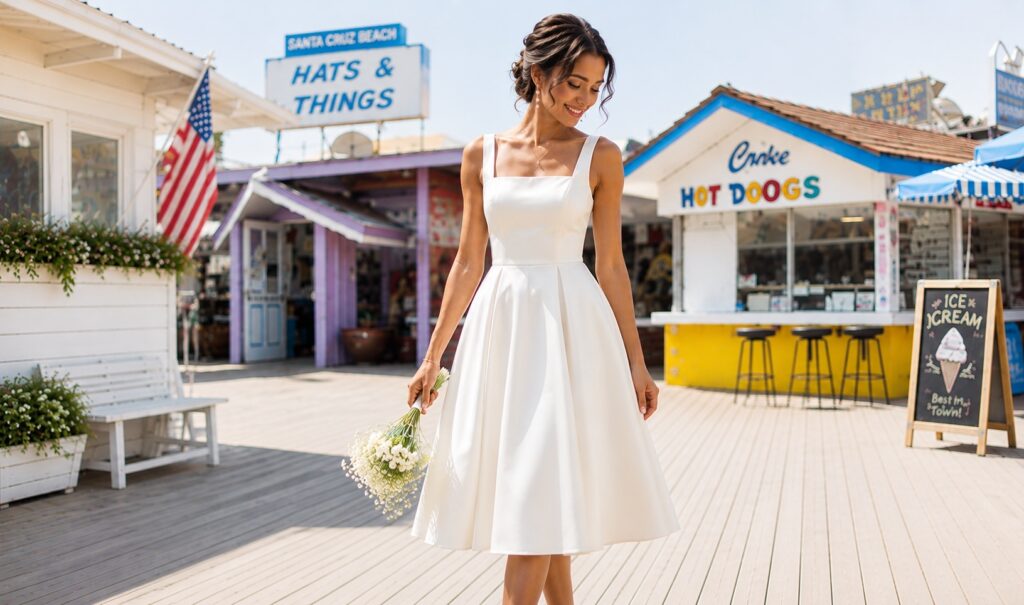
For a civil ceremony, tea-length is one of the most practical options. The hem typically falls between the knee and ankle, so there’s no train to carry through courthouse corridors or drag along pavement. It’s also much easier to manage when climbing stairs, getting in and out of a car, or moving from the ceremony to a restaurant afterward.
Pay attention to the skirt fabric. Mikado and heavier satin hold their shape well and give a tea length wedding dress more structure, which can help it read as bridal rather than cocktail. Softer fabrics create more movement but may photograph less crisply.
Shoes are also more important with this length because they’re fully visible. A pointed-toe pump or slingback works with a clean, modern dress; for a slightly more traditional look, add a short veil or gloves rather than piling on several bridal accessories at once.
Halter and Backless Dresses Require Some Planning
A fitted halter gown is particularly suited to rooftop ceremonies, restaurant weddings, and warm-weather elopements. The neckline provides enough visual interest that the rest of the dress can remain very simple, especially in crepe or satin.
But don’t leave the undergarment decision until the wedding morning.
Many halter dresses expose the shoulders and upper back, making a standard bra difficult or impossible to wear. Try the dress in advance with the exact adhesive cups, nipple covers, boob tape, or other support you plan to use. Check the result from the front, side, and back, and sit down in it—not just stand in front of the mirror.
For outdoor weddings, test adhesive products under realistic conditions as well. Heat, humidity, sweat, and body lotion can affect how securely some products stay in place.
The same attention should go to tailoring. On an embellished gown, decorative details can disguise small fit issues. A minimalist halter has nowhere to hide them: the neckline needs to lie flat, the armholes shouldn’t gape, and the waist and hips should sit cleanly. With a simple dress, fit does much of the work.
Satin Slip Dresses: Beautiful, but Watch for Wrinkles and VPL
A satin slip or column dress is an obvious choice for brides who want something modern and easy to wear. It can also be practical for an elopement because there’s less volume to transport.
The catch is that satin can be unforgiving.
Thin, glossy fabric may show underwear seams, shapewear edges, and even small changes in tension across the body. Before buying, look at the dress in daylight as well as fitting-room lighting. A lined or double-layer construction generally offers more coverage than a very lightweight single layer.
Seamless underwear or appropriately cut shapewear can help with visible panty lines (VPL), but always test the undergarment with the actual dress. Shapewear that ends in the wrong place can simply replace one visible line with another.
Wrinkling is another consideration, particularly if you’re traveling. Silk and some lightweight satins can crease after hours in a garment bag or suitcase. Heavier satin, crepe, and certain blended fabrics may be easier to manage, although performance varies by fabric and construction. If you’re flying to your wedding destination, ask the bridal salon how the specific gown should be packed and whether it can be safely steamed.
What Travels Best for an Elopement?
For destination weddings, think beyond how the dress looks on a hanger. Consider how much space it takes up, how quickly it wrinkles, and what you’ll need to make it ceremony-ready after traveling.
A streamlined crepe dress or relatively compact tea-length style is generally easier to transport than a gown with multiple layers of tulle, a structured overskirt, or a long train. Slip dresses take up very little luggage space, but delicate satin may require more wrinkle management once you arrive.
Whenever possible, carry the wedding dress rather than checking it with your luggage. And before packing, confirm the care instructions: not every bridal fabric, embellishment, or construction technique responds well to a hotel-room steamer.
How to Make a Simple Dress Feel Bridal
A minimalist dress doesn’t need more embellishment simply because the wedding is small. Instead, choose one or two details that clearly separate the outfit from an everyday white dress.
A veil is the most obvious option, but gloves, statement earrings, bridal shoes, or a bouquet can do the same job. The dress itself should provide the foundation through fabric, proportion, and fit.
For a civil ceremony, that might mean a structured tea-length satin wedding dress that can handle courthouse steps and dinner afterward. For a beach or destination elopement, it could mean a lightweight halter or column gown that travels easily. And if you’re considering a satin slip dress, spend as much time checking the lining, wrinkles, and undergarments as you do admiring the silhouette.
For a low-key wedding, simplicity works best when it’s practical as well as beautiful.