
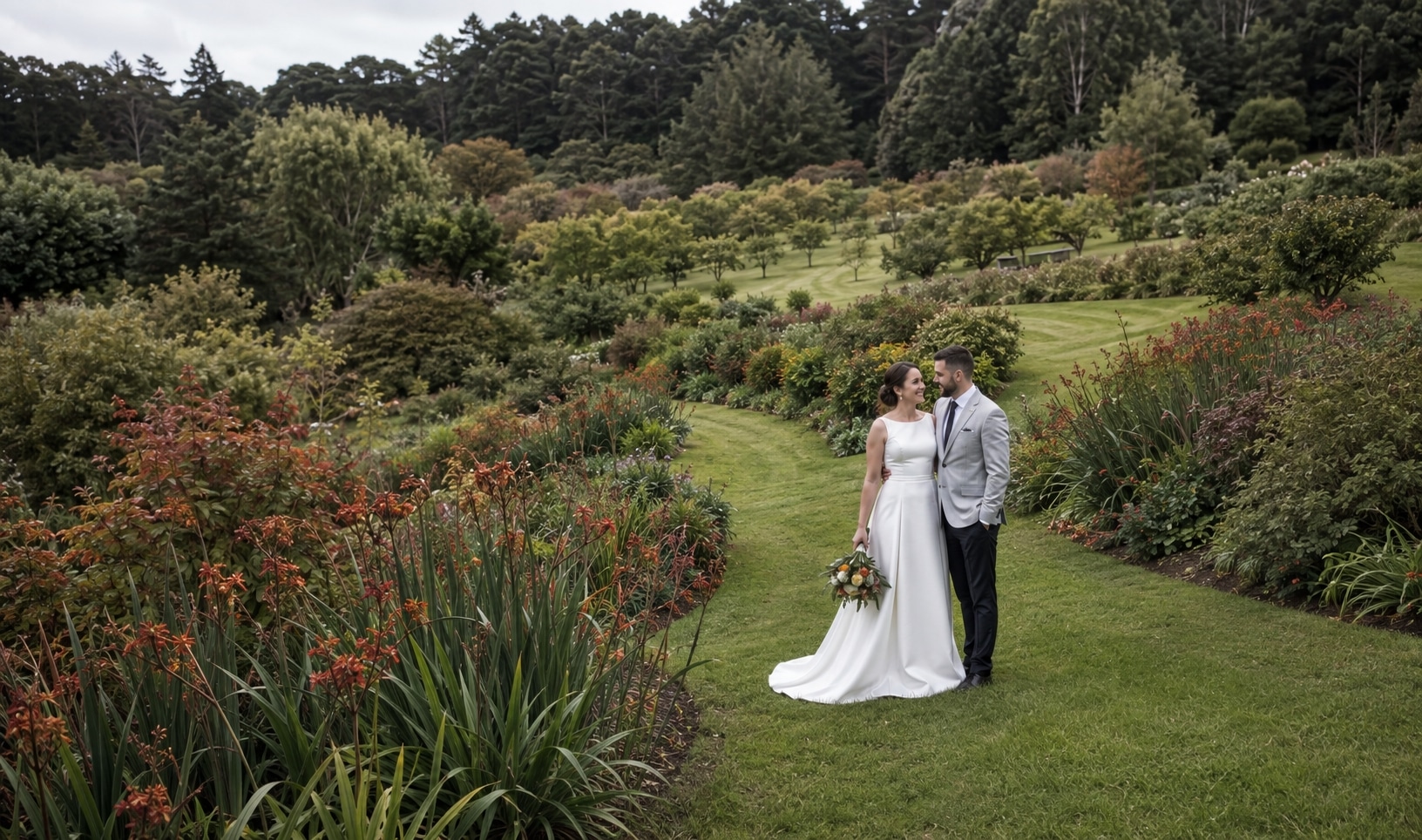
The Southern Highlands has a distinctive way of setting the tone for a wedding. Historic country estates, established gardens, wooded grounds and open lawns give celebrations here a sense of old-world romance, while the cooler climate and outdoor landscape make practicality just as important as appearance.
For a bride, that means looking beyond whether a gown simply feels “romantic” or “rustic.” The right wedding dress should feel polished enough for an elegant estate while still allowing you to move comfortably across lawns, gravel paths and gardens—and adapt when the temperature drops later in the day.
Fabrics for the Highlands Climate
Fabric is one of the first things worth considering for a Southern Highlands wedding, particularly in the cooler months.
Rather than relying on very light chiffon or layers of airy tulle, look at fabrics with a little more weight and structure. Silk crepe offers fluid movement without feeling flimsy, while Mikado and satin create a cleaner, more architectural silhouette that works particularly well against historic estate settings.
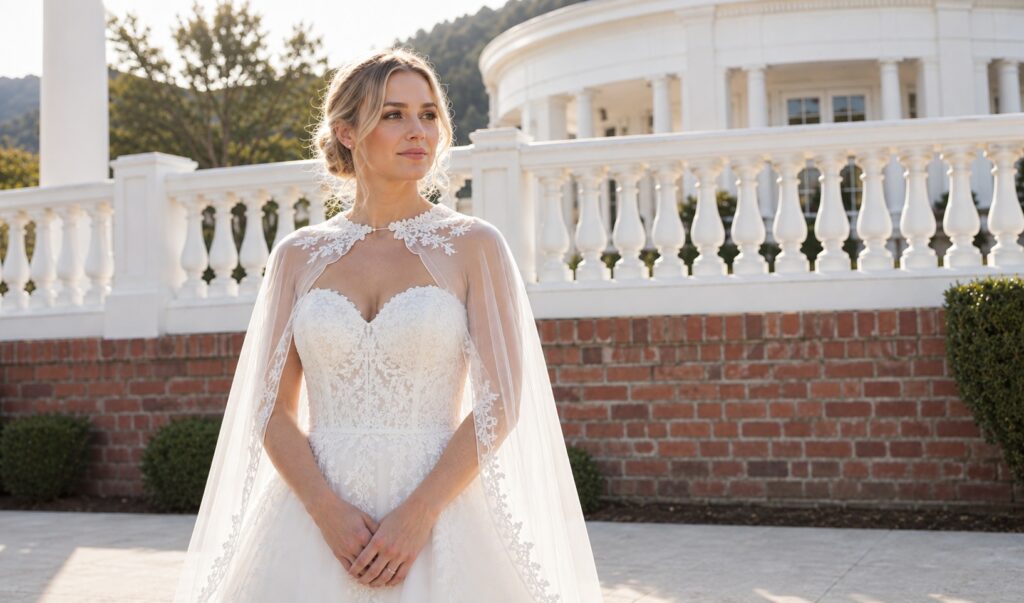
Season matters, too. Long lace sleeves can provide some coverage without making a gown feel heavy, while a detachable bridal jacket or cape gives you the option of adding a layer for an outdoor ceremony or evening photographs.
The aim isn’t to dress heavily for cold weather. It’s to choose a gown—and styling pieces—that can handle a change in temperature without changing the character of the bridal look.
A Train That Works Beyond the Aisle
A long train can be beautiful coming down the aisle, but think about where the dress needs to go afterwards.
Southern Highlands venues often mean moving between lawns, gravel driveways, garden paths and indoor reception spaces. On damp ground, an oversized train can quickly collect moisture, leaves and debris.
A sweep train or modest chapel train gives you the movement and bridal drama of a train without making the gown difficult to manage outdoors. If you prefer something longer, a secure bustle is essential so the train can be lifted once the ceremony and formal portraits are finished.
Estate-Inspired Silhouettes and Details
The Southern Highlands lends itself naturally to bridal design with a subtle heritage influence.
Against historic houses, stone architecture and established gardens, details such as long lace sleeves, bateau or high necklines, defined waists and rows of covered buttons feel particularly at home. They reference traditional bridal dressing without requiring the gown itself to look vintage.
The key is not to use all of them at once. A clean contemporary silhouette paired with one or two classic details usually feels more modern—and allows the craftsmanship of the dress to stand out.
Lace works particularly well when used with the same restraint. Fine Chantilly lace, botanical motifs or delicate appliqué on the bodice, sleeves or back can echo the garden setting without pushing the dress into generic bohemian territory.
For colour, ivory, warm white, champagne and soft oyster all sit beautifully against the deeper greens, stone and seasonal foliage of a country estate. The landscape already supplies the earthy tones; the wedding dress doesn’t need to imitate them.
Layers That Take You From Ceremony to Evening
A Southern Highlands bridal look should be able to evolve as the wedding does.
A lace jacket, tailored bolero or velvet cape can add warmth and texture for an outdoor ceremony, then be removed once you move indoors. A longer veil can provide drama for the ceremony and portraits but come off before walking through gardens or exposed areas where wind becomes a factor.
Detachable elements can work particularly well here. Removable sleeves, overskirts and capes allow the silhouette to change without requiring a second dress, while a well-designed bustle makes a longer train far easier to manage at the reception.
Footwear deserves the same consideration. Fine stilettos may suit the dining room, but block heels or elegant bridal flats are considerably easier on lawns and gravel.
The best Southern Highlands wedding dress isn’t simply one that looks right against a country-estate backdrop. It should work with the setting: refined enough for the house, practical enough for the grounds, and adaptable enough to carry you comfortably from the ceremony into the evening.