
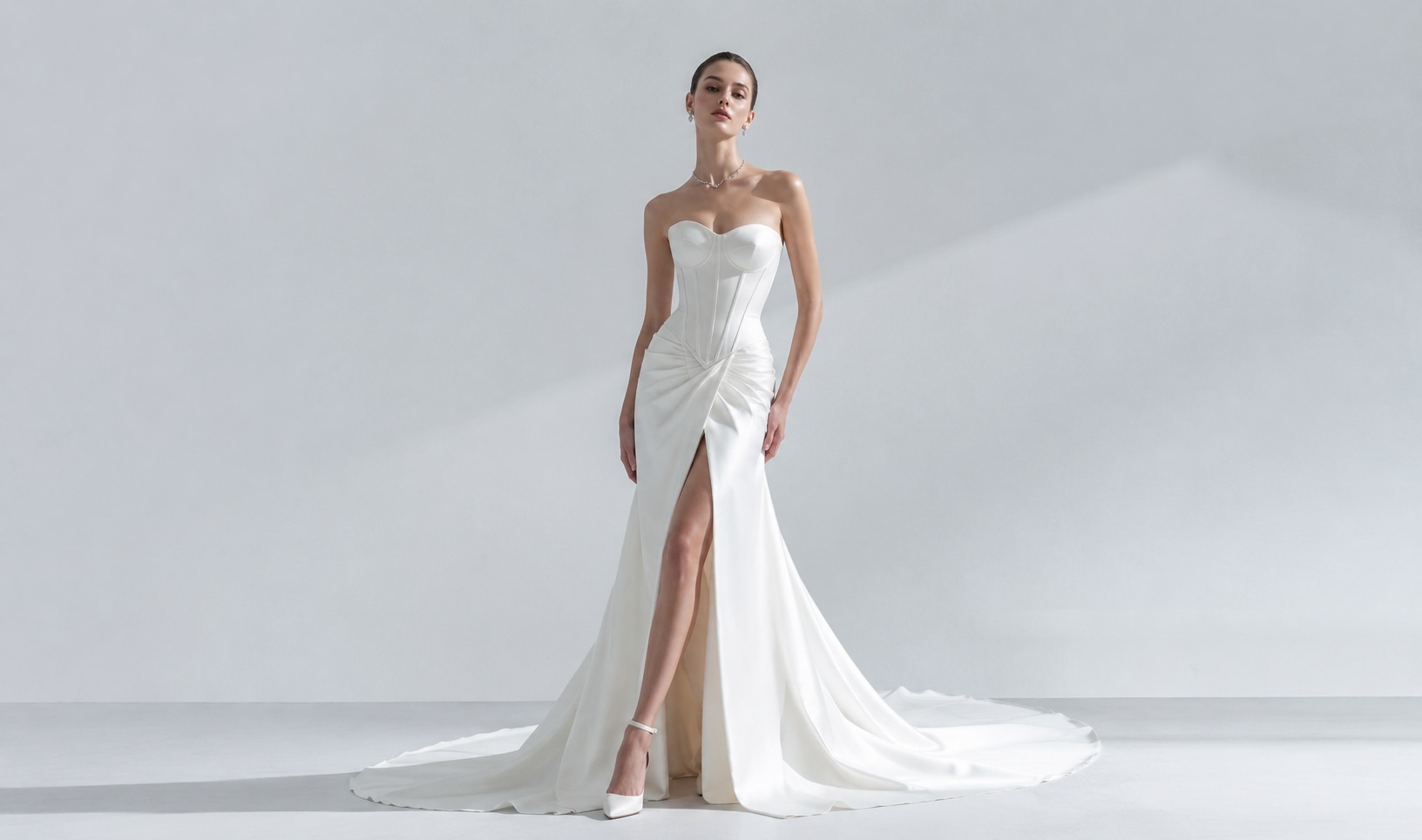
Being tall can open up plenty of possibilities when choosing a wedding dress, from full ball gowns and elongated drop-waist styles to clean column silhouettes. But for many tall brides, finding the right dress has less to do with style restrictions and more to do with fit.
Standard bridal sizing is based on a set of predetermined proportions, and those proportions won’t work for every taller frame. A gown may fit correctly through the bust and hips while still being too short through the bodice or skirt. The waist seam may sit higher than intended, or the hem may fall short once heels are added.
Understanding your own proportions—and knowing which measurements and construction details matter—can make it much easier to find a gown that looks and feels properly balanced.
Proportion Is More Important Than Height
Two brides who are both 5’10” can have completely different proportions. One may have long legs and a relatively short torso; another may carry more of her height through the torso. Shoulder width, bust placement, torso length, and the position of the natural waist all affect how a wedding dress sits on the body.
This is why there isn’t one silhouette that works for every tall bride. Look at the gown as a whole: where the waist falls, how the bodice fits vertically, and where the skirt begins in relation to your natural proportions.
The goal is a dress that fits your frame rather than simply one that comes with a longer skirt.
Dress Length and Hollow-to-Hem Measurements
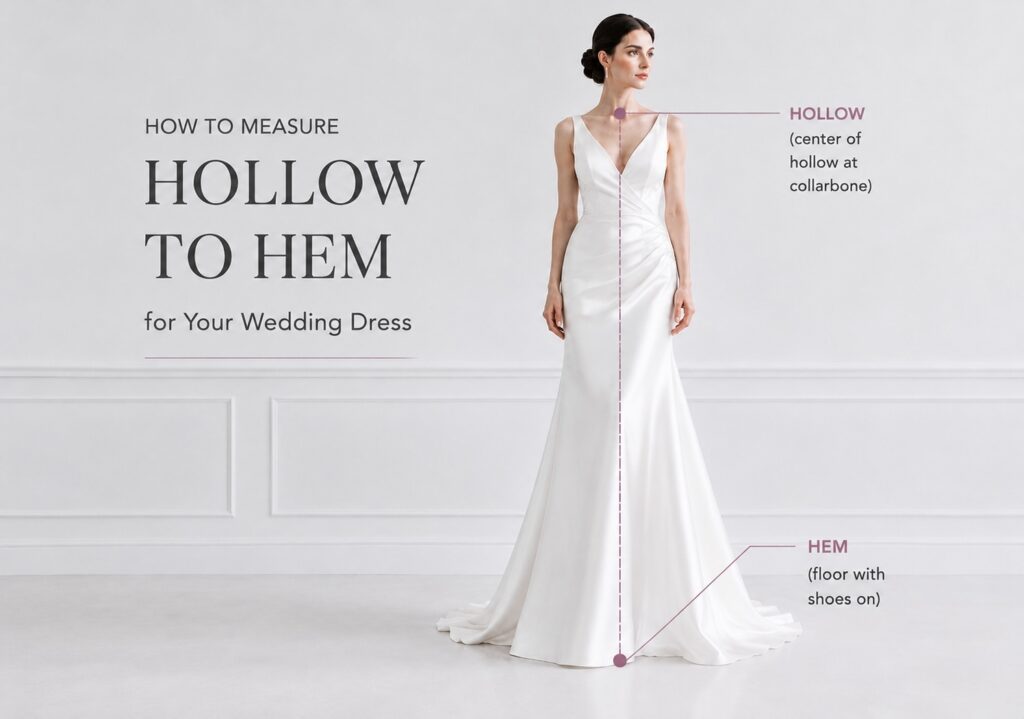
Hem length is one of the most practical considerations when choosing a wedding dress for a tall bride.
Check the designer’s standard hollow-to-hem measurement and whether the gown is available with extra length. Your intended heel height should also be factored into this measurement—a few additional inches can make the difference between a hem that falls correctly and one that sits noticeably above the floor.
This is particularly important for gowns with lace-edged hems, scalloped borders, embroidery, or other detailed finishes. Removing excess length is generally straightforward; adding it later can be far more complicated when the original hem is an integral part of the design.
Bodice Length and Waist Placement
A skirt that reaches the floor doesn’t necessarily mean the gown is proportioned correctly.
For brides with longer torsos, a standard bodice can place the waist seam above the natural waist. Bust cups, darts, boning, and hip shaping may also sit higher than intended. These are issues of vertical proportion, so sizing up won’t necessarily correct them.
When assessing the fit, look beyond whether the gown fits through the bust and waist. The waist seam should sit where the design intends it to, while the cups, boning, and shaping should align naturally with the body. If the bodice consistently runs short, a longer bodice, pattern adjustment, or made-to-measure option may provide a better result.
Ball Gowns, Drop Waists, and Fuller Skirts
Taller frames often work particularly well with silhouettes that have more volume or stronger proportions.
A full ball gown or sweeping A-line has enough vertical space to maintain its shape without overwhelming the wearer. Drop-waist gowns can also work particularly well on longer torsos, allowing the extended bodice and lower skirt placement to become a defining part of the silhouette.
Basque waists, structured corsetry, sculptural skirts, and longer trains are other options worth exploring. For brides who prefer something more pared back, column and sheath gowns can be equally effective. Height offers flexibility here; the more important consideration is how the proportions of the dress relate to your individual frame.
Lace, Appliqué, and Embellishment Scale
Large floral appliqués, wider lace repeats, bold embroidery, and dimensional details have more room to develop across a longer silhouette. With enough visual space around them, larger motifs can feel balanced rather than overpowering.
Placement matters just as much as scale. A lace pattern that ends awkwardly at the waist or an appliqué positioned too high on the bodice can disrupt the proportions of the entire gown. This is particularly worth checking when a design is being lengthened or otherwise customized.
Necklines and Upper-Body Proportions
There is no reason a tall bride needs a particular neckline simply to appear taller. Neckline choice is more useful when it takes the shoulders, bust, neck, and torso into account.
An off-the-shoulder neckline creates a strong horizontal line across the upper body and can emphasize defined shoulders. A deep V brings the focus toward the center of the bodice and opens up the décolletage, while a high-neck halter can highlight a long neck and strong shoulder line.
Rather than treating any of these as a universal recommendation for tall brides, consider how the neckline relates to the rest of the gown. The neckline, bodice length, waist placement, and skirt proportions should read as one complete silhouette.
Extra Length, Alterations, and Special Orders
Before choosing a gown, find out exactly what “extra length” means for that particular design. Some brands extend only the skirt, while others may also accommodate additional length through the bodice. This distinction matters for tall brides with longer torsos, since a longer hem alone won’t correct a waist seam or bust placement that sits too high.
If standard sizing leaves the bodice too short or the hem suspended, made-to-measure may be worth considering. Brands such as InWeddingDress allow brides to submit measurements including hollow-to-hem length, helping account for the vertical proportions of a taller frame before the gown is made.
Alterations still have their limits. Moving a waist seam, extending a lace-edged hem, or restructuring a boned bodice can be considerably more involved than adjusting a simple hem or side seam. Where possible, getting the vertical proportions right from the beginning is preferable to relying on extensive alterations later.
For tall brides, the best wedding dress isn’t defined by a particular neckline or silhouette. What matters is where the bodice, waist, skirt, and design details fall on your individual frame. Once those proportions are right, the choice between a minimalist column gown, an elongated drop-waist design, or a full ball gown comes down to personal style.