
Shopping for a wedding dress while pregnant comes with one extra challenge: your body may look and feel quite different by the time your wedding day arrives. A dress that fits perfectly at 12 weeks may not work the same way at 24 or 30 weeks.
That’s why choosing a maternity wedding dress isn’t just about finding a larger size. The silhouette, fabric, support, and room for adjustment all matter. Here’s what to consider when looking for a dress that feels comfortable and works with your changing shape.
Start With Your Pregnancy Stage
How far along you’ll be on your wedding day should influence the silhouette you choose.
During the first trimester, when the bump may still be small, you’ll usually have more flexibility. A flowing A-line dress can be a good option because it gives you room around the waist without looking oversized.
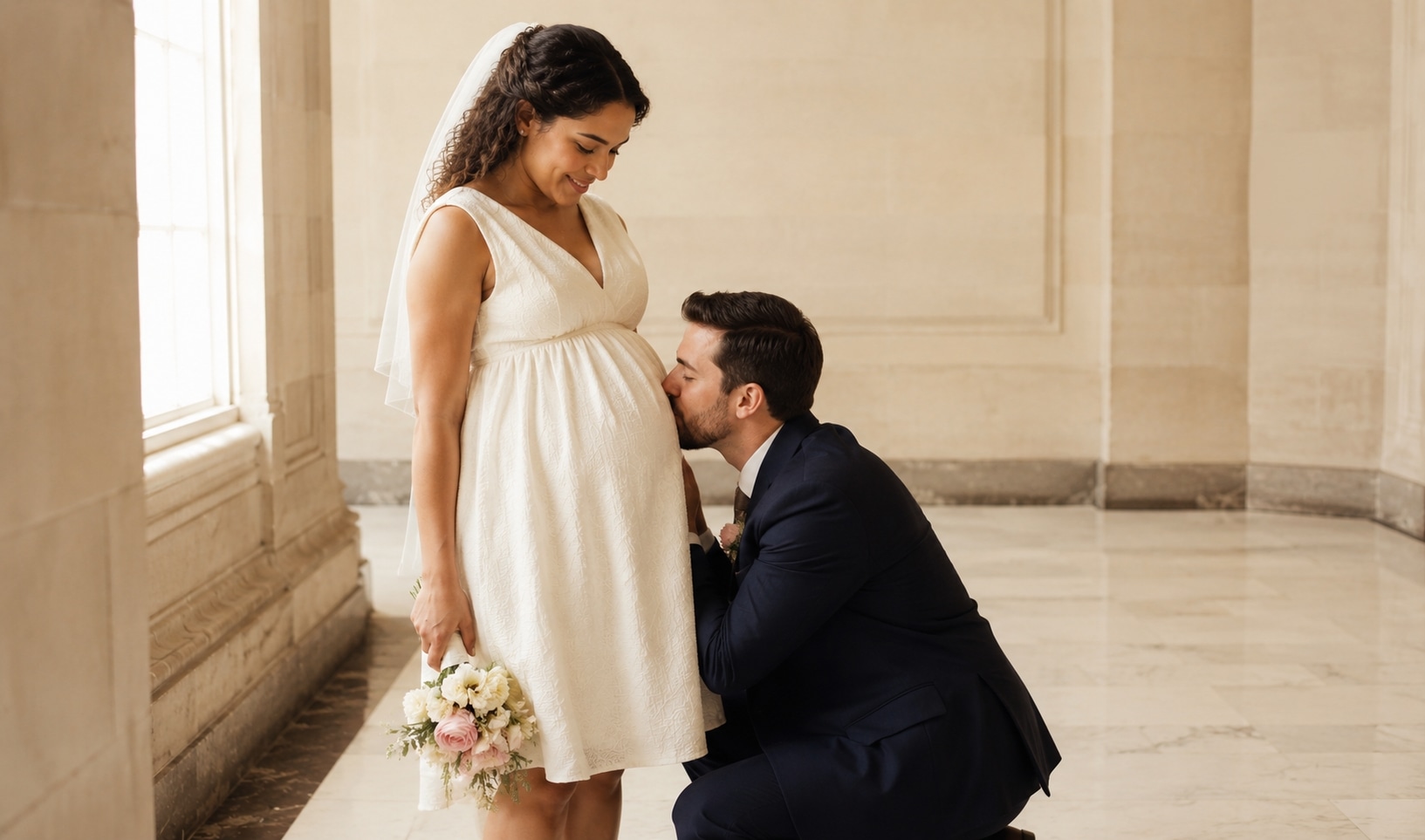
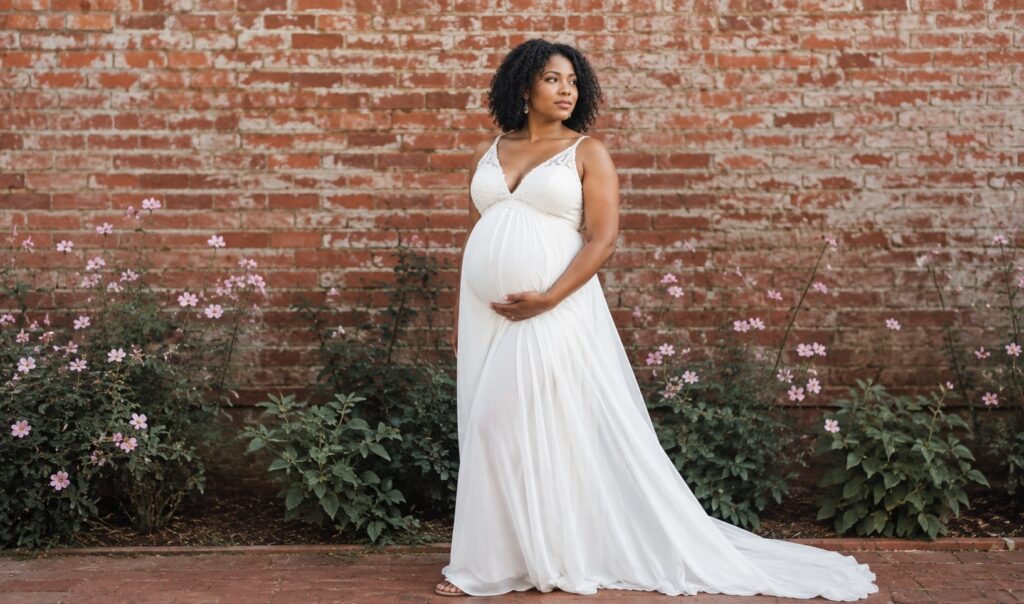
For brides who will be in their second or third trimester, an Empire waist wedding dress is often one of the most comfortable choices. The waistline sits just below the bust instead of at the natural waist, allowing the skirt to fall freely over the stomach.
This gives your bump room without squeezing it—and you don’t have to hide your pregnancy to create a flattering bridal silhouette.
Choose Fabrics That Move With Your Body
Pregnancy is probably not the best time for a wedding dress you have to fight your way into.
Lightweight fabrics such as chiffon, soft tulle, and stretch lace are useful because they move more naturally with the body. Stretch lace is particularly forgiving if your measurements change slightly between your final fitting and the wedding.
Be more cautious with very heavy satin, rigid corsetry, or extensive boning around the waist and abdomen. A structured gown can still work, but it shouldn’t create uncomfortable pressure when you sit, walk, or eat.
When trying on a dress, don’t just stand in front of the mirror. Sit down in it for a few minutes. If the bodice or waistband already feels restrictive, it probably won’t become more comfortable after several hours.
Plan for the Bump You’ll Have on Your Wedding Day
One of the easiest mistakes is ordering a dress based only on your current measurements.
If your wedding is several months away, your bust, waist, and abdomen may change considerably before then. Rather than simply ordering a much larger standard size, consider how adjustable the dress will be.
A lace-up back can be especially helpful because it provides more flexibility than a fixed zipper. Stretch fabrics and less restrictive waistlines can also accommodate smaller changes in your shape.
If you’re ordering a made-to-measure dress, provide your latest measurements and let the dressmaker know how many weeks pregnant you expect to be at the wedding. Avoid guessing exactly how many inches your bump will grow—pregnancy changes are different for every bride.
Look for Support Without Too Much Pressure
Your bump isn’t the only measurement that may change during pregnancy. Your bust and rib cage can change too, so the top of the dress deserves just as much attention.
Look for a bodice that provides support without feeling overly tight under the bust. Wider straps, well-positioned cups, soft lining, and a gently structured bodice can make a long wedding day much easier.
If you prefer a strapless or off-the-shoulder gown, check whether you can comfortably raise your arms, sit down, and breathe deeply without constantly adjusting the neckline.
Think About the Practical Side of the Wedding Day
A beautiful dress still has to work for several hours.
Before deciding, ask yourself:
- Can I sit comfortably during dinner?
- Is the skirt light enough to walk in without tiring quickly?
- Can I use the restroom without needing several people to help?
- Does anything press against my bump when I bend or sit?
- Can the dress be adjusted if my measurements change shortly before the wedding?
These details may seem minor during a fitting, but they can make a major difference on the wedding day.
Consider Custom Sizing When Standard Sizes Don’t Work
Pregnancy rarely follows a standard bridal size chart. You might need more room through the bust and abdomen without needing a dramatically larger dress everywhere else.
That’s where custom sizing can be useful.
For example, InWeddingDress offers custom sizing wedding dresses, allowing brides to provide their individual measurements rather than relying entirely on a standard dress size. For a maternity bride, combining custom measurements with an adjustable feature such as a lace-up back can provide additional flexibility as the wedding approaches.
The goal isn’t to disguise your bump or squeeze it into a traditional bridal silhouette. Choose a dress that gives your body enough room to change, supports you where you need it, and lets you enjoy the day without constantly thinking about what you’re wearing.