
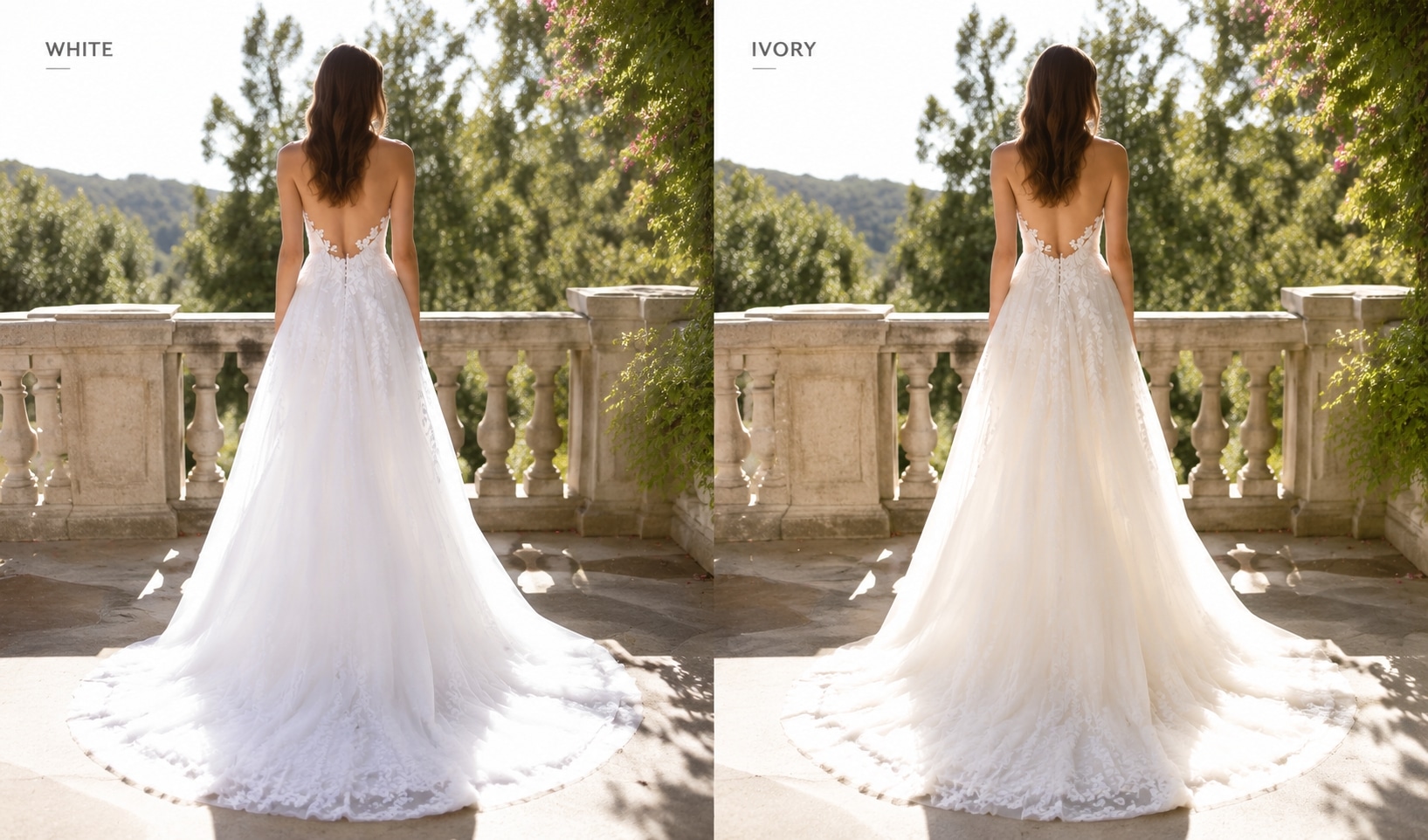
When choosing a beach wedding dress, most brides focus on the silhouette, fabric, and overall style. However, the color of the gown can have a significant impact on how the dress appears under natural coastal light.
White and ivory beach wedding dresses can both create beautiful bridal looks, but they produce very different effects in a beach setting. Direct sunlight, ocean reflections, skin tone, and fabric texture all influence how the final gown looks both in person and in photographs.
How White Wedding Dresses Look on the Beach
A pure white wedding dress, sometimes called optical white or stark white, creates a crisp and clean bridal appearance. Its bright tone feels modern, fresh, and classic, especially for brides who prefer a minimalist or contemporary style.
However, beach lighting can make pure white more challenging. Unlike indoor venues with controlled lighting, the beach has strong sunlight, open skies, and bright sand that reflects additional light onto the gown.
Under these conditions, pure white fabrics can sometimes lose subtle details in photographs. Delicate lace patterns, chiffon layers, and embroidery may appear less visible when bright areas become overexposed. The cool tone of stark white can also create stronger contrast against warm skin tones and natural beach colors, making some fabrics appear overly reflective.
This does not mean white is unsuitable for a beach wedding. Brides who love a sharp, clean bridal style may still prefer pure white, especially with simple silhouettes, smooth satin fabrics, or modern minimalist designs.
Why Ivory Often Works Better for Beach Wedding Photos
Ivory wedding dresses have a softer, warmer undertone compared with pure white. This allows the color to interact with natural sunlight in a more balanced way.
One major advantage of ivory is that it helps preserve the visual depth of the gown. In bright daylight or sunset lighting, warmer tones allow cameras to capture more fabric detail, including lace appliqués, flowing chiffon layers, soft tulle, and delicate embroidery.
Ivory also blends naturally with beach surroundings. The warm tone complements sandy beaches, golden sunlight, and sun-kissed skin without creating a harsh contrast. This makes it especially suitable for outdoor weddings where the gown will be photographed against natural landscapes.
Another reason many brides choose ivory is that it enhances the texture of bridal fabrics. Materials such as silk chiffon, crepe, and soft tulle often appear richer in warmer shades because the color allows the natural softness and dimension of the fabric to show through.
How InWeddingDress Creates Beach-Ready Color Balance
For a beach wedding gown, achieving the right color effect involves more than simply choosing an ivory or white outer fabric. The relationship between the outer layer, lining, and overall construction also affects how the dress appears under natural sunlight.
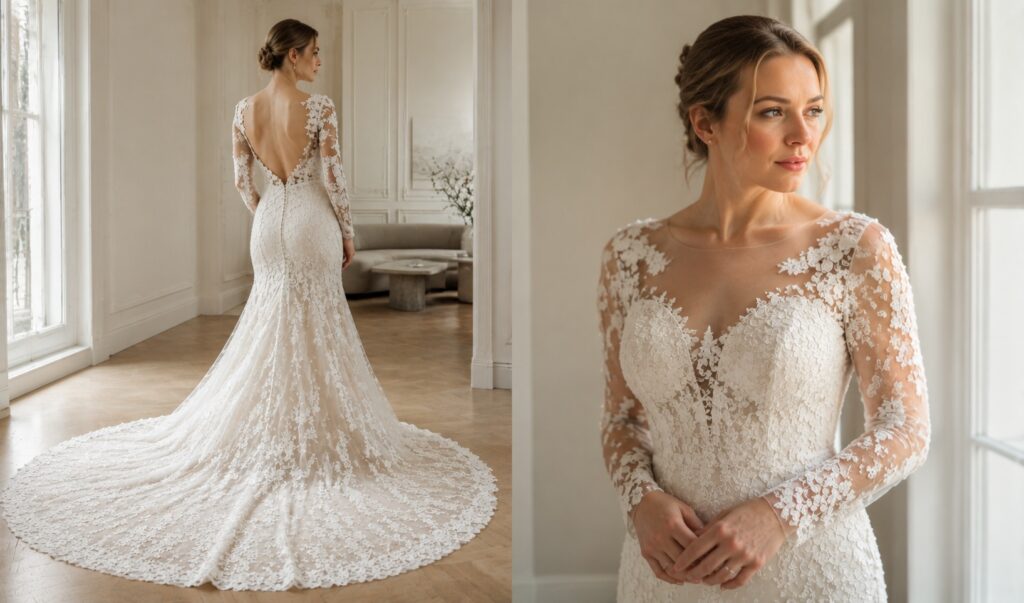
At InWeddingDress, many beach wedding dresses are designed with soft ivory outer layers combined with breathable nude, skin-tone, or champagne-colored linings. This layered construction helps create a balanced color appearance, reducing the risk of the gown looking too stark or too transparent under strong outdoor light.
The result is a softer bridal tone that allows lace details, fabric texture, and movement to remain visible while keeping the gown lightweight and suitable for beach celebrations.
Before choosing between ivory and white, view the dress under natural daylight rather than relying only on indoor lighting. The shade that preserves the fabric texture and works naturally with your beach setting will usually create the most flattering overall look.