
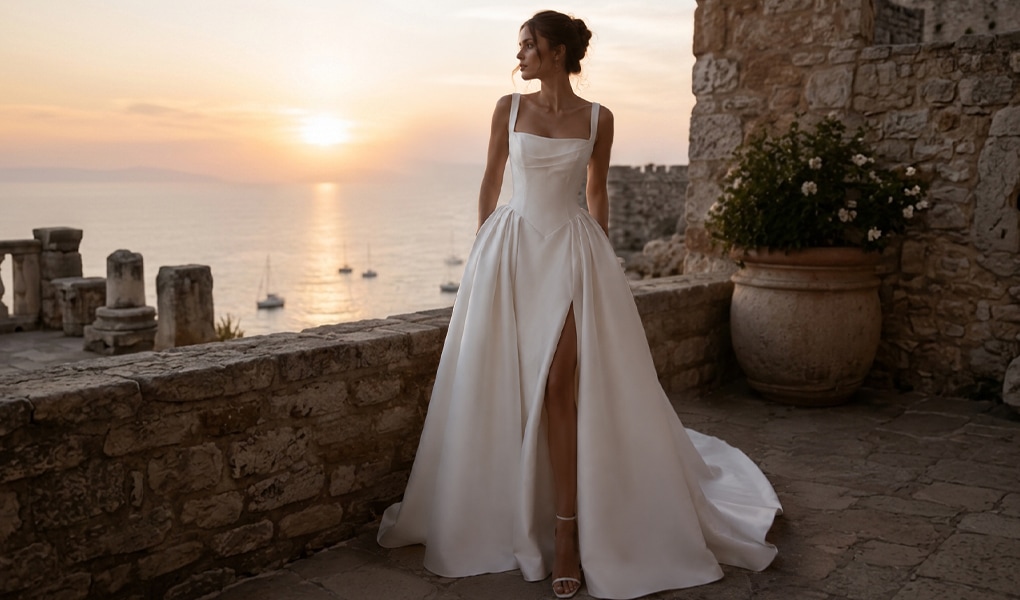
Bridal fashion is becoming more focused on shape, construction and texture than on heavy embellishment alone. Some of the strongest looks right now borrow from historical corsetry and ’90s minimalism, while others use exaggerated proportions, dimensional flowers or unexpected color.
If you’re starting to shop for a gown, these are the wedding dress trends worth knowing—and the design details to look for when trying them on.
Drop-Waist, Basque Waists & Corsetry
Waistlines are moving lower. Drop-waist wedding dresses extend the bodice below the natural waist, while Basque waists create a distinctive V- or U-shaped point at the center. Both give the torso a longer, more sculpted appearance and work particularly well with full skirts.
Corsetry is part of the look, too. Visible boning, paneled bodices and sheer corset construction are being treated as design features rather than hidden support.
For a more architectural silhouette, look for structured fabrics such as mikado, duchess satin and taffeta. The exact position of the waist matters, so this is one trend that is especially important to judge on your own proportions rather than on the hanger.
3D Floral Appliqués
Florals are hardly new to bridalwear, but they are becoming much more dimensional. Instead of traditional flat lace alone, gowns now feature organza petals, embroidered leaves, fabric flowers and hand-applied botanical details layered over tulle.
The effect can be subtle, with scattered flowers across a clean silhouette, or dramatic enough to cover an entire bodice and skirt.
For garden and outdoor weddings, dimensional florals are particularly effective because natural light creates shadows between the appliqués, making the texture more visible in photographs.
Sculptural Bows
Bows are getting bigger—and more architectural.
Rather than appearing as small decorative accents, oversized and sculptural bows are being incorporated into waistlines, shoulders and trains. Detachable versions are especially useful: a dramatic bow can add volume for the ceremony, then be removed to create a cleaner reception look.
Fabrics with body, including mikado, faille and taffeta, work especially well because they allow the bow to hold its shape. If you choose one at a dramatic scale, keep the rest of the gown relatively restrained and let the bow provide the focal point.
’90s-Inspired Minimalism
At the opposite end of statement bridalwear is the return of clean, ’90s-inspired silhouettes.
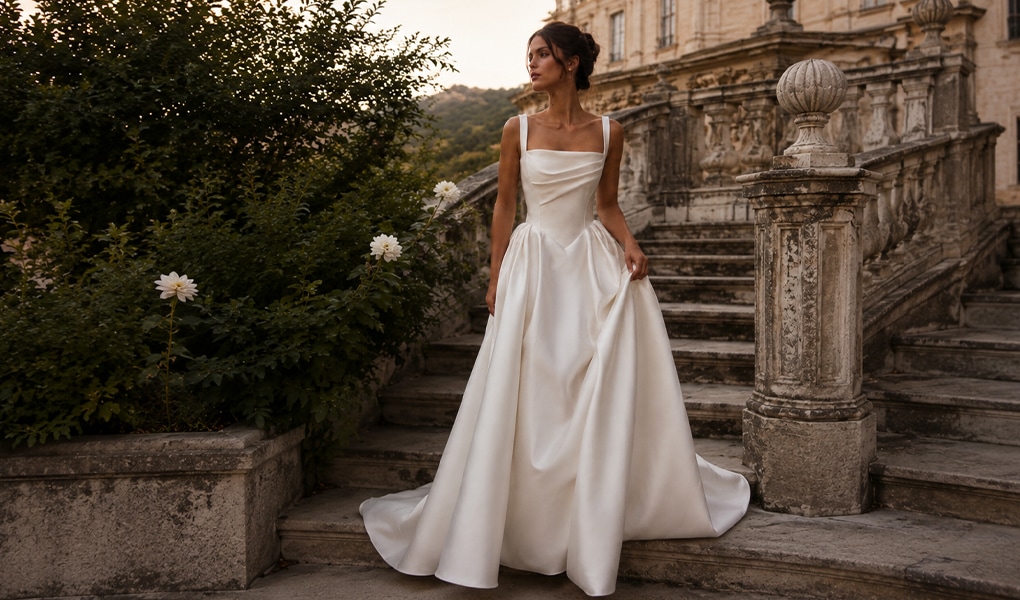
Think silk slip dresses, bias-cut skirts, column gowns, square or scoop necklines and halter-neck dresses with little or no embellishment. The appeal comes from proportion, fabric and fit rather than lace or sparkle.
Minimal gowns can look simple on the hanger, but construction matters more when there are fewer details to distract the eye. Silk and heavy satin also move differently, so walk and sit in the gown during your appointment rather than judging it only while standing in front of a mirror.
Pastel & Tinted Wedding Dresses
For brides interested in color, the shift is toward softer, more wearable shades rather than highly saturated gowns.
Blush, champagne, powder blue and pale lavender can appear across an entire dress or more subtly as a colored lining beneath ivory lace or tulle. A tinted underlayer is an easy way to add depth while keeping the overall look recognizably bridal.
Always check pale colors in natural light. A shade that looks cool in a boutique can appear considerably warmer under evening or venue lighting.
Mini & Reception Dresses
The bridal mini is no longer limited to courthouse weddings. Short dresses have become a popular second look for receptions, as well as an option for rehearsal dinners and destination celebrations.
Current versions range from structured corset minis and clean A-line dresses to bubble hems, feathers, bows and heavily embellished designs.
Because the hemline puts more emphasis on the legs and shoes, bring your intended footwear—or something with a similar heel height—to fittings. It makes it much easier to judge the proportions of the complete look.
Bridal Tailoring & Separates
Bridalwear is also expanding beyond the traditional gown. Tailored suits, jumpsuits, wide-leg trousers and mix-and-match separates offer a sharper alternative, particularly for civil ceremonies and reception looks.
Separates can also solve a practical styling problem. A corseted top paired with a removable overskirt, for example, can create the scale of a traditional ceremony gown without requiring a completely different outfit later in the day.
The key is tailoring: trouser length, shoulder placement and waist fit make a much bigger difference than extra embellishment.
Choosing a Trend That Works for You
Wedding dress trends are most useful as a vocabulary for identifying what you like. Knowing the difference between a Basque waist, drop waist, bias cut or 3D appliqué makes it much easier to narrow down dresses and communicate with a bridal stylist.
But you don’t need to combine several trends in one gown. Start with the silhouette that works for your proportions and venue, then choose one or two details that feel like you. A dress should still look right when you sit, walk and dance—not just when it photographs beautifully.