
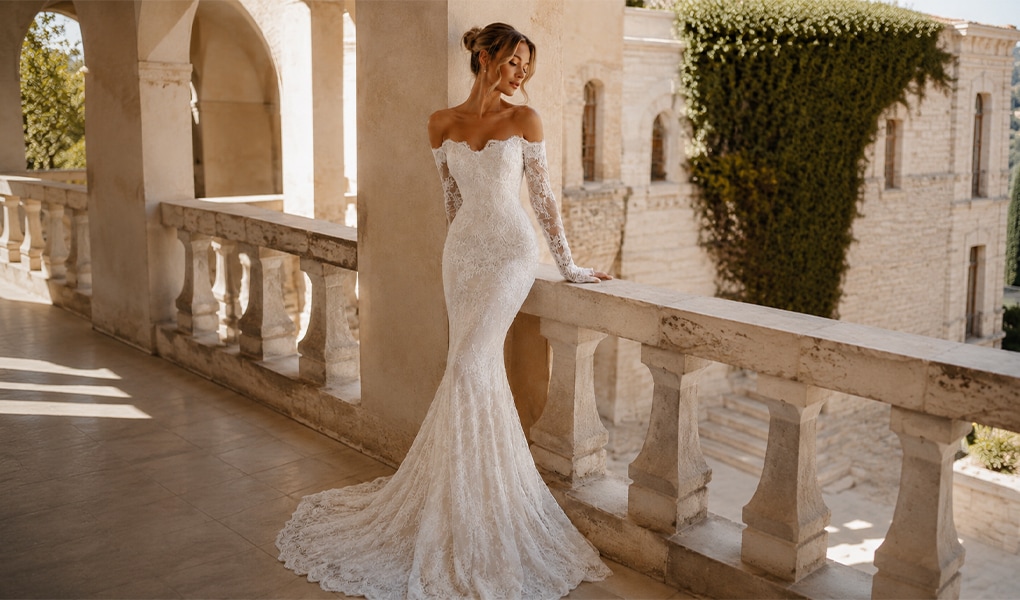
When choosing a wedding gown, many brides begin with details such as lace, sleeves, or neckline. However, the first element that defines how a gown looks and feels is the silhouette.
A silhouette determines the overall shape of the dress, from the way the skirt expands to how the fabric follows the body. It affects not only the visual impression of the wedding dress, but also practical details such as movement, comfort, and how the dress appears in photographs.
The right silhouette depends on more than personal preference. The venue, wedding style, fabric structure, and the way a bride wants to move throughout the day all play an important role in the final choice.
A-Line: The Timeless Bridal Foundation
The A-Line silhouette features a fitted bodice with a skirt that gradually widens from the waist, creating the recognizable “A” shape. Because the expansion begins naturally from the waistline, this silhouette creates a balanced proportion without adding excessive volume.
A-Line wedding gowns range from soft and flowing to structured and architectural depending on the fabric. Lightweight materials such as chiffon and soft tulle create gentle movement, while stretch satin or heavier satin fabrics provide a cleaner shape with more definition.
One of the biggest advantages of an A-Line gown is mobility. The skirt allows comfortable walking, sitting, and dancing, making it a practical choice for weddings with a full-day schedule.
Its flexible structure works well across different wedding settings, from garden ceremonies to formal ballroom receptions. It also photographs well in both close-up portraits and full-length venue shots because the silhouette has enough shape without overwhelming the bride.
Ball Gown: Volume, Structure, and Bridal Drama
The Ball Gown silhouette is defined by a fitted bodice paired with a full, dramatic skirt. It creates the strongest sense of traditional bridal volume and is often associated with formal wedding ceremonies.
The shape of a Ball Gown depends heavily on construction. The volume is created through elements such as layered tulle, crinolines, internal structure, and fabrics that can hold their form. Soft tulle and organza create lighter volume with movement, while structured fabrics such as heavy satin or architectural textiles create sharper folds and a more sculpted appearance.
Because of its size, a Ball Gown should be considered in relation to the wedding environment. Large venues, cathedral aisles, and spacious reception areas allow the silhouette to fully develop. In smaller spaces, the skirt volume may affect movement and require more attention during the ceremony and reception.
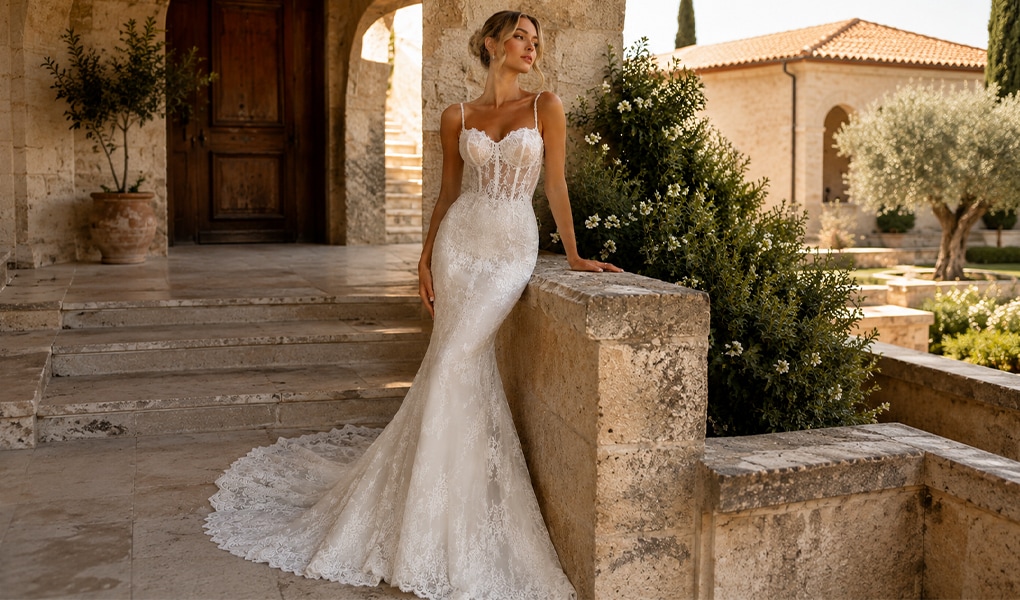
Mermaid, Trumpet, and Fit-and-Flare: Understanding the Difference
These three silhouettes are often grouped together because all of them create a fitted shape through the upper body. The key difference is where the skirt begins to expand, which directly affects both appearance and movement.
Mermaid
Mermaid wedding dresses remain fitted through the waist and hips before dramatically flaring around the knee or below.
The silhouette creates the strongest contrast between the narrow upper shape and the wider skirt, making it one of the most dramatic bridal designs.
Stretch satin works especially well for mermaid gowns because the fabric follows the body while maintaining a smooth surface. Crepe offers a softer matte finish, while lace adds texture and traditional bridal detail.
The main consideration with mermaid is mobility. Because the skirt stays narrow around the legs for longer, walking stride can be limited. Brides who prioritize a dramatic ceremony entrance and photography often choose this style, while those planning extensive dancing should consider the fit carefully.
Trumpet
Trumpet gowns begin to flare higher, usually around the mid-thigh area. This creates a smoother transition between the fitted bodice and the skirt.
Compared with mermaid, Trumpet allows more freedom of movement while maintaining a defined shape. It is often chosen by brides who want a fitted silhouette but still need comfort for walking, stairs, and dancing.
Stretch satin, crepe, and soft tulle are commonly used because they support the shape while allowing the skirt to move naturally.
Fit-and-Flare
Fit-and-Flare gowns provide the softest transition among the three silhouettes. The gown remains fitted through the upper body and hips before gradually opening below the hips.
This design offers a balance between a sculpted appearance and everyday movement. It works particularly well for brides who want the clean lines of a fitted gown with more flexibility throughout the wedding day.
Sheath / Column: Minimal Structure, Maximum Fabric Impact
The Sheath, or Column, silhouette follows a narrow vertical line from the neckline to the hem. Instead of relying on skirt volume, the design highlights fabric quality, tailoring, and natural movement.
This silhouette is often paired with fabrics that have beautiful drape, such as crepe, stretch satin, and lightweight satin materials. Because the shape is simple, details such as fabric texture, seam placement, and neckline design become especially important.
Sheath gowns photograph beautifully in close portraits and modern architectural settings. However, in very large venues, the minimal silhouette may require additional design details or accessories to maintain visual presence within the space.
Choosing a Silhouette Based on Your Wedding Vision
A wedding gown silhouette shapes the entire bridal look. Before focusing on decorative details, consider three practical questions:
How do you want to move on your wedding day?
If your day includes long periods of standing, walking, or dancing, silhouettes with more skirt freedom, such as A-Line, Fit-and-Flare, or Trumpet, may provide greater comfort.
How large is your wedding environment?
Grand venues can support the volume of a Ball Gown, while smaller or outdoor spaces often work beautifully with A-Line, Sheath, or lighter silhouettes.
What visual impression do you want your gown to create?
Ball Gown emphasizes ceremony and volume. Mermaid highlights structure and curves. Sheath focuses on clean lines and fabric. A-Line offers a classic bridal proportion that adapts to many styles.
The silhouette is the foundation of a wedding gown. Once the shape is chosen, elements such as fabric, neckline, sleeves, and embellishments can be layered onto that foundation to create a gown that feels complete, personal, and appropriate for the wedding setting.