
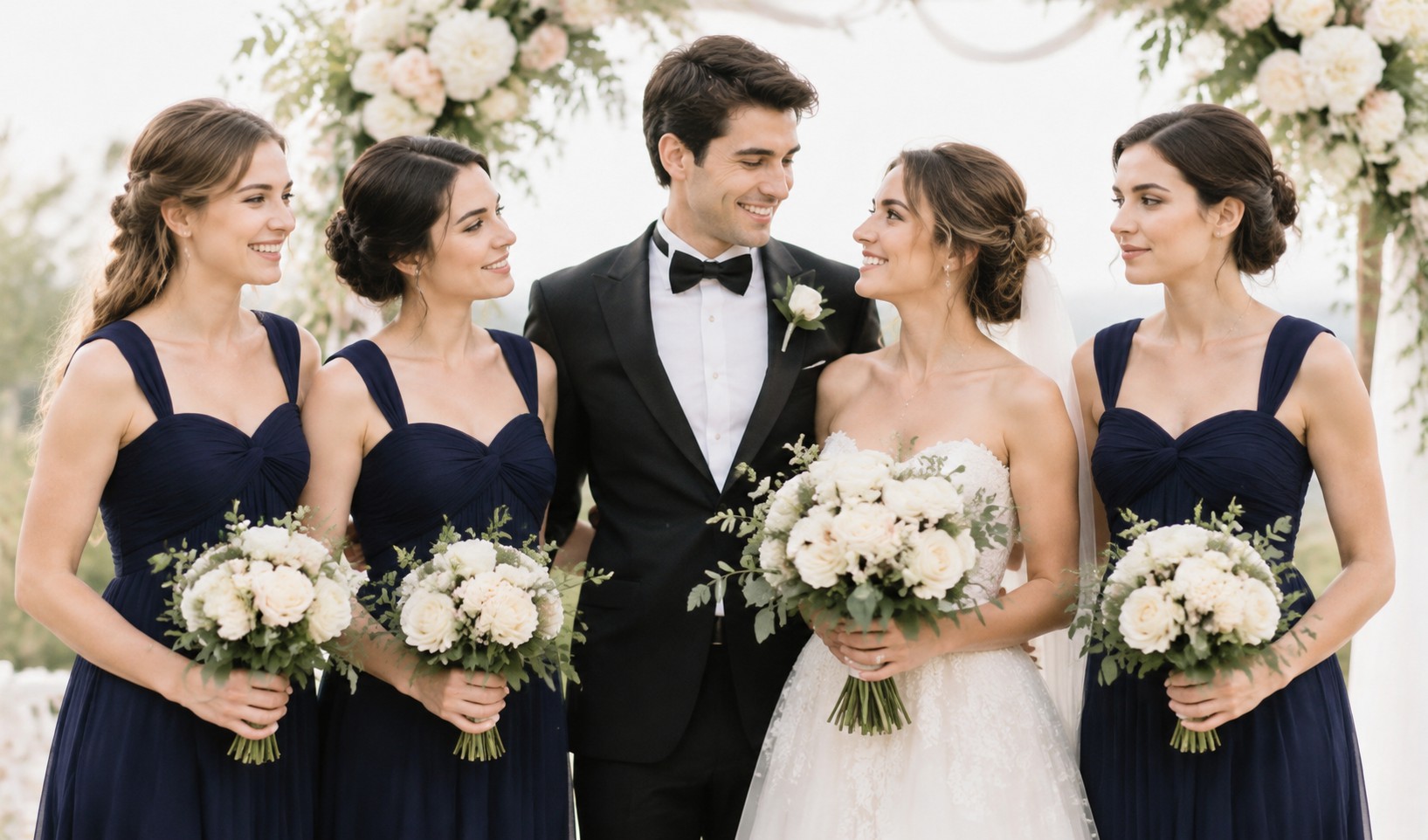
No, bridesmaid dresses don’t need to be made from the same fabric as the wedding dress. In many cases, they look better when they aren’t.
The bride’s gown should set the mood rather than dictate every material in the lineup. A satin wedding dress can sit beautifully next to chiffon bridesmaid gowns; intricate lace often looks even more striking beside simple crepe. What matters is that the fabrics feel right for the same wedding—and that the bride still looks unmistakably like the bride.
Start With the Wedding Dress
Before looking at bridesmaid dresses fabrics, take a close look at the gown. Not just whether it’s satin or lace, but how it actually looks: Is it sleek and minimal? Soft and romantic? Heavily embellished? Light and ethereal?
A detailed gown with lace, beading, embroidery or dimensional appliqués already has plenty going on. Bridesmaid dresses in chiffon or matte crepe give those details space to stand out.
A minimalist silk, satin or crepe gown gives you more freedom. Satin bridesmaid dresses can introduce sheen, while chiffon adds movement and organza brings a little more fashion-forward volume.
There’s no need to recreate the bride’s fabric. You’re looking for a relationship between the dresses, not a replica.
Yes, You Can Mix Bridesmaid Fabrics
Mismatched bridesmaid dresses have moved well beyond choosing different necklines in one color. Mixing textures—say, satin with chiffon or crepe—is another way to make the bridal party feel less uniform.
Here’s how to do it without making the lineup feel random.
If the fabrics vary, keep the colors fairly close. If you’re using several colors, limit the number of fabrics. And if both color and material are changing, repeat something else across the group, such as dress length or level of formality.
For a bridal party of six, two or three fabrics are usually enough. You’ll see the variation in photographs without every dress feeling unrelated to the next.
Four Fabric Pairings That Work
Satin wedding dress + chiffon bridesmaids
The bride keeps the richer shine, while chiffon gives the bridal party a softer finish. This pairing works particularly well for spring and summer weddings.
Lace wedding dress + crepe bridesmaids
Matte crepe is a smart counterpoint to intricate lace. It looks polished without adding another layer of pattern or embellishment.
Minimal crepe wedding dress + satin bridesmaids
There’s no rule saying the bridesmaids must wear the quieter fabric. A sharply cut, minimalist bridal gown can easily hold its own beside satin dresses, and the difference in finish makes the lineup more interesting.
Organza or tulle wedding dress + chiffon bridesmaids
These fabrics all have movement, but chiffon is less voluminous. It carries the softness of an airy bridal gown through the group without repeating its dramatic shape.
That mix of texture is particularly useful now that bridal parties are becoming less uniform. Rather than putting every bridesmaid in exactly the same material and silhouette, many modern lineups use fabric as another way to create subtle variation.
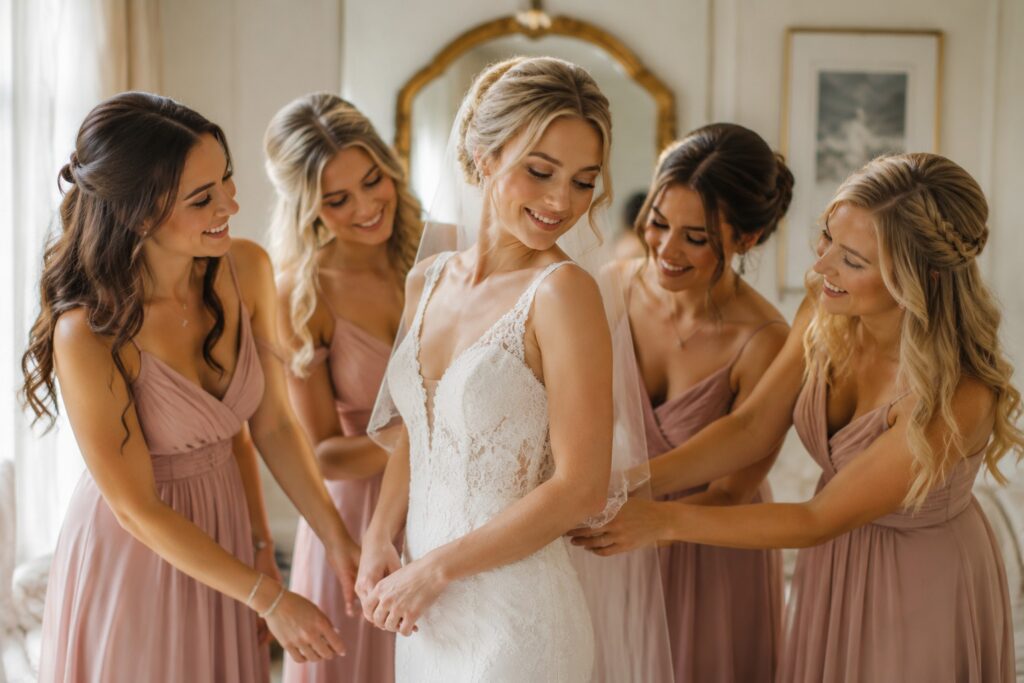
Don’t Forget the Venue and Season
The wedding dress may be your starting point, but it shouldn’t be the only consideration.
For a summer garden, beach or destination wedding, chiffon, georgette and lightweight crepe are easier to wear than velvet or heavy jacquard. Organza gives you more structure while still feeling light enough for warm-weather celebrations.
For a winter ballroom or formal evening wedding, satin, velvet and jacquard can handle a grander setting.
Comfort matters here. If your bridesmaids will spend an hour standing outdoors in July, a heavy fabric isn’t suddenly practical just because it looks good next to the wedding gown.
Always See the Fabrics Together Before Ordering
This is where many mismatched bridal parties go wrong.
Two dresses can both be described as “sage” and look noticeably different once they’re side by side. Satin reflects light and can make a color appear brighter or deeper; chiffon has a softer, more diffused finish. Even fabrics produced in the same advertised shade may not photograph identically.
Order swatches before placing the full dress order.
Put every fabric sample together and look at them in daylight rather than relying on product photos. If you have a swatch of the wedding dress, add that too.
Then photograph the whole group with your phone. Look at the image rather than just the samples in your hand. Wedding photography changes the way sheen, texture and pale colors read, so this quick test can reveal combinations that looked perfect indoors but clash on camera.
A Few Questions Brides Often Ask
Do bridesmaid dresses need to match each other?
Not anymore. They can vary in neckline, silhouette, color or fabric. Just avoid changing every element at once. Two or three repeated details will make the group look intentional.
Should bridesmaid dresses be less formal than the wedding dress?
They don’t necessarily need to be less formal, but they shouldn’t compete with the bridal gown. A black-tie wedding still calls for appropriately formal bridesmaid dresses, even if the bride’s gown is highly elaborate.
Can bridesmaids wear satin if the bride wears satin?
Absolutely. If you love a uniform satin look, create separation through silhouette, color and detailing. A bride in ivory silk satin with architectural draping will still stand apart from bridesmaids in simpler satin slip or column dresses.
The easiest rule to remember is this: let the wedding dress lead, but don’t copy it. The fabrics can contrast, the textures can change, and the bridesmaids can have some individuality. They simply need to look like they belong in the same photograph.