
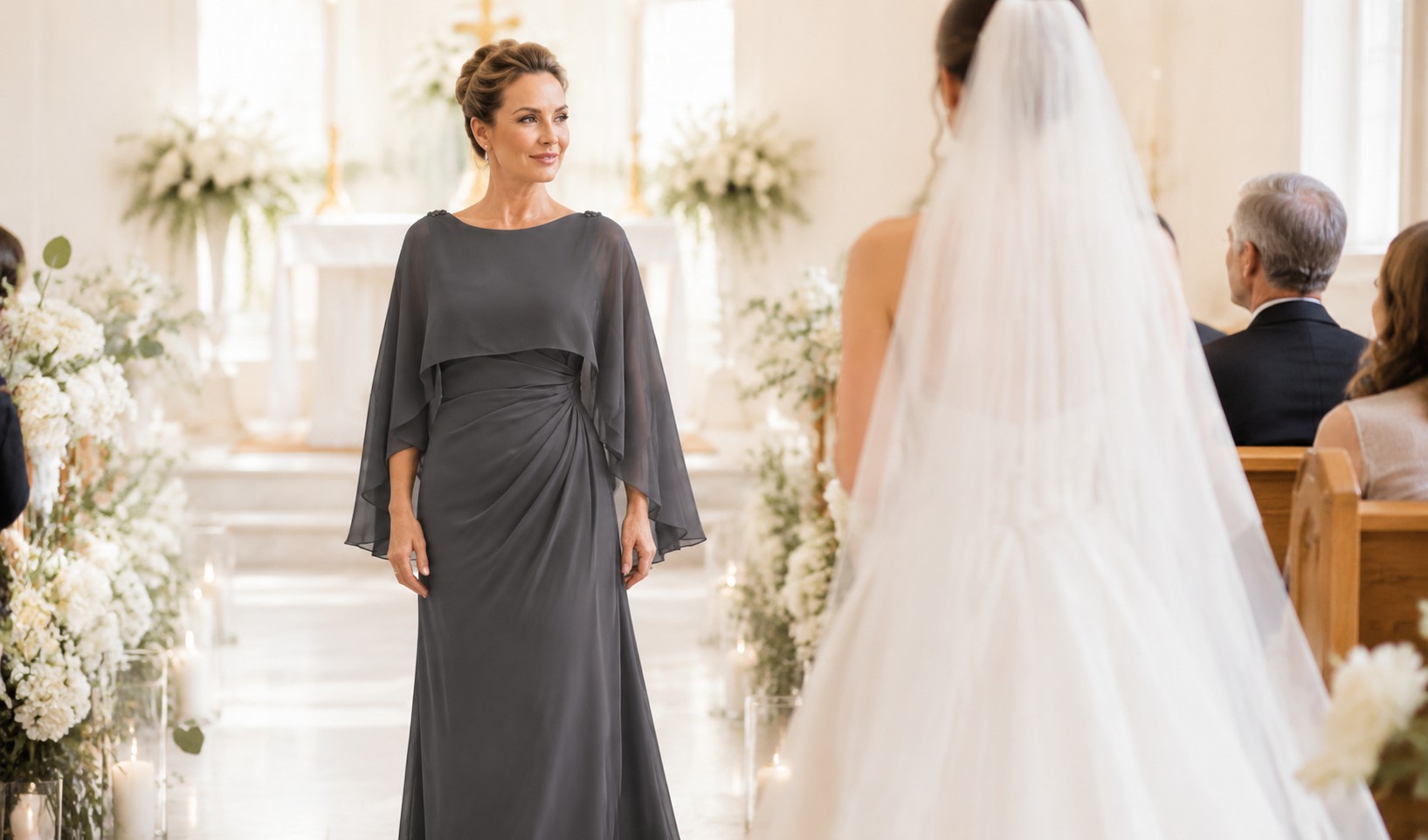
Choosing a mother of the bride dress color used to follow a simple rule: match the wedding party and avoid standing out. Modern American weddings have moved away from that approach. Today, the best-dressed mothers are not wearing the exact wedding colors—they are choosing shades that belong in the same visual story.
The goal is to create harmony in family portraits while maintaining an individual sense of style. Finding the right hue requires more than looking at the wedding palette. It involves considering the venue, season, personal coloring, fabric texture, and how the dress will appear under professional photography lighting.
Start With the Wedding Palette: Coordinate, Don’t Copy
The first step is understanding the wedding’s color direction. The mother of the bride should know the bridesmaids’ dress color, floral palette, and overall level of formality before shopping.
A useful guideline is the Three-Tone Rule:
- One tone comes from the bridal party or wedding palette.
- One tone provides contrast.
- One tone reflects the mother’s personal coloring.
For example, if bridesmaids are wearing dusty blue, a mother of the bride does not need to choose the same shade. Navy, slate gray, silver, or champagne can create a connected look without blending into the bridal party.
The same principle applies to the mother of the groom dresses. Traditionally, the mother of the bride selects her dress first and shares her color choice with the mother of the groom, allowing both outfits to coordinate without appearing identical.
Find Your Hue: Match the Dress to Your Undertone
A wedding dress color should work with the person wearing it. Understanding skin undertone can make a significant difference.
Cool undertones often look best in:
- Navy
- Sapphire blue
- Silver
- Lavender
- Soft gray
These shades tend to complement pink or blue undertones in the skin.
Warm undertones usually pair well with:
- Champagne
- Gold beige
- Emerald green
- Burgundy
- Taupe
These colors enhance golden or olive undertones.
If you are unsure of your undertone, look at the jewelry you naturally prefer. If silver jewelry brightens your complexion, cooler shades may work better. If gold jewelry feels more flattering, warmer tones are often a good starting point.
Classic Mother of the Bride Colors That Always Work
Navy: The Most Reliable Choice
Navy mother of the bride dress remains a favorite because it works across seasons and wedding styles. It photographs beautifully, pairs well with almost any floral design, and feels appropriate for both daytime ceremonies and evening receptions.
For a more luxurious look, fabric matters. A navy silk gown has a very different effect from a navy polyester dress. Rich fabrics such as silk, crepe, or velvet create depth and prevent dark colors from appearing flat in photographs.
Champagne & Taupe: Elevated Neutrals
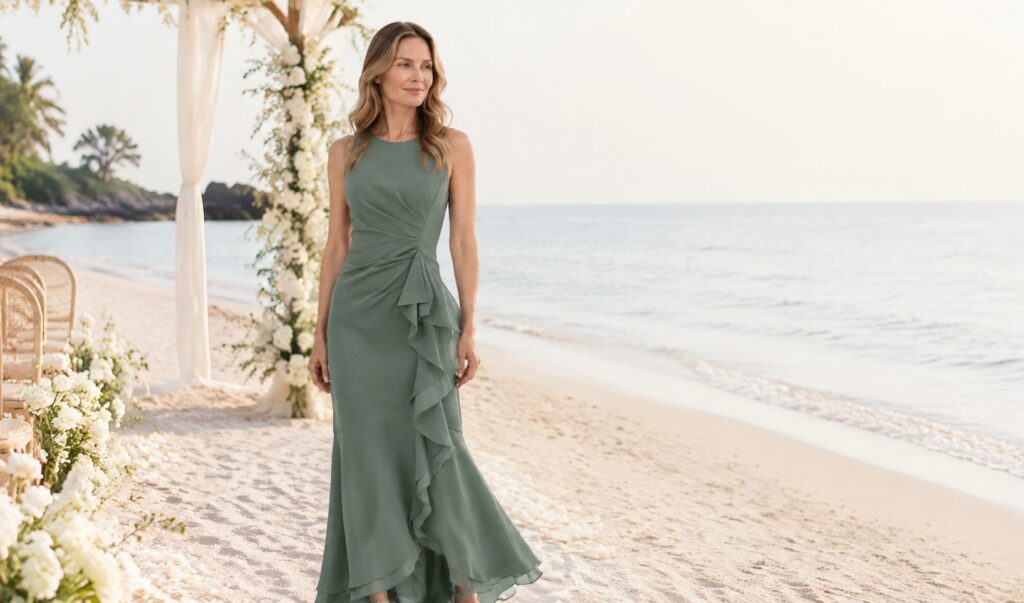
Soft neutrals are popular for garden weddings, coastal celebrations, and modern venues. However, champagne requires careful selection.
Avoid ultra-light champagne satin with a strong shine. Under flash photography, high-gloss fabrics can reflect too much light and appear closer to ivory, creating an unwanted resemblance to the bridal gown.
Matte fabrics, textured silk, embroidery, or subtle beading usually photograph better and create a more sophisticated effect.
Emerald Green: A Strong Modern Favorite
Emerald is especially popular for fall and winter weddings. It provides richness without being overly bright and works beautifully with gold accessories, pearls, and neutral floral arrangements.
Silver and Pewter: Elegant Evening Options
Silver-gray tones are a strong choice for formal weddings. They add sophistication while remaining separate from the bride’s white gown. Soft metallic fabrics or detailed textures often work better than highly reflective finishes.
Colors to Approach With Caution
Some colors are not completely forbidden, but they require consideration.
Black:
Black has become increasingly accepted at modern American weddings, especially formal evening events. However, some families or regions still associate it with mourning. Before choosing black, consider the wedding style and family expectations.
Bright Red:
Deep wine or burgundy can be elegant, but bright red may attract too much attention in photographs and compete with the bride’s presence.
Very Pale Nude or Ivory:
Anything close to white, ivory, or bridal champagne should be avoided unless the bride specifically approves it.
Large Floral Prints:
Prints are acceptable, especially for garden weddings, but choose carefully. A subtle floral pattern with a neutral base works better than bold, high-contrast prints that dominate photographs.
Think About the Camera, Not Just the Mirror
A dress that looks beautiful in a fitting room may appear differently on the wedding day. Professional cameras, flash photography, and outdoor lighting can change how colors and fabrics appear.
Before purchasing, compare the dress color with:
- A bridesmaid fabric swatch
- The wedding invitation
- The bridal bouquet colors
- Photos taken in natural daylight
If choosing lighter shades, always check how the fabric reflects light. Matte finishes usually photograph more consistently than shiny materials.
A Color That Feels Like You
The perfect mother of the bride dress color is not simply the trendiest shade or the closest match to the wedding palette. It is the color that connects the celebration, flatters the wearer, and remains beautiful when viewed years later.
The secret is not finding the “correct” wedding color—it is finding the hue that makes you feel confident while honoring the importance of the day.