
A bridal bouquet has always been one of the most photographed details of a wedding day. It appears in the quiet moments before the ceremony, the first steps down the aisle, the portraits that follow, and the photographs that become family heirlooms.
But today’s bouquets are changing. After years of oversized arrangements and perfectly rounded shapes, brides are looking for designs that feel more personal, natural, and expressive. The focus is shifting from creating the biggest bouquet to creating one with intention — a design that reflects the bride’s style, the setting, and the overall feeling of the celebration.
Modern bridal bouquets are defined by movement, texture, and individuality. From garden-inspired arrangements to sculptural floral designs, these are the styles shaping the next generation of wedding flowers.
Garden-Gathered Bouquets: The New Definition of Romance
The hand-tied garden bouquet remains one of the most sought-after bridal styles, and its popularity comes from its effortless beauty.
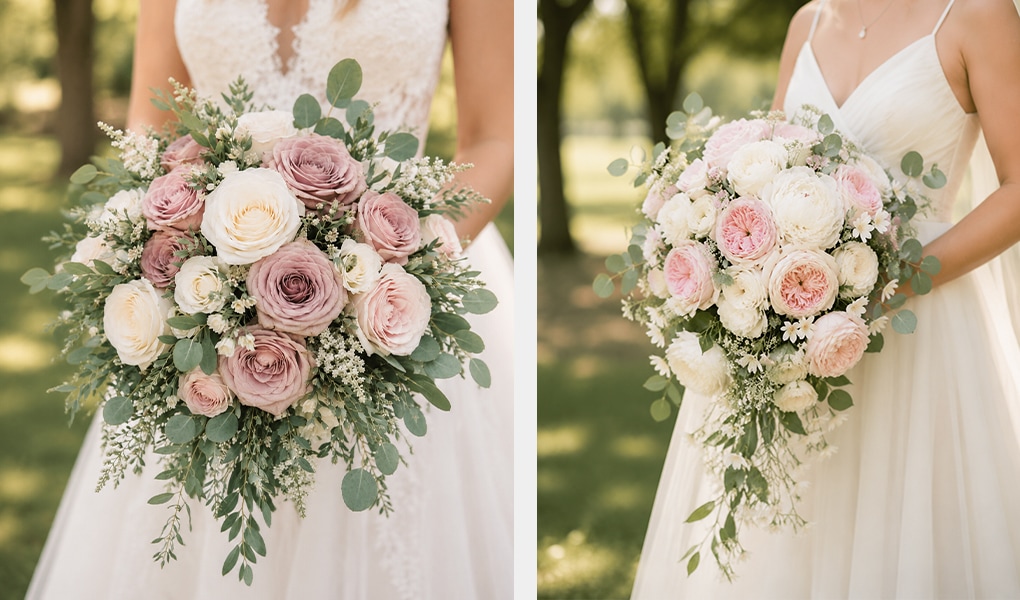
Unlike traditional bouquets built around perfect symmetry, garden-gathered arrangements embrace a more natural rhythm. Flowers sit at different heights, greenery moves freely, and the overall shape feels as though it was gathered rather than constructed.
Garden roses, peonies, ranunculus, dahlias, sweet peas, eucalyptus, and olive branches are often combined to create layers of softness and texture. Designers may pair delicate petals with airy foliage or contrast romantic blooms with more structured elements to give the bouquet depth.
The appeal is in the balance: relaxed but refined, organic but carefully considered. This style feels especially at home in garden weddings, estate celebrations, and romantic outdoor settings, where the flowers appear to belong naturally within the landscape.
Sculptural and Asymmetrical Bouquets: When Flowers Become Art
A growing number of brides are moving toward bouquets with stronger artistic direction. Asymmetrical and free-form designs are replacing traditional expectations of balance with a more expressive approach.
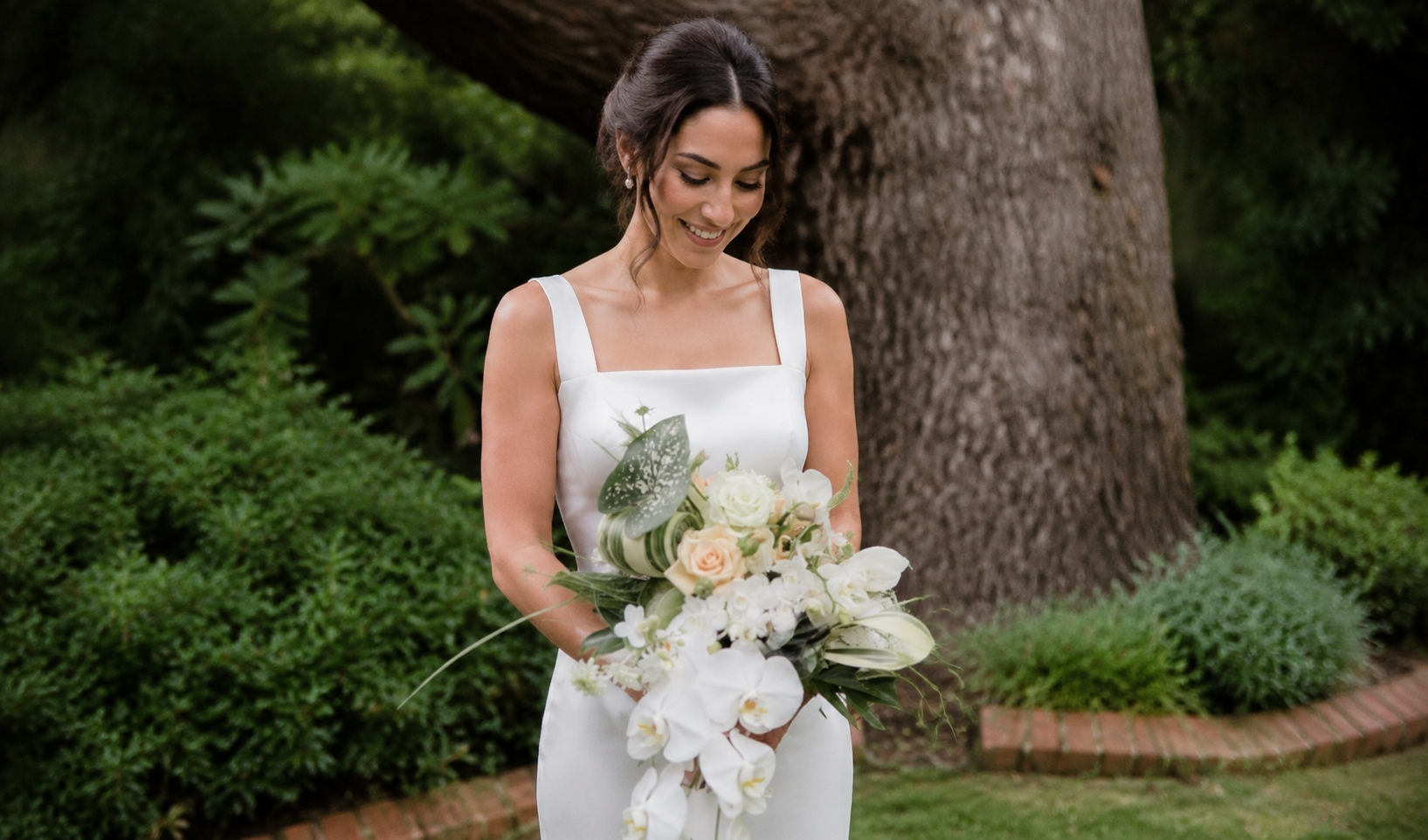
These bouquets use negative space, unexpected proportions, and directional movement to create visual interest. A single orchid extending outward, a curved stem creating a graceful line, or a statement flower placed slightly off-center can completely change the feeling of an arrangement.
Architectural blooms such as phalaenopsis orchids, calla lilies, anthuriums, and other statement flowers are often paired with softer elements like jasmine vines or cascading amaranthus. The contrast between structure and movement gives the bouquet a sculptural quality.
For brides choosing modern gowns, minimalist venues, or fashion-forward celebrations, this style offers a way to make the flowers feel like part of the overall design rather than simply an accessory.
Cascading Bouquets: A Classic Silhouette Returns
The cascading bouquet is experiencing a revival, but with a lighter and more contemporary interpretation.
The dramatic, heavily structured cascades of previous decades have evolved into softer designs focused on movement and flow. Instead of overwhelming the bride’s silhouette, modern cascading bouquets create a graceful line that extends naturally from the hands.
Orchids, trailing amaranthus, jasmine vines, and delicate greenery are popular choices because they add length and movement without creating unnecessary weight.
This style works particularly well with clean-lined wedding gowns. A simple satin wedding dress or minimalist silhouette allows the bouquet’s flowing shape to become the focal point, adding romance and a sense of occasion without competing with the dress.
Long-Stem and Presentation Bouquets: Modern Elegance in Simplicity
For brides drawn to contemporary fashion, long-stem and presentation bouquets offer a refined alternative to traditional hand-held arrangements.
Carried along the arm rather than gathered tightly in front of the body, these bouquets highlight the natural shape and length of the flowers. Long-stemmed roses, calla lilies, delphinium, gladiolus, and French tulips create a sleek silhouette with a sense of quiet sophistication.
This style pairs beautifully with minimalist gowns, architectural venues, and modern celebrations. Its appeal comes from restraint — the beauty is found in the line of the flowers, the simplicity of the composition, and the confidence of the bride carrying it.
Minimalist Bouquets: The Beauty of a Single Statement
Alongside elaborate floral designs, minimalist bouquets continue to gain attention among brides who appreciate understated elegance.
A single open garden rose, a few calla lilies, or a bouquet built around one flower variety can create a powerful visual impact. When fewer elements are used, every detail becomes more noticeable — the shape of each petal, the texture of the bloom, and the natural character of the flower itself.
This approach reflects the growing influence of quiet luxury in weddings. Rather than adding more, designers are focusing on selecting exceptional flowers and allowing them to speak for themselves.
A Shift Toward Warmer, More Emotional Color Palettes
Color is also becoming more expressive. While classic white and blush tones remain timeless, many brides are introducing warmer shades and more nuanced combinations.
Cream, vanilla, apricot, and butter yellow bring softness and warmth. Olive green, sage, terracotta, and deep plum create richer, more grounded palettes. Muted antique pinks and misty lavender add a romantic quality with a subtle vintage feel.
The modern approach to color is less about matching a wedding theme and more about creating an atmosphere. A carefully chosen palette can influence how a bouquet feels — whether it is airy and romantic, modern and refined, or bold and artistic.
The Modern Bouquet Is About Intention, Not Perfection
The most memorable bridal bouquets are not necessarily the largest or the most elaborate. They are the ones that feel thoughtfully chosen — a reflection of the bride, the wedding dress, the venue, and the emotion of the day.
Whether shaped by loose garden flowers, sculptural silhouettes, flowing cascades, or a single statement bloom, today’s bouquets are moving toward a more personal definition of beauty.
The future of bridal flowers is not about following one perfect formula. It is about creating something that feels natural, meaningful, and unmistakably yours.