
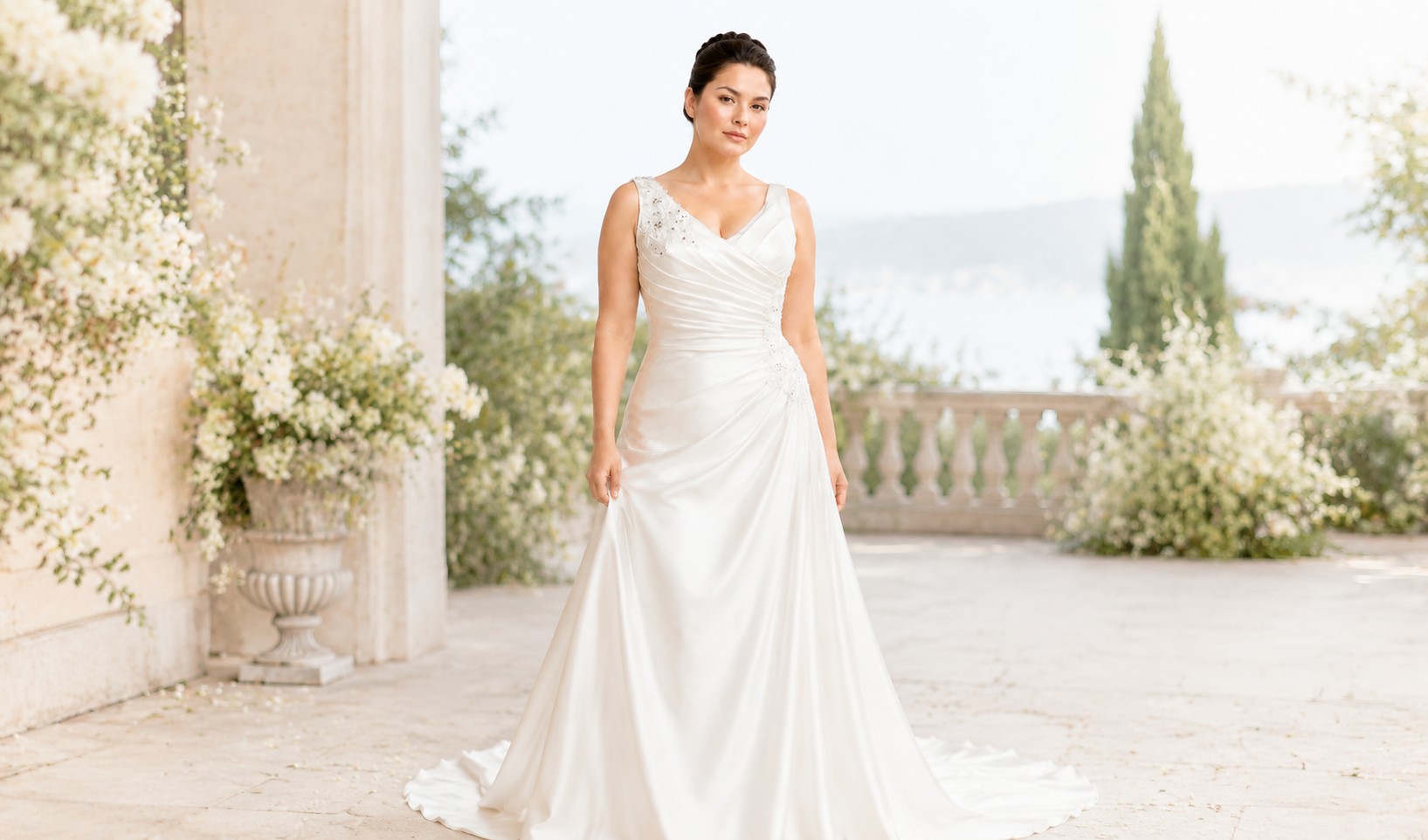
If you are a fuller-figured bride whose weight is mainly carried around your stomach, you are not alone. Many women have a lower-belly shape that they describe as a “mom apron” — a softer area that can be difficult to wedding dress because most bridal inspiration does not show this body type often enough.
It is completely understandable to feel nervous about wedding dress shopping. Many brides worry that a gown will cling to their stomach, highlight areas they feel insecgure about, or force them to rely on uncomfortable shapewear.
But the secret to a flattering wedding dress is not squeezing your body into a smaller shape. The most effective dresses do not simply “cover” the belly — they use architectural design to redirect the eye and create a balanced silhouette.
Here are the most effective wedding dress design solutions for brides who want more comfort and confidence around the midsection.
1. Basque Waist A-Line: Creating Vertical Lines Instead of Horizontal Focus
A traditional A-line wedding dress is already a flattering choice, but an A-line with a Basque waistline takes tummy coverage to another level.
A Basque waist features a gentle V-shaped dip at the front of the bodice, creating a longer, more defined waistline instead of a straight horizontal seam.
How It Works:
A straight waist seam cuts across the widest part of the torso and can visually emphasize width. The Basque V-shape does the opposite — it draws the eye downward and creates a vertical line through the center of the body.
This helps elongate the torso, visually break up the lower belly area, and create a more sculpted silhouette without feeling tight.
Best For:
- Brides who want a defined waist but do not want attention focused on the stomach
- Brides who love a classic, romantic, or royal-inspired bridal look
2. Empire Waist with Fluid Pleating: Moving the Focus Above the Belly
An empire waist wedding dress places the waistline higher, usually just below the bust or around the narrowest part of the ribcage. The skirt then flows naturally downward instead of starting at the stomach.
How It Works:
The eye naturally follows the waistline of a dress. By moving that visual break upward, the design avoids cutting across the fullest area of the abdomen.
When combined with soft, fluid pleating, the fabric creates movement and dimension rather than clinging to the body.
One bride described the feeling perfectly:
“Since the waistline sits a bit higher it hides everything very nicely and I don’t feel any insecurity about my stomach the way I had anticipated I would.”
Best For:
- Brides who want maximum comfort around the stomach
- Brides who dislike tight shapewear or restrictive dresses
- Brides looking for a soft, effortless, elegant silhouette
3. Built-In Corsetry with Lace-Up Back: Structure Instead of Compression
Many brides assume shapewear is the only way to create a smoother shape, but bridal gowns with proper internal construction can often provide better support.
A dress with internal boning, structured corsetry, and a lace-up back works differently from shapewear.
How It Works:
Instead of squeezing the body from the outside, internal boning creates a supportive framework inside the gown. The structure helps hold the bodice in place, smooth the silhouette, and distribute support around the ribcage and waist.
A lace-up corset back is especially helpful because it allows small adjustments throughout the day. Unlike a fixed zipper, it can adapt to your body and provide a customized fit.
Design Tip:
Look for:
- Internal boning
- Corset bodice
- Lace-up back closure
Avoid gowns that rely only on tight compression fabrics to create shape.
4. Asymmetrical Diagonal Ruching: Using Optical Illusion Through Fabric Direction
Ruching can be one of the most effective tummy-camouflaging techniques — but the direction of the fabric matters.
How It Works:
Diagonal or asymmetrical ruching guides the eye across the body instead of directly toward the center of the stomach. The angled lines create movement, soften natural curves, and break up the visual focus on the midsection.
Cross-over draping can create a similar effect by creating a flattering flow across the torso.
What To Avoid:
Be careful with tight, horizontal ruching directly across the belly. Horizontal lines naturally emphasize width and can make the stomach area appear broader.
Look For:
- Diagonal ruching
- Asymmetrical draping
- Cross-over pleating
5. Peplum and Tiered Overlays: Creating a Natural Layer of Coverage
For brides who prefer more coverage, structured details like peplum layers, overskirts, or tiered overlays can provide beautiful dimension.
How It Works:
Instead of hiding the body under extra fabric, these details create intentional layers that float away from the stomach area. The added structure creates shape around the waist while keeping the fabric from clinging.
This is especially effective for brides who want a fashion-forward look rather than a traditional “concealing” style.
Best For:
- Modern romantic gowns
- Couture-inspired designs
- Brides who want texture and movement
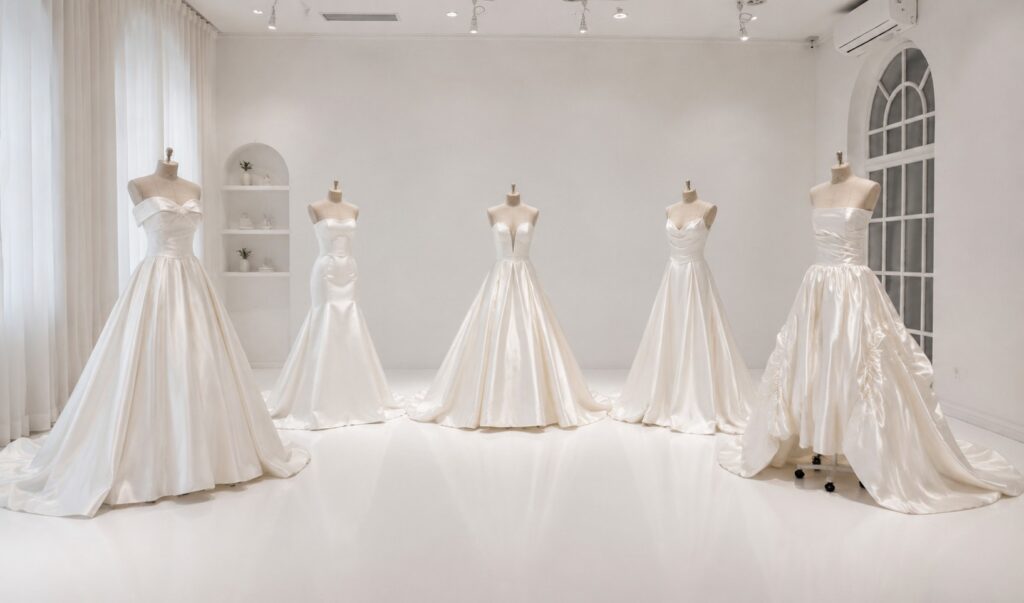
Quick Reference: Wedding Dress Features That Help Hide the Belly
| Design Element | Why It Works | Keywords to Look For |
| Waistline Placement | Redirects attention away from the widest part of the stomach | Basque Waist, Empire Waist, Drop-V Waist |
| Bodice Structure | Creates support without uncomfortable compression | Internal Boning, Corset Bodice, Lace-Up Back |
| Fabric Direction | Uses optical illusion to soften body contours | Diagonal Ruching, Cross-Over Draping |
| Skirt Shape | Allows fabric to flow away from the midsection | A-Line Skirt, Flowing Pleats, Tiered Skirt |
| Layered Details | Creates intentional coverage and dimension | Peplum, Overskirt, Overlay |
The Goal Is Not to Hide Your Body — It Is to Find a Dress Designed for Your Body
Your wedding dress should not feel like something you have to fight against all day. The right gown should support you, move with you, and allow you to focus on the moments that matter.
A beautiful bridal look is not created by making your body smaller. It is created by understanding how fabric, structure, and proportion work together.
When a dress is designed with the right waistline, construction, and visual balance, you do not need to spend your wedding day thinking about your stomach. You can simply enjoy being the bride.