
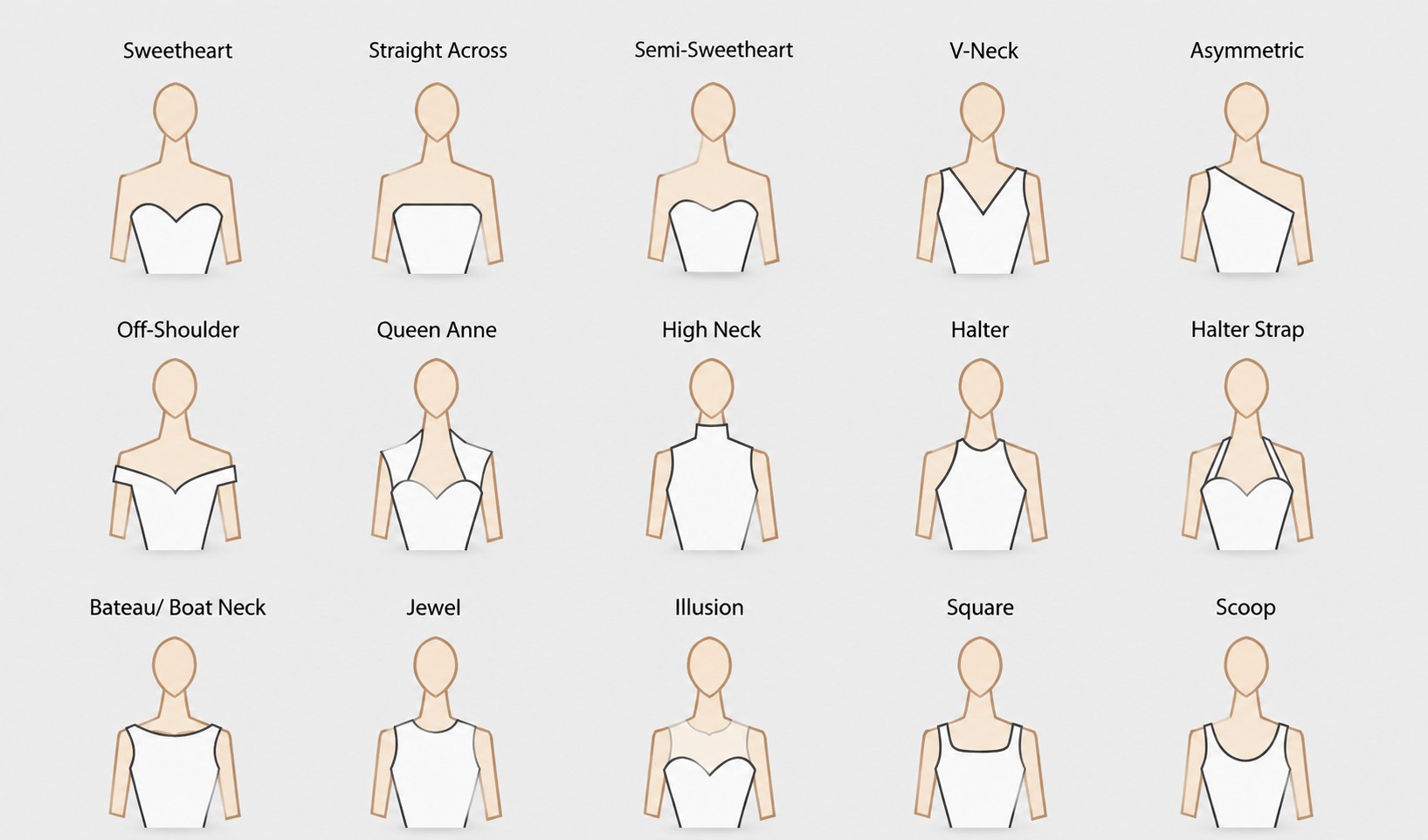
The neckline is one of the most defining elements of a wedding dress. While the silhouette determines the overall shape of the gown, the neckline frames the face, shapes the décolletage, and influences how the upper body appears in photographs.
From sculpted sweetheart designs to structured bateau styles, each neckline creates a different balance of proportion, coverage, and visual impact. Understanding the construction behind each style can help you choose a destination wedding dress that works with your body, fabric choice, and personal aesthetic.
Sweetheart Neckline: Sculpted Romance
The sweetheart neckline follows the natural curve of the bust, creating a heart-shaped contour across the décolletage. It is one of the most recognizable bridal necklines because it combines feminine curves with a structured silhouette.
Best For: Brides who want to highlight the collarbone, define the bust line, or create a more sculpted upper-body shape.
Structural Detail: Often supported by internal boning, corsetry, or reinforced seams to maintain the curved neckline while providing support.
Design Direction: Works especially well with structured fabrics such as mikado silk, satin, and lace corsetry. Pair with drop earrings or an updo to keep attention on the neckline.
Scoop Neckline: Soft Curves and Natural Balance
The scoop neckline features a rounded U-shaped curve that creates an open, gentle frame around the chest and collarbone.
Best For: Brides looking for a softer alternative to sharper necklines or a more relaxed bridal silhouette.
Structural Detail: The depth and width of the curve determine the overall effect—higher scoops feel classic, while deeper versions create a more open décolletage.
Design Direction: Particularly suited to fluid fabrics such as silk crepe, chiffon, and lightweight tulle.
V-Neckline: Lengthening and Streamlined
The V-neckline uses diagonal lines that draw the eye downward, creating the appearance of a longer neckline and torso.
Best For: Brides who want to elongate their proportions or add definition through the upper body.
Structural Detail: Deeper V-neck designs require careful construction, often using reinforced bodices or internal support to maintain shape.
Design Direction: Clean fabrics like crepe and satin enhance the vertical line of the neckline and complement modern silhouettes.
Square Neckline: Architectural and Vintage-Inspired
The square neckline features a straight horizontal edge with defined corners, creating a structured frame across the collarbone.
Best For: Brides who want stronger shoulder definition or a balance between vintage influence and modern minimalism.
Structural Detail: This neckline depends on precise tailoring and fabrics with enough structure to maintain its geometric shape.
Design Direction: Especially striking in mikado silk, duchess satin, and structured lace.
Bateau Neckline: Minimalist Sophistication
Also known as the boat neckline, the bateau extends horizontally across the collarbone from shoulder to shoulder.
Best For: Brides who prefer refined coverage or want to visually broaden narrow shoulders.
Structural Detail: Because the neckline relies on clean horizontal lines, precise pattern cutting is essential for maintaining balance.
Design Direction: Commonly seen in couture bridal gowns using mikado silk, crepe, or other polished fabrics. A sleek updo allows the neckline to remain the focus.
Off-the-Shoulder Neckline: Open Collarbone Framing
The off-the-shoulder neckline sits below the shoulders, exposing the collarbone and shoulder line.
Best For: Brides who want to emphasize the upper body while maintaining a classic bridal feel.
Structural Detail: Requires careful support in the bodice to keep the neckline secure and comfortable throughout the day.
Design Direction: Works beautifully with lace, satin, and draped fabrics. Statement earrings often work better than necklaces with this neckline.
Halter Neckline: Sculptural and Contemporary
The halter neckline extends upward toward the neck, directing attention to the shoulders, neck, and back.
Best For: Brides seeking a modern silhouette or wanting to highlight shoulder and back structure.
Structural Detail: The fit around the neck and shoulders is critical, as the neckline carries both visual and structural weight.
Design Direction: Pairs naturally with sleek fabrics such as silk satin and crepe, especially in minimalist gowns.
High Neckline: Refined Coverage
The high neckline rises toward the base of the neck, creating a more covered and formal silhouette.
Best For: Brides who prefer a sophisticated, vintage-inspired, or more modest bridal look.
Structural Detail: The neckline requires careful tailoring around the collar area to avoid adding unnecessary visual weight.
Design Direction: Often enhanced through lace, embroidery, or structured fabrics that emphasize the neckline’s shape.
Jewel Neckline: Clean and Classic
The jewel neckline is a rounded neckline that sits close to the base of the neck, creating a simple and polished frame.
Best For: Brides who prefer minimalist designs or want accessories and fabric details to take priority.
Structural Detail: Because the design is simple, precise finishing and proportion are essential.
Design Direction: Works especially well with modern crepe gowns, satin dresses, and clean silhouettes.
One-Shoulder Neckline: Modern Asymmetry
The one-shoulder neckline creates an asymmetrical silhouette with one side covered and the other exposed.
Best For: Brides looking for a contemporary, fashion-forward alternative to traditional bridal necklines.
Structural Detail: The pattern must carefully balance the asymmetrical shape to maintain comfort and visual harmony.
Design Direction: Best paired with simple accessories and modern gown silhouettes where the neckline becomes the focal point.
Queen Anne Neckline: Regal Architecture
The Queen Anne neckline combines a high-standing collar at the back with a lower front neckline, often transitioning into a sweetheart or scoop shape. Inspired by Victorian-era fashion, it creates a distinctive balance between coverage and décolletage.
Best For: Brides seeking upper-back coverage, a regal silhouette, or a design that adds structure to the shoulders.
Structural Detail: The combination of a raised back and sculpted front requires careful pattern construction to maintain proportion and comfort.
Design Direction: Particularly striking in structured fabrics such as mikado silk or detailed lace like Chantilly lace. A polished bun or low chignon keeps the neckline architecture visible.
Make the Dress Truly Yours: Custom Neckline Alterations by InWeddingDress
Finding a wedding dress you love does not always mean every detail is exactly what you imagined. You may fall in love with the silhouette, fabric, or overall design of a gown, but wish the neckline had a slightly different shape—a higher front, a softer curve, broader coverage, or a more open décolletage.
Because the neckline plays such a defining role in framing your face and upper body, even a subtle adjustment can completely transform the overall aesthetic.
At InWeddingDress, we believe you shouldn’t have to compromise on your vision. We offer custom neckline alterations services to help you personalize your gown seamlessly. For just $10, you can adapt the neckline of your chosen design—ensuring the bodice aligns perfectly with your body type, comfort level, and personal style.
A wedding dress should feel uniquely yours. If a gown feels almost perfect, a small customization can make all the difference.