
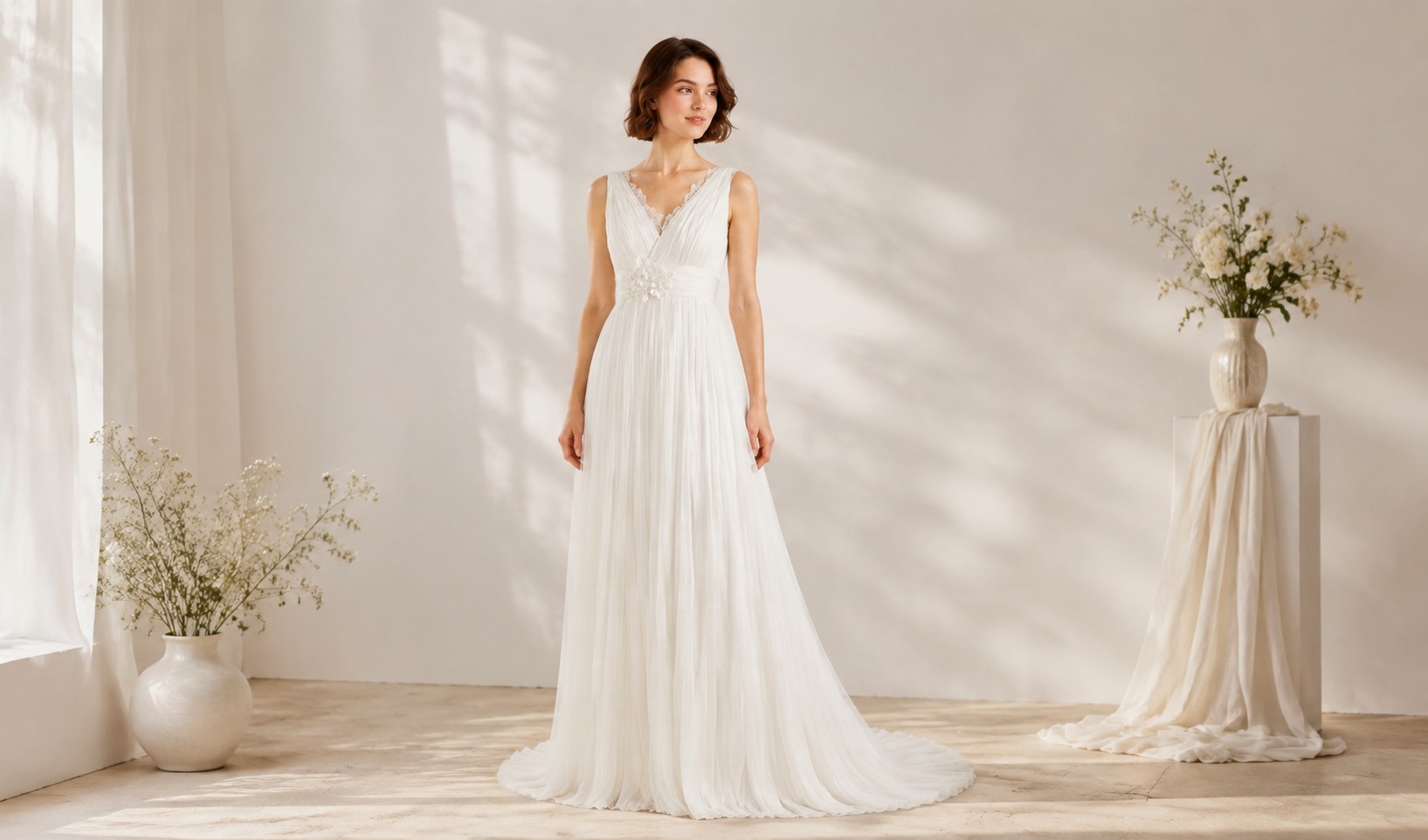
An August wedding looks beautiful in photos, but the dress has to handle more than just the ceremony. Hours under direct sunlight, outdoor portraits, humidity, and moving between venues can quickly turn a beautiful gown into an uncomfortable one. Choosing the right summer wedding dress is about more than the silhouette—it is about how the fabric, lining, construction, and details work together when you wear it for an entire day.
Start With the Fabric—Then Check the Lining
A lightweight outer layer does not always mean a cool wedding dress. A gown made with airy chiffon or delicate lace can still feel warm if the lining underneath is thick or lacks breathability.
For summer weddings, chiffon remains a popular choice because it is lightweight, flowy, and easy to move in. It works especially well for beach weddings, garden ceremonies, and destination celebrations. Silk offers a smooth feel and natural breathability, making it a comfortable option for long hours of wear. Lace can also be suitable for summer, especially when paired with a lightweight lining instead of multiple heavy layers.
When shopping for a summer gown, do not only ask about the outer fabric. Check the lining, the number of layers in the skirt, and whether the dress allows airflow. A breathable construction often matters more than the fabric name alone.
Choose a Bodice That Works in Hot Weather
The bodice is often where summer comfort is decided. Structured gowns can look stunning, but heavy corsetry, thick padding, and multiple internal layers may trap more heat around the torso.
If you are planning a warm-weather wedding, details such as open-back designs, spaghetti straps, illusion panels, and lightweight corset construction can reduce coverage while maintaining support. These features allow more airflow without losing the fitted bridal shape many brides want.
For brides who love strapless or structured gowns, pay attention to how the bodice is built. Internal support should come from thoughtful construction, such as properly placed boning, lining, and fitted panels—not simply from adding more layers of fabric.
A well-made structured dress should stay secure during walking and dancing without feeling overly tight or restrictive.
Match the Dress to Your Venue
Your wedding location should influence your fabric, silhouette, and train choice.
For a beach wedding, lightweight designs usually work best. Chiffon A-line gowns, sheath dresses, and dresses with a sweep train are easier to manage on sand and in windy conditions. Heavy beading, thick satin layers, and extra-long trains may collect sand and become difficult to move in.
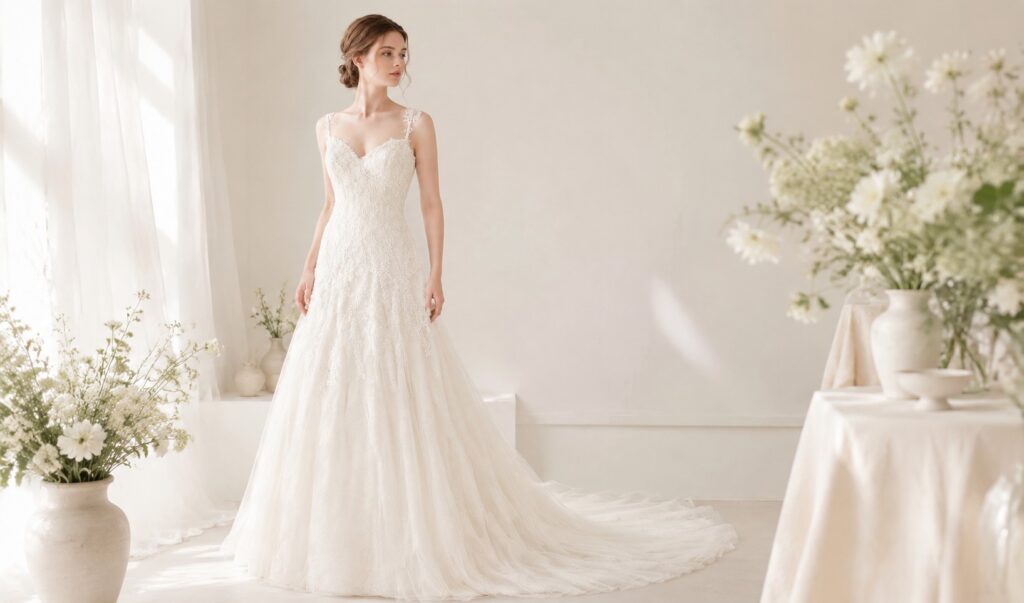
For a garden wedding, soft textures and romantic details pair naturally with the setting. Lace appliqués, floral details, and flowing A-line silhouettes can create a bridal look that feels elegant without adding unnecessary weight.
For a formal ballroom wedding, you have more flexibility. Structured satin gowns, fuller skirts, and more dramatic silhouettes can work well, especially when the venue has reliable air conditioning. In this setting, the focus can shift more toward the gown’s shape and construction.
Plan the Skirt and Train Before the Wedding Day
A summer wedding does not require giving up a full-length gown. Many brides still choose traditional floor-length dresses or dramatic trains—the key is planning how the dress will function after the ceremony.
A cathedral train creates a dramatic entrance, but it can become difficult during outdoor photos or the reception. If you choose a longer train, consider a built-in bustle that allows the train to be lifted and secured after the ceremony.
For brides who want more movement and airflow, details such as a high slit can make a long gown easier to walk in while adding a modern touch. Short and tea-length wedding dresses are also practical choices for courthouse ceremonies, casual weddings, or a second reception look.
Look for Details That Improve Summer Wearability
Small design choices can have a major impact on how a dress feels throughout the day.
An open back reduces coverage and creates ventilation. Removable sleeves give flexibility when temperatures change from afternoon to evening. Lightweight embellishments, such as lace appliqués and delicate embroidery, can add detail without the extra weight of heavy beadwork.
For outdoor summer weddings, colors such as ivory, champagne, and soft blush can complement natural surroundings while offering an alternative to traditional bright white.
The right summer wedding dress is not simply the one that looks beautiful on a hanger. It is the gown that stays breathable during photos, moves easily throughout the celebration, and supports you from the first walk down the aisle to the final dance. By paying attention to fabric, construction, venue, and practical details, you can find a dress that looks right and feels right in warm weather.