
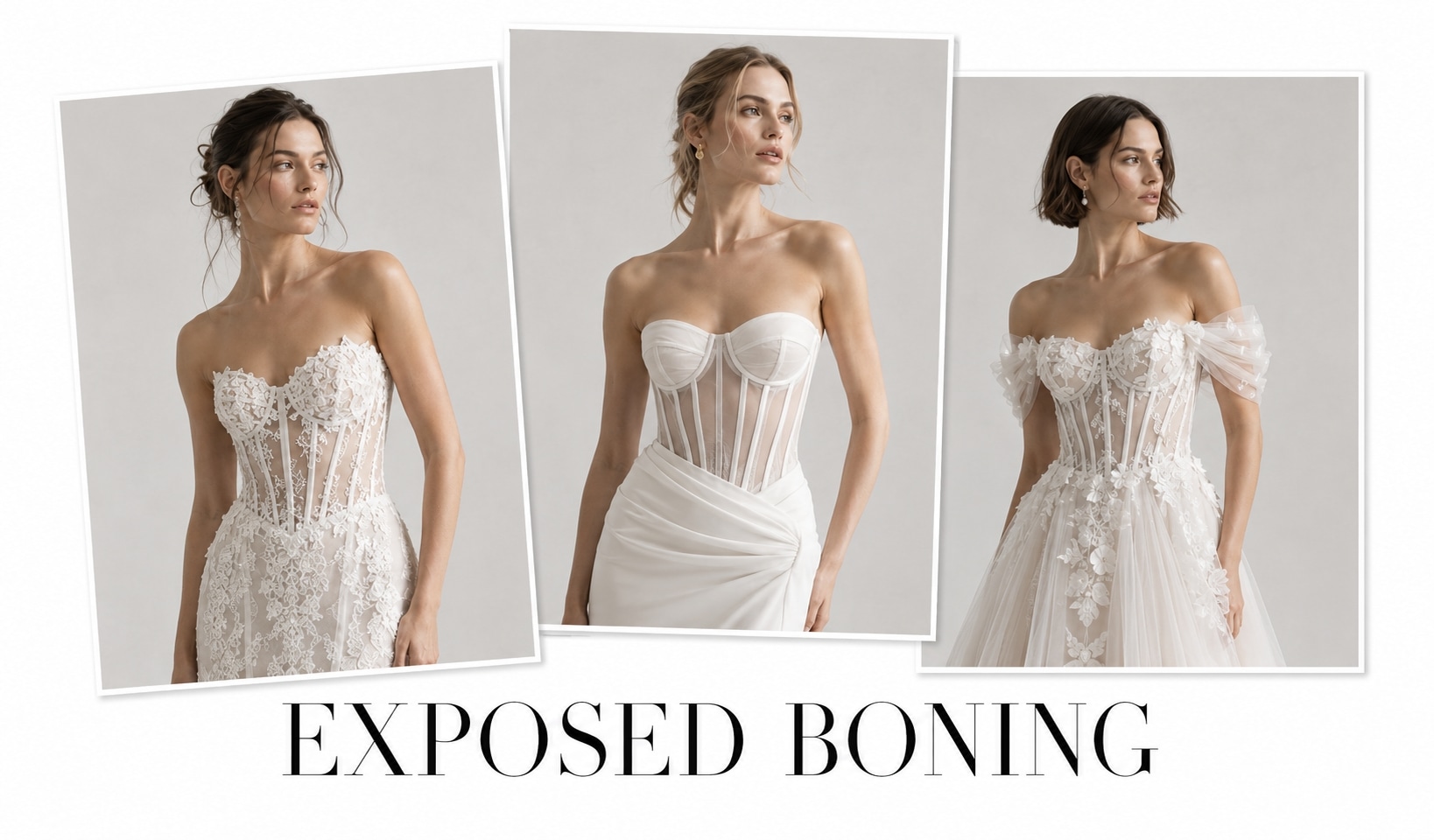
When you look at a wedding dress, the first things you notice are usually the satin, lace, neckline, or silhouette. But the clean shape of a structured gown often comes from what is built underneath the outer fabric.
One of the key components is boning – narrow, semi-rigid strips sewn into the inner construction of the bodice. Bridal gowns may use lightweight synthetic boning such as Rigilene, firmer plastic boning, or steel boning for more structured corsetry. The choice depends on how much support and flexibility the bodice requires.
Even though it’s hidden inside the bodice, boning directly affects how a structured dress looks, feels, and stays in place as you move.
What Does Boning Actually Do?
Boning gives the bodice vertical structure. As you sit, walk, bend, and move, a fitted bodice without enough internal support can start to fold, sag, or bunch around the waist. Boning helps keep the fabric smooth instead of allowing it to collapse onto itself.
It also helps the upper part of the dress stay in position. This is especially important in strapless or off-the-shoulder designs, where there are no conventional shoulder straps carrying the load. In a properly constructed gown, boning works with the fitted bodice, cups, lining, seams, and other internal support layers to keep the neckline stable.
Bridal boning is designed for structural support rather than aggressive waist shaping. It helps the bodice follow a smooth, natural line without tightly compressing the torso. The result should feel supportive and secure rather than restrictive.
Where Is Boning Inside a Wedding Dress?
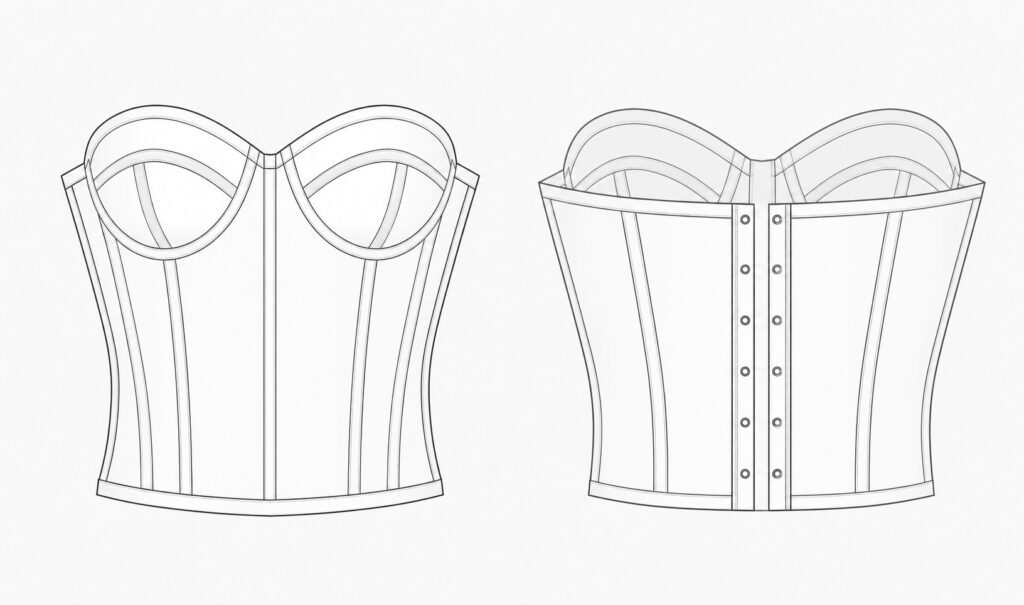
Boning is normally positioned along the structural lines of the bodice. Depending on the pattern, it may run alongside princess seams, side seams, front bodice panels, or sections of an inner corset. This placement allows the support to follow the shape of the body without being visible from the outside.
The boning itself should not sit directly against your skin. During construction, each strip is usually enclosed inside a boning channel, which holds it securely in place. The inner structure is then covered by the dress lining, creating a softer layer between the boning and the body.
That construction makes a big difference to comfort. A structured wedding dress may naturally feel firmer than a relaxed chiffon gown, but the boning should not poke or create sharp pressure points.
If you can feel the end of a boning strip digging through the lining, don’t assume that is simply how a structured wedding dress is supposed to feel. The issue may come from the end of the boning, the channel, the lining, or the fit of the bodice.
A simple fitting test can tell you a lot: sit down, walk around, raise your arms, and bend slightly. The bodice should remain in position without sharp pressure or constant adjusting.
Does Boning Make Alterations More Difficult?
Boning can make bodice alterations more involved, particularly when the dress needs to be taken in or let out around the bust or waist.
With a softly constructed chiffon dress, a tailor may be able to adjust the fit mainly through the seams and lining. A structured bodice has additional internal components to work around. If boning sits beside or across the area being altered, the tailor may need to open the lining, remove or reposition the boning, adjust the bodice seam, rebuild the boning channel, and then close the lining again.
Lace appliqués, cups, sheer panels, and other construction details can add another layer of work. The more structured the bodice is, the more important it becomes to have alterations handled by someone familiar with bridal construction.
This doesn’t mean a boned wedding dress cannot be altered. It simply makes the starting size more important. Buying a heavily structured gown several sizes too large with the expectation of dramatically reducing the bodice later can create unnecessary alteration work. Choosing a size reasonably close to your measurements usually gives the tailor a better starting point.
Boning is easy to overlook when you’re comparing lace, necklines, and silhouettes, but the inside of the bodice deserves just as much attention. A well-built structured gown should stay smooth and supportive as you sit, walk, and raise your arms. You should feel firm support—not sharp edges, poking, or the need to keep pulling the dress back into place.