
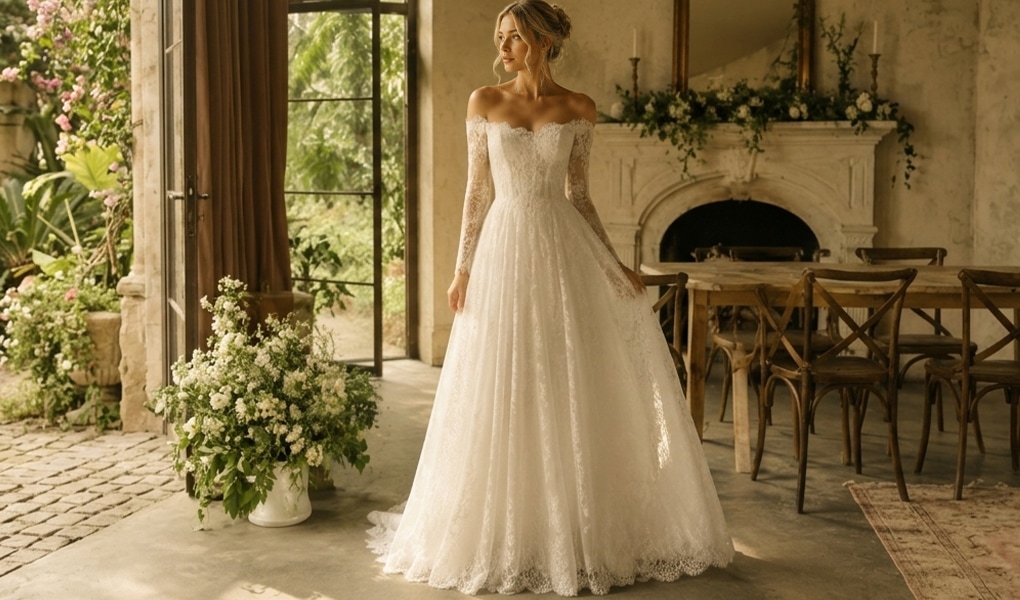
Sleeves are often viewed as a decorative detail for a wedding gown. In reality, sleeve design has a major impact on the overall balance of a dress. The shape, length, and construction of a sleeve can change the way the shoulders are framed, how the upper body is proportioned, and how comfortably a bride can move throughout the wedding day.
A beautiful sleeve needs to work with the rest of the gown. The right choice depends on the neckline, fabric, wedding style, and most importantly, how the sleeve feels when walking, hugging guests, raising a glass, or dancing.
Cap Sleeve & Short Sleeve: Subtle Coverage With Different Effects
Cap sleeves are the shortest sleeve style, extending only slightly over the shoulder. Short sleeves continue farther down the upper arm, usually providing more coverage while maintaining a simple silhouette.
Both styles add structure to a sleeveless or strapless gown without creating the visual weight of a full sleeve. They are often used with lace, illusion fabric, or lightweight materials to create a softer transition around the shoulder.
However, cap sleeves require careful attention to placement. Because the sleeve edge often ends near the widest part of the upper arm, a rigid or tightly fitted cap sleeve can unintentionally draw attention to that area. Brides looking for upper-arm coverage may prefer soft lace, stretch lace, or illusion fabric that follows the body without creating a sharp cutoff.
Short sleeves generally offer more flexibility because the length extends beyond the shoulder area. A fitted lace short sleeve creates a classic bridal appearance, while a softer fabric sleeve creates a more relaxed look.
Three-Quarter Sleeve: Balanced Coverage and Detail
Three-quarter sleeves wedding dresses extend below the elbow and usually end around the forearm. This length creates a balance between coverage and openness because the wrist remains visible.
The exposed wrist area keeps the upper body from appearing visually heavy and provides space for accessories such as bracelets or a statement ring. For this reason, three-quarter sleeves are often favored in gowns with detailed lace or fitted bodices.
Fabric choice strongly affects the final appearance. Lace and illusion mesh create a delicate effect, while stretch fabrics provide a closer fit with greater comfort during movement.
This sleeve length is especially practical for brides who want more coverage while still needing freedom for everyday wedding activities.
Long Sleeve: Structure, Texture, and Fit
Long sleeves extend from the shoulder to the wrist and can create completely different looks depending on their construction.
A fitted long sleeve, often made with lace, illusion mesh, or stretch fabric, follows the natural shape of the arm and highlights craftsmanship through details such as embroidery, appliqué, or buttons. These sleeves are common in traditional and formal bridal designs.
The main consideration with fitted long sleeves is movement. If the fabric has limited stretch or the sleeve is cut too tightly around the shoulder and elbow, it may restrict arm movement. Brides should test simple actions during fittings, including raising both arms, reaching forward, and embracing someone.
A looser long sleeve wedding dress design provides more movement and creates a softer relationship between fabric and body.
Flutter Sleeve: Soft Draping for Upper-Arm Coverage
Flutter sleeves are created from lightweight fabric that falls away from the shoulder or upper arm rather than fitting closely against the body.
Their strength comes from movement. The fabric creates a soft layer over the upper arm, which can visually soften the area without adding structure or bulk.
Chiffon, tulle, and lightweight lace are commonly used because they allow the sleeve to move naturally with the bride. Flutter sleeves work particularly well with gowns that have flowing skirts or relaxed silhouettes where movement is part of the overall design.
For brides who want arm coverage without the restriction of a fitted sleeve, flutter sleeves provide one of the most comfortable options.
Puff Sleeve & Juliet Sleeve: Volume With Historical Influence
Puff sleeves and Juliet sleeves share a connection through volume, but their construction creates different effects.
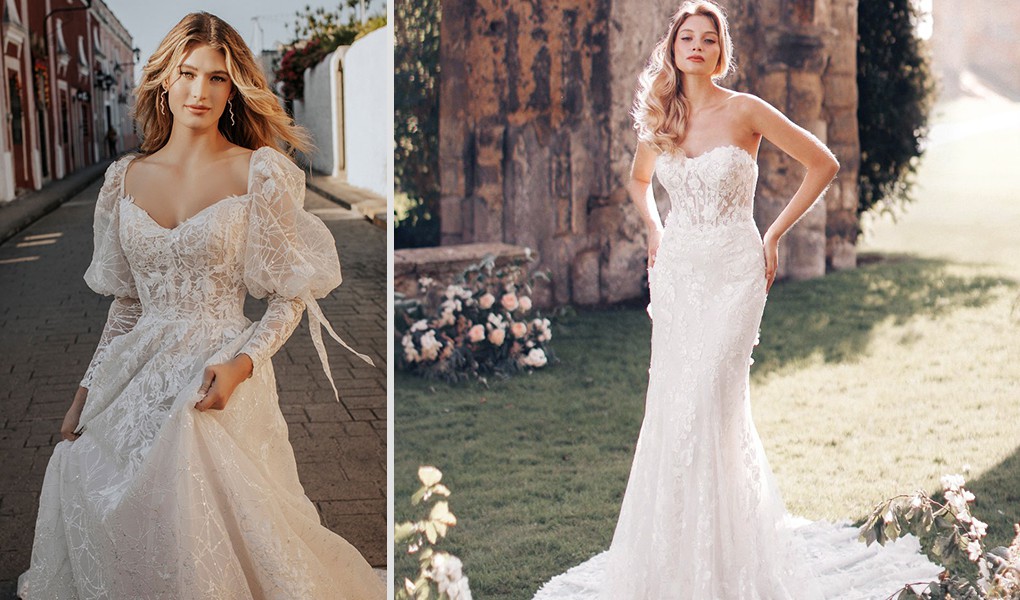
A puff sleeve concentrates fullness around the shoulder or upper arm. The amount of volume can range from a subtle gathered detail to a dramatic statement sleeve. Because volume adds visual width, the placement and size of the puff are important design considerations.
Juliet sleeves take inspiration from Renaissance fashion. They typically feature a fuller, gathered shoulder area combined with a fitted sleeve that narrows along the arm. This contrast between volume and structure gives the sleeve a more historical and couture-inspired appearance.
Juliet sleeves are often paired with corset bodices, lace details, and structured gowns where the sleeve becomes part of a larger vintage-inspired design.
Bishop Sleeve & Bell Sleeve: Controlled Volume vs. Open Movement
Bishop and bell sleeves both create volume, but the difference lies in the wrist design.
A bishop sleeve has fullness throughout the arm and gathers into a fitted cuff at the wrist. The cuff controls the volume and creates a defined finish, making the sleeve feel more sculptural. This style works well with delicate fabrics such as chiffon, soft tulle, and lace.
A bell sleeve gradually widens toward the hem and remains open at the wrist. Instead of being controlled by a cuff, the sleeve creates a wider, flowing shape that moves freely with the bride.
The practical difference becomes noticeable during the wedding day. Bishop sleeves usually keep fabric closer to the body, while long bell sleeves may require more attention during dinner, cake cutting, or dancing because the open sleeve can move into the surrounding space.
Off-the-Shoulder Sleeve: Framing the Collarbone With a Mobility Check
Off-the-shoulder sleeves sit below the shoulder line, exposing the shoulders and creating a horizontal frame across the neckline.
This design draws attention toward the collarbone and can visually broaden the shoulder line, making it especially flattering for brides who want to create more balance around a narrower shoulder area. Brides with naturally broader shoulders may prefer a softer draped version rather than a structured horizontal design.
The most important consideration with off-the-shoulder sleeves is mobility. Because the sleeve is attached below the shoulder joint, some structured designs can limit arm movement. A bride should test whether she can comfortably raise her arms, hug guests, and move during the first dance.
Flexible construction, hidden elastic, or detachable straps can provide additional support without sacrificing the design.
Choosing the Right Sleeve Style
Sleeves influence both the appearance and the experience of wearing a wedding gown. Before choosing a style, consider how much coverage you want, how you want your shoulders and arms to be framed, and how much movement your wedding day requires.
During fittings, do more than stand in front of the mirror. Move naturally:
- Raise your arms as if greeting guests.
- Sit down to check shoulder tension.
- Practice walking and turning.
- Try a few dance movements.
The best sleeve design should enhance the gown’s overall structure while allowing the bride to feel comfortable throughout the celebration. Like every element of a wedding dress, sleeves are part of the larger design that shapes how the gown looks, moves, and feels on the most important day.