
When brides search for a wedding gown, the silhouette usually gets the most attention. However, the waistline is one of the most influential design details in determining how a gown shapes the body.
The waistline marks the transition between the bodice and the skirt, but its impact goes far beyond construction. A change of only a few inches in waist placement can alter the entire proportion of a gown—lengthening the legs, defining the torso, or creating a stronger hourglass effect.
From the timeless natural waist to the corset-inspired basque waist, each placement creates a different visual structure and changes the way the gown fits and moves.
Natural Waist: The Classic Bridal Balance
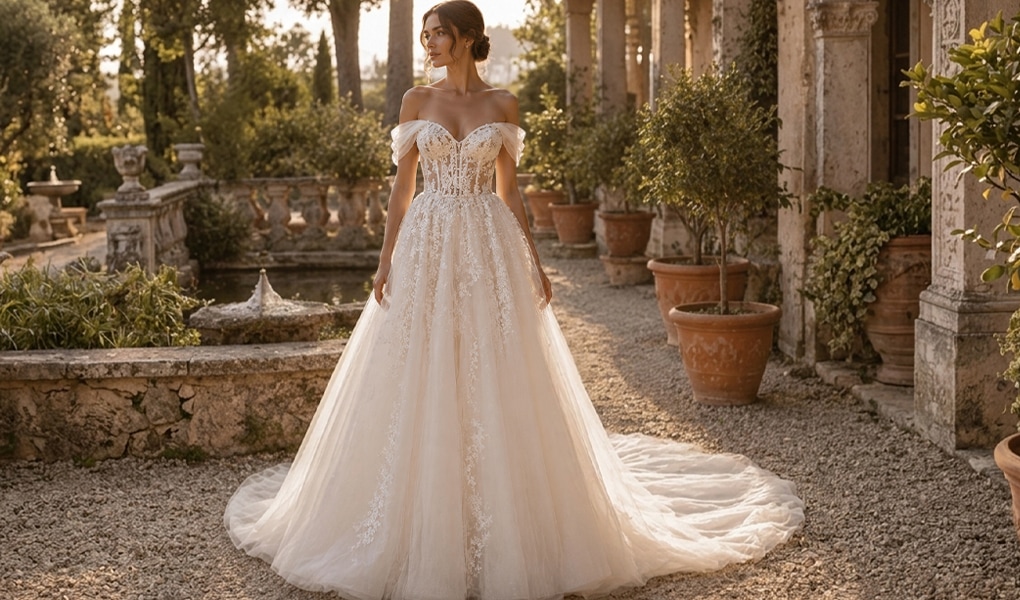
The natural waist sits at the narrowest point of the torso, usually between the ribcage and hips. It is the most traditional waist placement and remains a foundation of many classic wedding gown designs.
Because it follows the body’s natural structure, this waistline creates a balanced transition between the bodice and skirt. It defines the waist without dramatically shifting the body’s proportions, which is why it works across a wide range of bridal styles.
Natural waist gowns are often paired with A-Line, Ball Gown, and Fit-and-Flare silhouettes. A structured bodice can enhance definition, while softer fabrics create a more relaxed transition into the skirt.
For brides looking for a timeless bridal proportion, the natural waist remains one of the most reliable choices.
Empire Waist: The High-Waisted Illusion
The empire waist sits just below the bust, significantly higher than the natural waistline. By raising the visual waist point, this design creates a longer vertical line through the lower body.
This placement is especially effective for brides who want to create the appearance of added height. Petite brides often appreciate empire waist wedding gowns because the raised waistline visually extends the legs and prevents the dress from being divided into shorter sections.
The design also provides additional comfort around the midsection because the gown does not rely on a tightly defined waist. This makes it a practical option for destination weddings, outdoor ceremonies, and brides who prefer a more relaxed fit.
Lightweight fabrics such as chiffon, soft tulle, and flowing lace are commonly used because they enhance the movement created by the higher waist placement.
Drop Waist: A Fashion-Forward Extended Torso
A drop waist extends below the natural waist, usually reaching toward the upper hip area. Instead of emphasizing the narrowest point of the torso, it creates a longer bodice line before the skirt begins.
This placement gives wedding gowns a distinctive fashion quality and is often associated with vintage-inspired designs, especially styles influenced by the 1920s.
The visual effect is important to consider: while a drop waist elongates the torso, it can also shorten the appearance of the legs. Brides with a naturally longer leg line or a shorter torso often find this proportion especially flattering, while petite brides may need to consider the overall balance of the gown.
Drop waist designs work particularly well with sleek fabrics such as crepe and satin, where the uninterrupted vertical line becomes part of the overall look.
Basque Waist: The Corset-Inspired Waist Definition
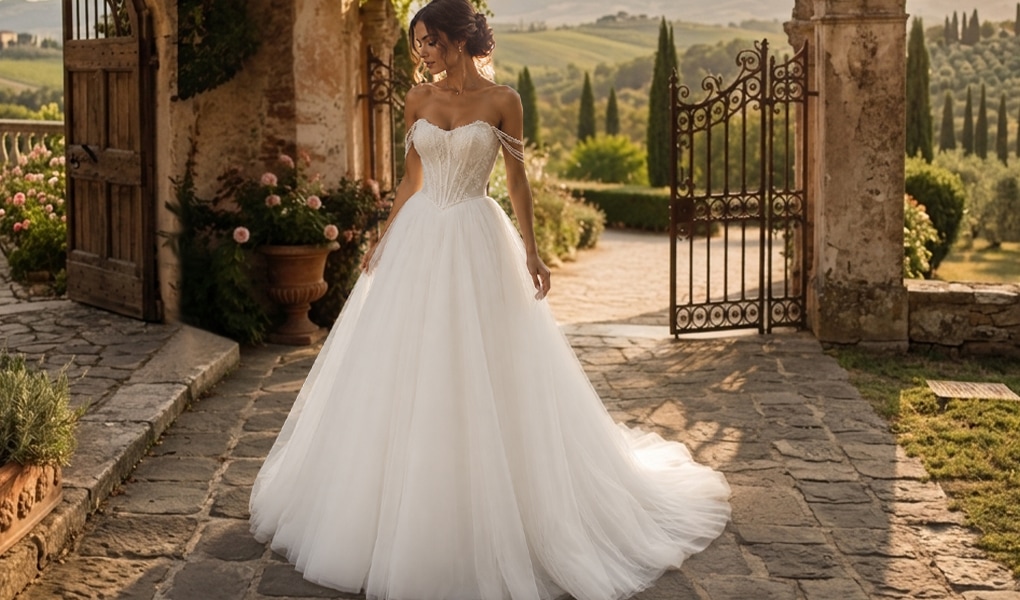
The basque waist features a pointed V-shaped extension that dips below the natural waist at the center front. Inspired by Victorian corsetry and historical bridal fashion, it has become increasingly popular in modern couture wedding designs.
The strength of the basque waist lies in its shaping effect. The downward point draws the eye toward the center of the body, creating a longer torso line while emphasizing the waist. When combined with structured boning, it can create a stronger hourglass impression.
Basque waists are frequently paired with Ball Gown and corset-style bodices, especially when designers want to combine historical references with dramatic bridal structure.
This waistline works particularly well with fabrics that support architectural construction, including structured satin, lace over corsetry, and fabrics with enough weight to hold the shape.
Asymmetrical Waist: Directional Movement and Modern Design
An asymmetrical waistline creates an uneven transition between the bodice and skirt, often through diagonal seams, draping, or gathered fabric.
Unlike traditional horizontal waist placements, the asymmetrical design introduces movement and visual direction. It can make a gown feel more contemporary and fashion-driven by shifting attention away from a standard center line.
This style is often paired with modern draping techniques, lightweight fabrics, or clean silhouettes where the waist detail becomes the main design feature.
Choosing the Right Waistline: Focus on Proportion and Comfort
The waistline is one of the most powerful tools in wedding gown design because it controls where the eye perceives the body’s center point.
When trying on gowns, consider two questions:
Where do you want the visual waist to sit?
A higher waistline can create a longer leg line, while a lower waistline creates a longer torso effect.
How does the waist feel throughout the day?
A structured corset waist may provide strong definition for formal gowns, while a softer waist placement may offer more comfort for extended wear.
The ideal waistline should support both the design of the gown and the bride’s movement throughout the wedding day. Once the proportion feels right, details such as fabric, neckline, and embellishment can complete the overall bridal look.