
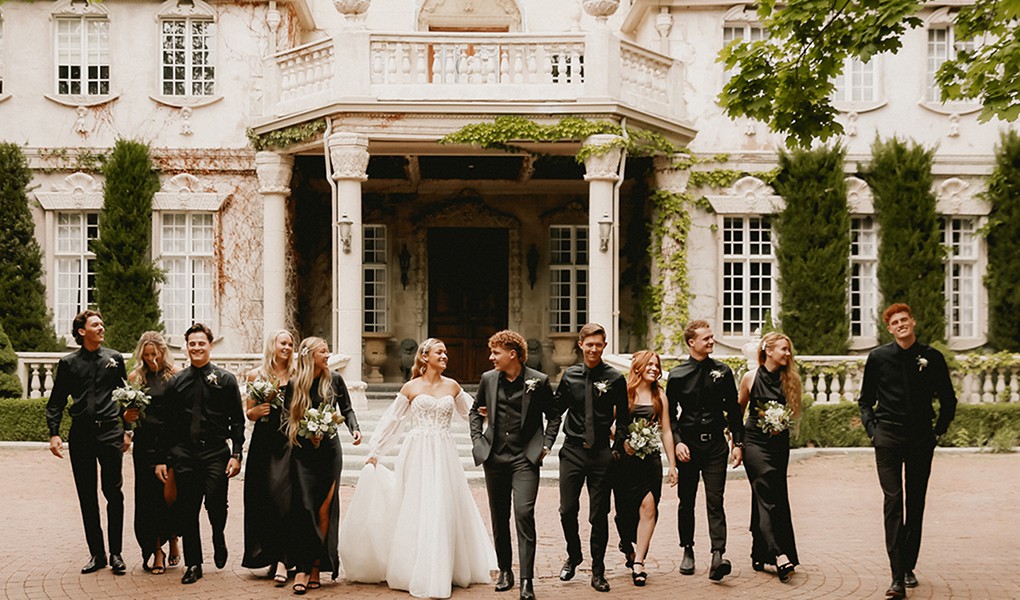
For generations, wedding parties followed a familiar formula: bridesmaids stood beside the bride, groomsmen stood beside the groom, and the outfits were designed around those traditional roles. But modern weddings are increasingly moving beyond those boundaries. More couples are choosing a coed wedding party—a mixed-gender group made up of the people who truly belong by their side, regardless of gender.
As a wedding planner, one of the questions I hear most often is not whether couples can have a coed wedding party. It is how to make everyone look like part of the same celebration.
The answer is not making everyone wear identical outfits. In fact, the most successful coed wedding parties usually embrace individual style while creating a few intentional visual connections. The goal is a cohesive look: a wedding party that feels thoughtfully designed, not like a group of guests who happened to stand together.
The key is to create visual anchors. Color, accessories, florals, and styling details can connect people across different outfits while still allowing each person to feel comfortable and authentic.
Start with a color story, not a strict dress code
The easiest way to style a coed wedding party is to begin with a clear color direction.
Instead of thinking in terms of “what should bridesmaids wear?” and “what should groomsmen wear?”, think about the overall palette of the wedding party.
One popular approach is assigning each side of the wedding party its own color identity.
For example, the bride’s side might be styled around sage green. Female attendants could wear sage green bridesmaid dresses, while a bridesman could wear a charcoal or black suit with a sage green tie, pocket square, or boutonniere that connects him visually to the group.
On the groom’s side, attendants might follow a navy palette. Groomsmen could wear navy suits, while a groomswoman could choose a navy evening gown or a tailored pantsuit in the same shade.
This approach works because everyone still looks like part of their respective team while maintaining a polished overall aesthetic.
One styling detail that makes a significant difference: always compare fabrics and colors in person. A sage green satin dress and a sage green tie purchased from different retailers may look completely different under natural light. Using fabric swatches during the planning process can prevent unexpected color mismatches.
Consider a unified wardrobe with personalized details
Not every couple wants a wedding party divided by color. For a cleaner, more classic look, many couples choose to coordinate outfits by style while using accessories to show each person’s connection to the couple.
For example:
- All attendants wearing the same suit color, regardless of gender;
- All female attendants choosing bridesmaid dresses within the same color family;
- Personal details used to distinguish the bride’s side and groom’s side.
A bridesman might wear a tie or pocket square that matches the bridal bouquet, while a groomswoman could incorporate the groom’s color palette through a corsage or floral accessory.
This approach is especially useful for couples who want a traditional wedding aesthetic while still including important people who do not fit traditional gender roles.
The overall effect feels intentional because the foundation is consistent, while the personal touches make the wedding party feel more meaningful.
A mixed palette can create the most editorial look
Some of the most visually interesting coed wedding parties move away from matching entirely.
Instead of choosing one exact color, couples can create a curated palette of three to four shades and allow attendants to select outfits within that range.
For example:
- Champagne
- Caramel
- Rust
- Deep brown
or:
- Dusty blue
- Soft gray
- Ivory
- Navy
This approach creates a more fashion-forward, magazine-inspired feeling because each person brings texture and personality into the group.
The important part is having a visual anchor. Without one, a mix-and-match wedding party can quickly feel disconnected.
That anchor might be:
- The same style of bouquet;
- Matching shoes;
- A consistent suit color for all men;
- Similar fabric textures;
- Coordinated floral accessories.
The goal is not uniformity. It is intentional harmony.
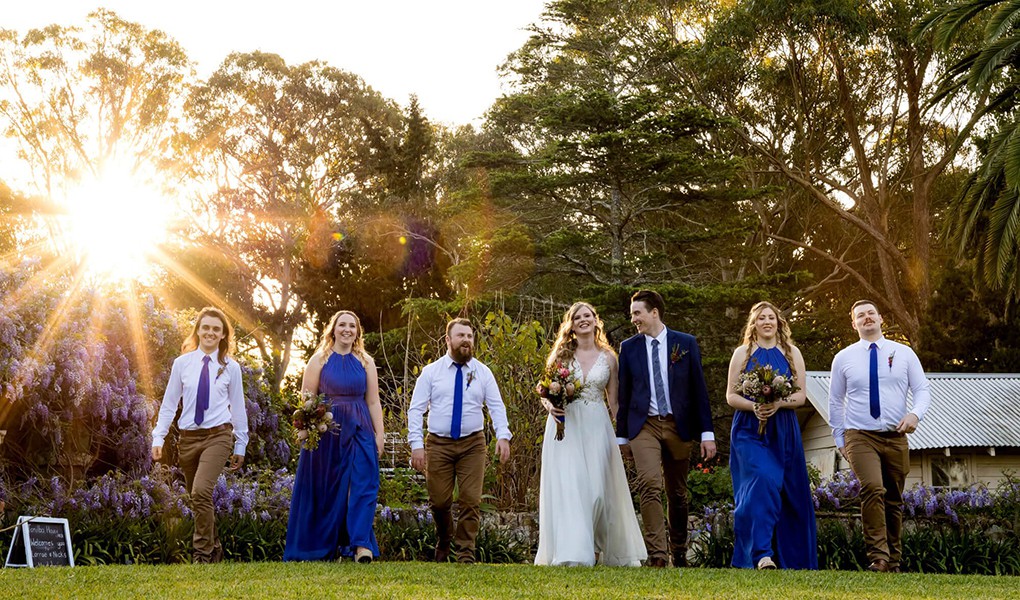
Florals are one of the easiest ways to connect a coed wedding party
Flowers often become the bridge between different wedding party outfits.
Traditionally, men wear boutonnieres and women carry bouquets, but coed wedding parties allow for more creative choices.
A bridesman can wear a boutonniere that incorporates flowers from the bridal bouquet, creating a direct visual connection to the bride’s side.
A groomswoman may carry a smaller bouquet, wear a wrist corsage, or choose a floral pin designed to complement the suit or dress.
These details are small, but they make a significant difference in photographs because they visually connect everyone standing together.
Think carefully about ceremony entrances and placement
Once you move beyond traditional wedding party roles, ceremony logistics become part of the styling conversation.
During the ceremony, attendants do not need to be arranged by gender. The more natural approach is usually to group people by relationship.
The bride’s chosen attendants stand with the bride, and the groom’s chosen attendants stand with the groom.
For the processional, couples have several options.
Some prefer a traditional paired entrance, while others choose individual entrances so every person has their own moment. Solo entrances can feel especially natural for coed wedding parties because they avoid forcing people into traditional bridesmaid-and-groomsman pairings.
The best choice depends on the personalities of the people involved. The goal is for everyone to feel comfortable, not to recreate a tradition that no longer reflects the couple.
Rethink bachelor and bachelorette traditions
A coed wedding party often naturally leads couples to reconsider pre-wedding events as well.
If the bride’s closest friend is a man, there is no reason he should automatically be excluded from the bachelorette celebration. Likewise, a groom’s closest female friend may be an important part of his pre-wedding experience.
Modern couples are increasingly organizing these events around friendships rather than gender categories.
The same idea applies to titles:
- A male member of the bride’s party may be called a bridesman or man of honor.
- A female member of the groom’s party may be called a groomswoman or best woman.
The title matters less than recognizing the person’s actual role in the couple’s life.
The best coed wedding parties feel personal, not perfectly matched
A well-styled coed wedding party does not look like everyone followed the same formula. It looks like a group of people who belong together.
The most memorable wedding parties are not defined by whether everyone wears the same dress or the same suit. They are defined by thoughtful details: a shared color story, coordinated florals, intentional accessories, and the confidence that every person standing there was chosen for a reason.
The future of wedding style is becoming less about following a fixed template and more about creating a celebration that reflects the people at the center of it.
A coed wedding party works because it starts with the most important design choice of all: choosing the people who truly belong beside you.