
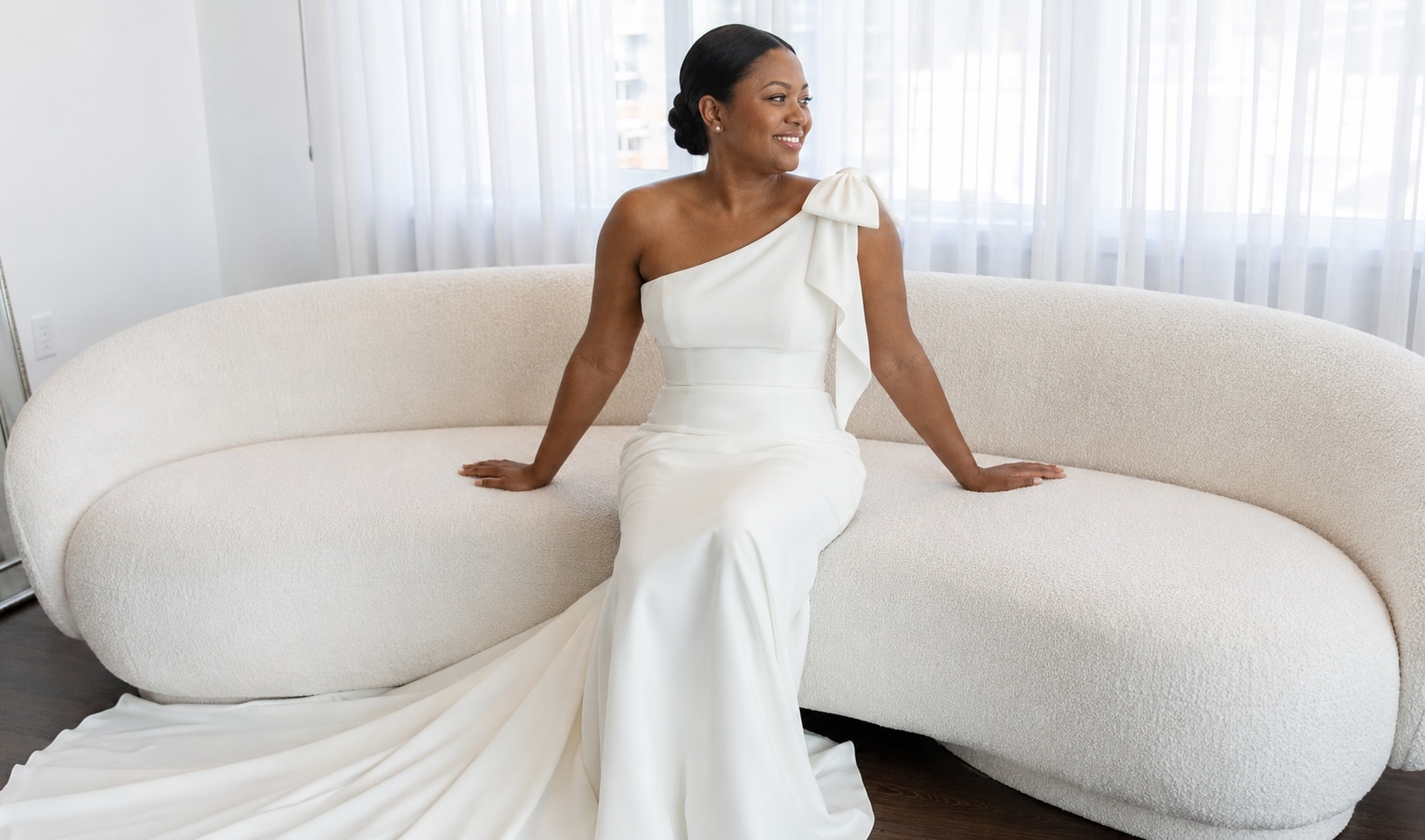
Advice for broad-shouldered brides has traditionally centered on one idea: making the shoulders appear narrower. But in bridal design, a strong, well-defined shoulder line can be a real advantage. It carries structured bodices beautifully, gives clean necklines definition, and brings presence to minimalist wedding gowns that rely on cut rather than embellishment.
The details that matter most are how the dress works with that natural structure. The neckline frames the shoulders and décolletage, sleeves determine where the eye travels from shoulder to arm, the skirt establishes the overall silhouette, and fabric gives those lines either softness or definition.
Choose a Neckline That Frames the Shoulders
The neckline has an immediate effect on how the shoulders are perceived, and clean, deliberate shapes tend to work particularly well on a strong frame.
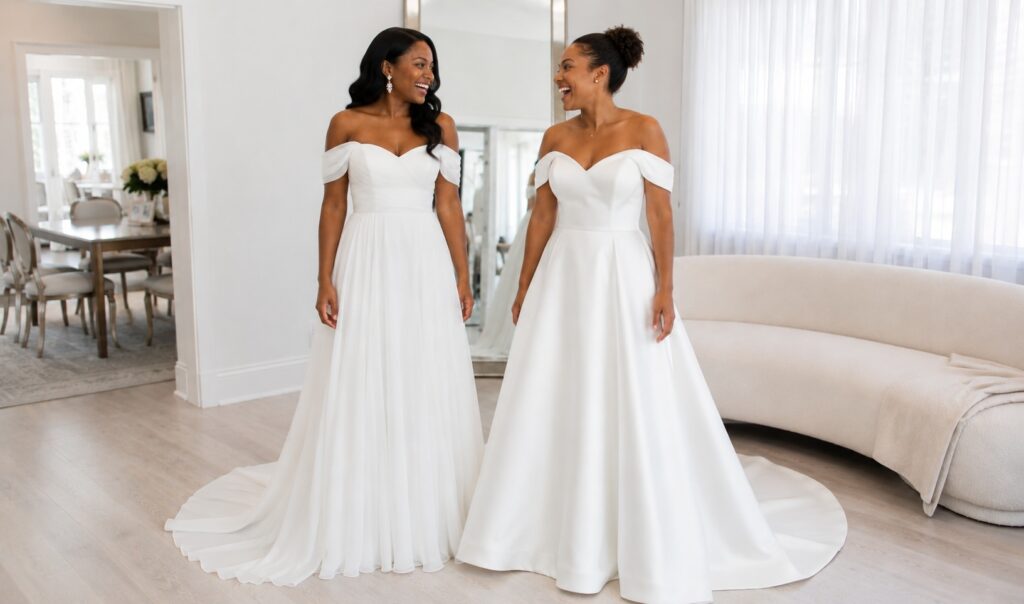
An off-the-shoulder neckline is a natural place to start. By following the collarbone and exposing the shoulders, it makes the shoulder line an intentional part of the gown. In Mikado or a substantial satin, the neckline can hold a beautifully defined curve, especially when paired with a structured bodice. The result feels polished and sculptural, with the shoulders contributing to the shape of the dress.
For a less symmetrical look, consider an asymmetrical neckline or one-shoulder wedding dress. A diagonal cut changes the direction of the eye and brings movement to a pronounced shoulder line. Because the neckline already provides a strong design element, these gowns are often at their best with a relatively restrained skirt and minimal embellishment.
Plunging V-necks and plunging halters introduce a stronger vertical line. A plunging halter is particularly striking on brides with defined shoulders and arms: the neckline draws inward toward the neck before descending through the center of the bodice, while leaving the outer shoulders exposed. Pair it with an open back and fluid skirt, and the effect is sleek from the front and beautifully defined from behind. Heavy beading or appliqué around the neckline is rarely necessary—the cut itself provides the interest.
Let the Sleeves Follow the Shoulder Line
With a sleeved wedding gown, pay close attention to where the sleeve begins and how it moves from the shoulder into the arm.
When a full sleeve head sits directly at the widest point of the shoulder, especially with gathering or additional volume, it naturally makes that area more prominent. Brides looking for a cleaner silhouette may prefer sleeves that continue the line of the body without adding bulk at the shoulder.
Fitted tulle or lace sleeves work especially well for this reason. Their line continues uninterrupted toward the wrist, giving the upper body a sense of length and continuity. With lace, placement matters: delicate motifs with some negative space generally feel lighter than dense appliqués concentrated at the shoulder.
Dropped sleeves create a softer effect. Sitting below the natural shoulder line, they expose the collarbone and shoulders before falling gently over the upper arm. They pair beautifully with off-the-shoulder gowns and bring romance to the silhouette without concealing the shoulder line.
Puff sleeves can work, too, when the volume is intentional. They emphasize the shoulders and suit gowns with a more dramatic or fashion-forward point of view. For a streamlined look, however, less volume at the sleeve head will usually create a cleaner finish.
Consider the Entire Silhouette
A-line and ball-gown skirts are frequently recommended for broad shoulders, but the success of either silhouette depends as much on the waist and construction as it does on the fullness of the skirt.
A well-cut A-line should open naturally from the waist, creating movement without unnecessary weight. It works particularly well with a defined neckline because the skirt continues the clean lines established by the bodice.
A ball gown offers more ceremony and drama. A structured bodice followed by a generous skirt creates clear definition through the shoulders, waist, and hem. Mikado, substantial satin, and organza are particularly effective when the goal is a gown with presence and shape.
Column and sheath silhouettes deserve equal consideration. Strong shoulders can carry a pared-back gown exceptionally well, especially when the design relies on proportion and precise cutting. Pairing a fluid column skirt with a plunging halter or asymmetrical neckline creates a modern bridal look with very little need for additional decoration.
Does the Fabric Make Any Difference?
Fabric can completely change the character of the same silhouette. An off-the-shoulder neckline cut in airy chiffon will behave very differently from one constructed in crisp Mikado.
Mikado and heavier satins are ideal when the design calls for definition. They hold the shape of a neckline, support a structured bodice, and give fuller skirts a distinct silhouette. Crepe has a more fluid quality, following the body with a clean drape that works particularly well for plunging halters, column gowns, and other minimalist designs.
Lace and tulle bring softness, but placement makes a difference. When the shoulder line is already a feature, leaving some openness around the neckline allows it to remain visible. Lace, embroidery, or dimensional appliqués can then build gradually through the bodice or skirt, adding detail without overwhelming the top of the gown.
A beautiful shoulder line is already an asset. The best wedding dress simply makes it feel like an essential part of the design.