
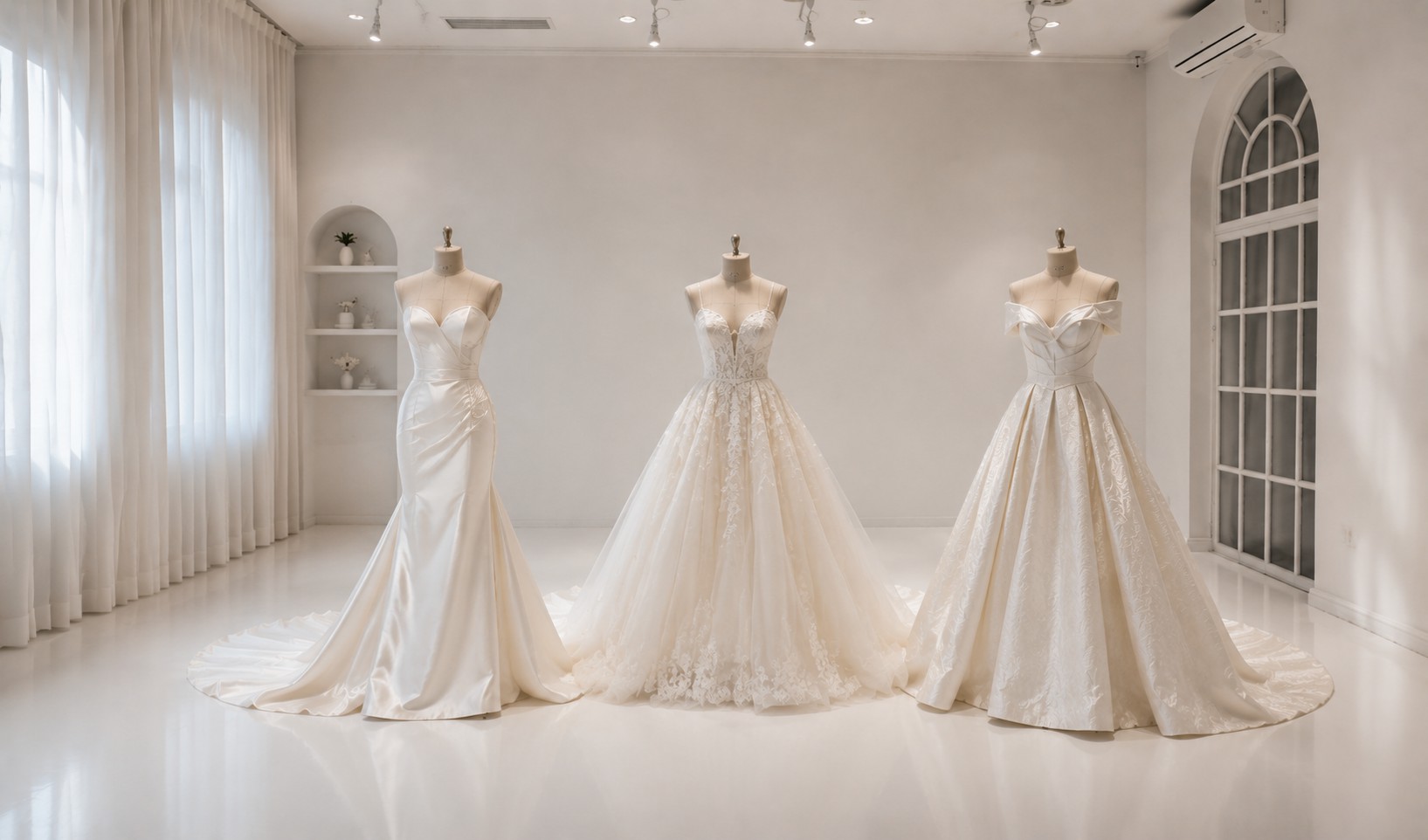
Finding a wedding dress that fits your budget can feel like a victory—until the alterations bill arrives.
Here’s the part of bridal shopping that’s easy to underestimate: The price on the tag is rarely the final amount you’ll spend on your gown. Most wedding dresses are ordered according to a designer’s standard size chart, and real bodies don’t always fit neatly into those predetermined proportions.
Melissa Lynn Oddo, owner of deMelis Atelier and founder of Stitched Collective, puts it plainly: “When wedding dresses are ordered, it is atypical that a person will fall exactly into the designer’s size chart so alterations to one or more areas of the dress are to be expected.”
That mismatch can become expensive. According to Oddo, standard wedding dress alterations typically cost $700 to $1,000, generally covering a hem, bustle and an adjustment to the top or bottom of the gown. More complex construction or extensive changes can push the total even higher.
In other words, a $1,500 wedding dress may not really be a $1,500 wedding dress.
What Are You Actually Paying For?
Wedding gowns are far more complicated to alter than everyday clothing. According to The Knot, hemming can run $125–$450, depending on the number of layers and complexity of the finish. Adding a bustle typically costs $75–$175, while changing a zipper back into a corset closure can cost $100–$300.
Why so much? Because bridal alterations often involve deconstruction before reconstruction.
To take in a heavily embellished bodice, for example, a seamstress may need to remove lace appliqués or beadwork, open the lining, adjust multiple structural layers and then rebuild those details by hand. As Oddo has explained of the craft, altering is “a different animal” from making a garment from scratch.
The Hidden Cost Isn’t Just Money
Alterations also introduce another consideration: you’re modifying a gown whose construction has already been completed.
Intricate lace may need to be removed and reapplied. Significant sizing changes can shift seam placement, boning or embellishment. With delicate fabrics, even skilled work has to account for existing stitch lines and the gown’s original architecture.
Then there’s time. Bridal alterations commonly involve multiple fittings over several weeks, meaning the dress may still be undergoing adjustments surprisingly close to the wedding.
For some brides, that process is completely worthwhile. But it also raises a useful question: What if the dress were cut closer to your measurements before it was sewn?
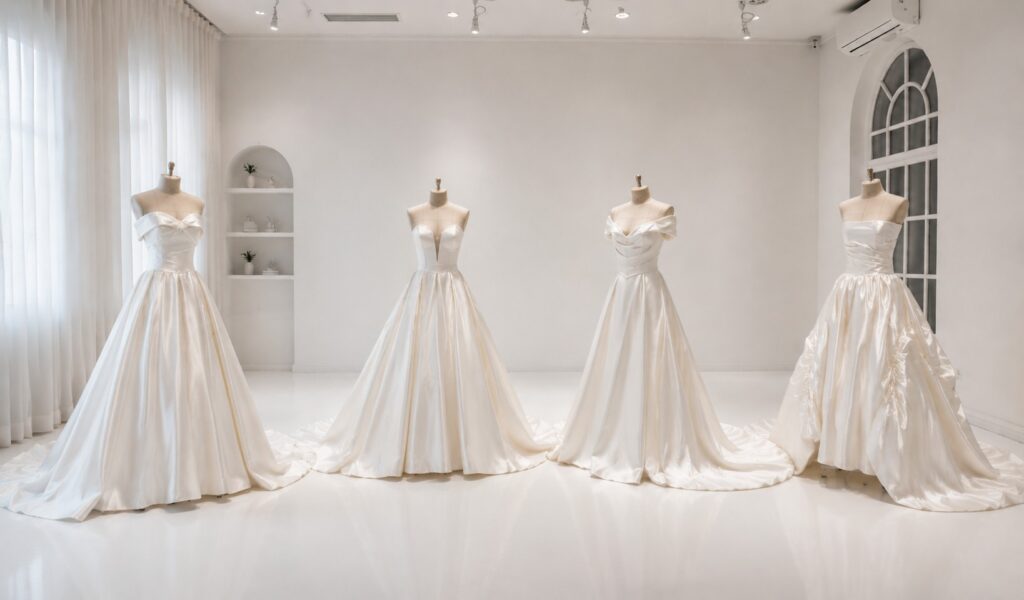
The Smarter Alternative: Custom Sizing From the Start
That’s the appeal of made-to-measure or custom-size production.
Instead of choosing one standard size based on your largest measurement and correcting the remaining areas afterward, the gown is produced using your individual measurements from the beginning.
InWeddingDress, for example, offers affordable custom alterations service and custom sizing based on measurements including height, bust, waist, hips and hollow-to-hem.
The advantage isn’t simply “custom” as a luxury buzzword—it’s efficiency. When the manufacturer knows your proportions before cutting the fabric, skirt length, waist placement and bodice proportions can be incorporated during production rather than corrected by dismantling a finished garment later.
That can mean cleaner finishing, since lace and seams are positioned for the intended proportions from the start; better structural integrity, because boning and internal support don’t need to be extensively repositioned; and, potentially, fewer post-purchase alteration costs.
This can be particularly valuable for petite and tall brides, fuller-busted brides, or anyone whose bust, waist and hip measurements correspond to different standard sizes.
How to Get Your Measurements Right
Custom sizing only works when your measurements are accurate. Measure the bust at its fullest point, the natural waist at its narrowest, and the hips at their widest point, keeping the tape level rather than pulling it tightly against the body.
For floor-length wedding dresses, hollow-to-hem is especially important. Measure from the hollow at the base of your neck down to the intended hemline—and take your wedding shoes into account. Heel height can make the difference between a skirt that just brushes the floor and one that requires another trip to the seamstress.
Most importantly, submit the body you have now, not the measurements you hope to have by your wedding.
Wedding Dress Alterations FAQs
What if my weight changes after ordering a custom-size gown?
Small fluctuations may still require minor adjustments, which is normal. Custom sizing should reduce the need for major reconstruction—not be treated as a guarantee that a dress will never need tailoring.
Why can traditional alterations cost hundreds of dollars?
Because you’re paying for skilled manual labor on a completed garment. Linings, seams, boning, lace and embellishments may need to be carefully removed, adjusted and reconstructed.
Who benefits most from custom sizing?
Anyone who falls between conventional sizes can benefit, but it can be especially useful for petite, tall and curvy brides, as well as brides whose bust, waist and hip measurements span several points on a standard size chart.
Ultimately, smart wedding dress shopping isn’t just about asking, “How much does this gown cost?” It’s about asking, “How much will it cost to make this gown fit me?”