
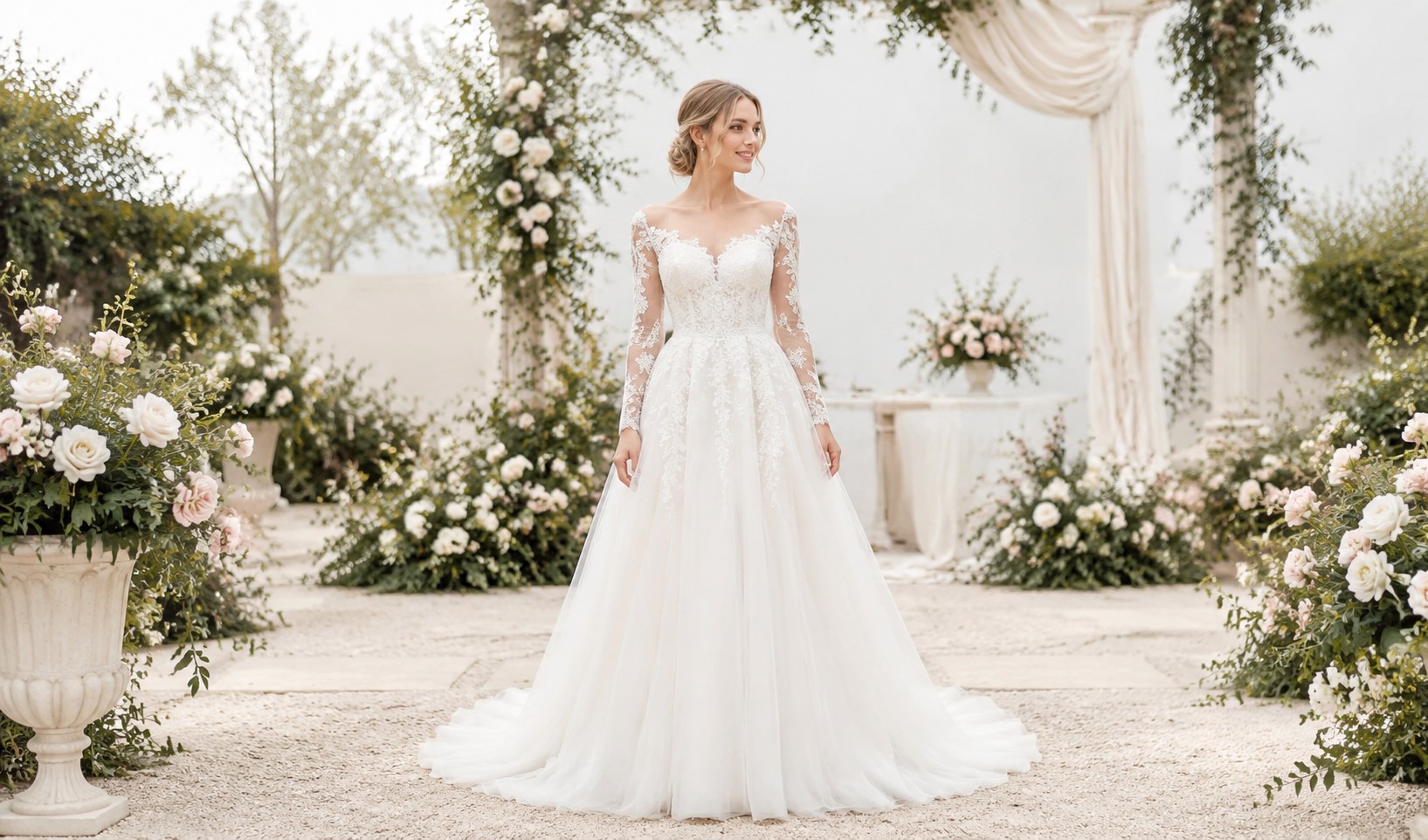
Hourglass figures are defined by a visually balanced bust and hip line anchored by a naturally defined waist. While this proportion is often considered one of the most versatile for bridal wear, the challenge is not finding a dress that fits—it’s choosing a silhouette and construction that preserves balance without adding unnecessary volume or shifting attention away from the waist.
For hourglass brides, the most flattering wedding dresses are usually the ones with intentional structure: a supportive bodice, a clearly defined waistline, and a skirt that follows the body’s natural proportions. During bridal appointments, stylists often look beyond the outer appearance of a gown and pay attention to what is happening underneath—the internal architecture that determines how the dress holds its shape throughout the day.
Focus on the construction of the bodice, not just the silhouette
A fitted wedding dress can look completely different depending on how it is built.
For an hourglass figure, look for internal corsetry with strategically placed boning and vertical seamlines. The best designs often include boning that extends through the waist and toward the high hip, creating support through the torso while maintaining a smooth transition between the bust, waist, and hips.
This construction is especially important for brides with a fuller bust. Without enough internal support, a fitted bodice can lose its shape over time, creating pulling around the neckline or unwanted folds around the waist. A well-engineered corset structure allows the gown to define the waist while keeping the upper and lower body visually balanced.
When trying on dresses, pay attention to where the seams fall. Vertical panel seams can elongate the torso, while strategically placed waist seams can reinforce the hourglass shape without making the dress feel overly restrictive.
Choose silhouettes that follow your natural proportions
Certain silhouettes consistently work well for hourglass figures because they maintain the relationship between the upper and lower body.
Fit-and-flare gowns are often a favorite because they contour through the bodice and hips before opening into a softer skirt. They highlight the waist while allowing more movement than a traditional mermaid gown.
Mermaid and trumpet wedding dress silhouettes create a more dramatic effect by following the body closely before expanding below the knee. These styles work particularly well when the gown has proper internal structure and carefully placed seams. The goal is not simply a tight fit—the craftsmanship of the pattern determines whether the dress looks sculpted or restrictive.
For brides who want a more classic bridal look, an A-line gown with a defined natural waist can be equally flattering. The key detail is the waist placement. A structured waistline preserves the hourglass proportion, while a loose or undefined transition can make the silhouette feel less intentional.
Common wedding dress mistakes for hourglass brides
Having an hourglass figure may make shopping easier, but there are still a few styles that can work against your natural proportions.
1. Minimalist bias-cut slip dresses without internal support
Bias-cut silk slip dresses are beautiful for their effortless, modern aesthetic, but they require careful consideration for hourglass figures. Because the fabric is cut on the diagonal and typically has little internal structure, it may not provide enough support through the bust and waist.
Without proper construction, the fabric can gather around the narrowest part of the body or create uneven folds instead of the clean, fluid line seen in editorial photos.
If you love the slip dress look, consider versions with a built-in corset, structured cups, or additional waist shaping.
2. Empire waist silhouettes
Empire waist bridal gowns place the waistline higher, usually just below the bust. While this style can create a romantic, vintage-inspired look, it often hides the natural waist—the defining feature of an hourglass figure.
For brides who love a softer, flowing aesthetic, a gown with a natural waist and a lighter skirt fabric can achieve a similar feeling while keeping the body’s proportions visible.
Think about how the dress photographs in motion
A wedding gown has to work beyond the fitting room. The most successful silhouettes maintain their structure while you move: walking down the aisle, sitting during dinner, turning for portraits, and dancing at the reception.
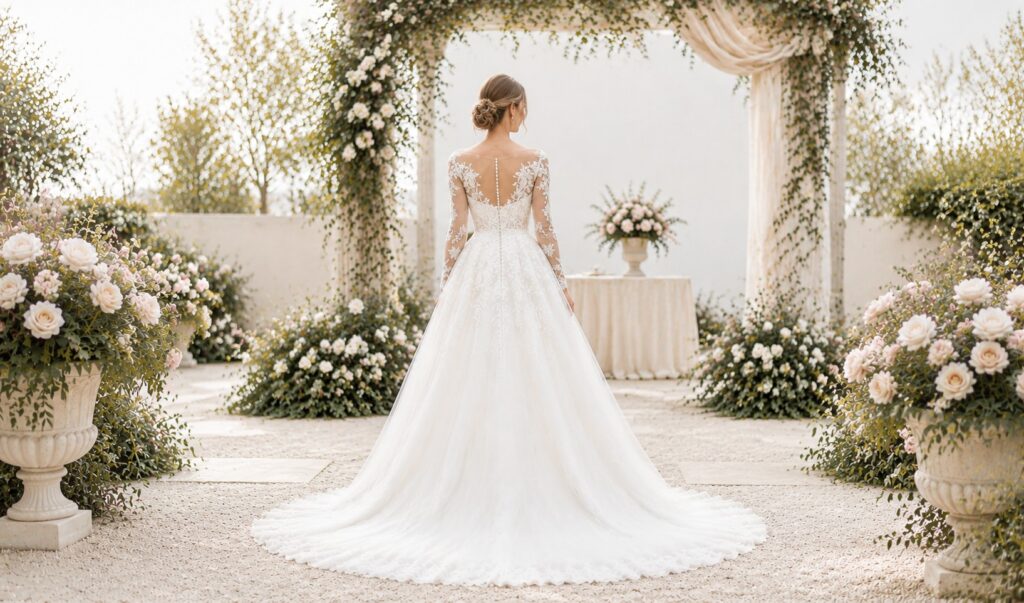
One detail I always recommend checking during a fitting is the transition between the bodice and skirt. From the front, many gowns look beautiful standing still, but the difference becomes obvious when you move. A well-designed dress keeps the waist defined, the neckline supported, and the skirt falling naturally from every angle.
For hourglass brides, the goal is not to create a different shape. It is to find a gown with the right architecture—one that understands proportion, supports the body, and allows the bride’s natural silhouette to become part of the design.