
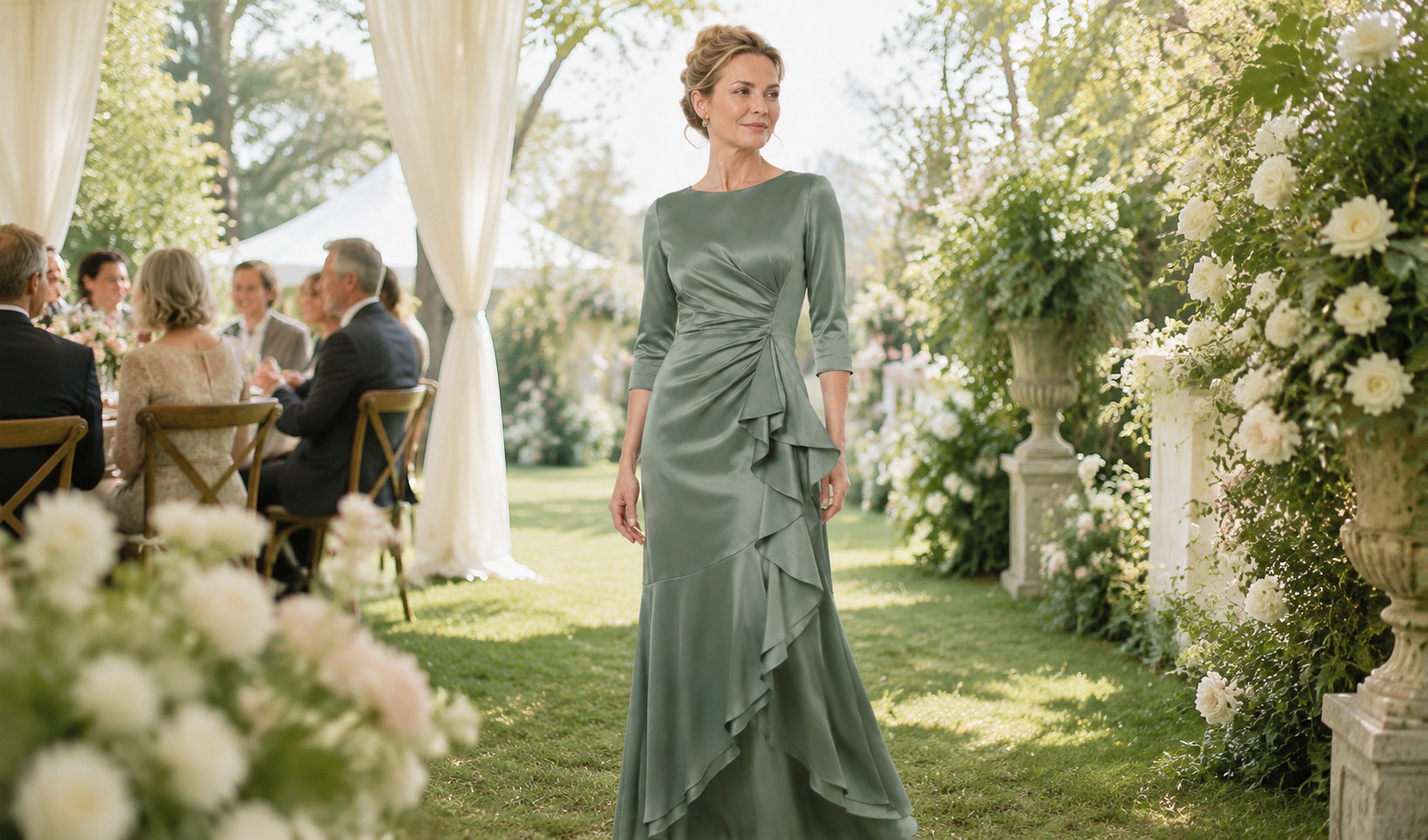
Outdoor weddings make dressing as the mother of the groom a little more complicated—in a useful way. The prettiest mother of the groom dress in the fitting room may feel entirely different after an hour on a sunny lawn or a walk across sand. Look for something polished enough for family portraits, but comfortable enough for the actual setting: breathable fabric, a sensible hemline, and shoes that won’t disappear into the grass.
Check the Dress Code Before You Shop
Start with the invitation, venue, and time of day. A black-tie evening at an estate calls for something very different from an afternoon ceremony overlooking the beach.
It’s also worth checking in with the couple about color. You don’t need to match the mother of the bride—nor should the two of you look like additional bridesmaids. Think of the outfits as belonging in the same photograph: similar levels of formality, complementary colors, distinct dresses.
White and ivory are generally left to the bride unless she says otherwise. Champagne and very pale blush deserve a little caution, too. Take a phone photo of the dress outdoors before committing; some light shades read surprisingly white in bright daylight.
Choose a Fabric That Can Handle the Day
For an outdoor ceremony, fabric has two jobs: it needs to breathe, and it needs to survive several hours of sitting, standing, walking, and photographs without looking exhausted.
Chiffon earns its popularity here. It’s light, moves well in a breeze, and works particularly nicely for gardens and seaside venues. Silk crepe has a softer, less reflective finish than satin and enough weight to drape elegantly without feeling overly formal. Good-quality lace is another forgiving option; its texture tends to disguise small creases better than a perfectly smooth fabric.
Heavy brocade and thick satin can become uncomfortable surprisingly quickly in summer heat. Linen is cool, but a pure linen mother of the bride dress may be covered in sitting creases before the ceremony is over.
One fitting-room test is more useful than another five minutes in front of the mirror: sit down for a few minutes, stand up, walk around, and lift your arms. Check the waist for creasing, the shoulders for pulling, and the hem for anything you might step on.
Your Shoes Need to Match the Ground
This is where outdoor weddings catch people out.
For a lawn or garden ceremony, block heels are usually the safest compromise between formal and practical. Wedges work, too. A narrow stiletto can sink into soft grass with every step; if you really want to wear one, slip a heel protector over the tip to create a wider base.
On sand, heels are rarely worth the trouble. A refined flat sandal, low wedge, or embellished supportive sandal looks intentional without making the walk down the beach an endurance test.
A wooden deck or patio presents a different problem. Smooth soles can slip, while very thin heels may catch between boards. Look for a stable heel and a sole with some traction.
And don’t underestimate what several hours of standing can do to otherwise comfortable shoes. Invisible cushioned or arch-support inserts are easy insurance. Keeping a pair of dressy flats in the car or changing before the dancing starts is even better.
Let the Setting Guide the Color
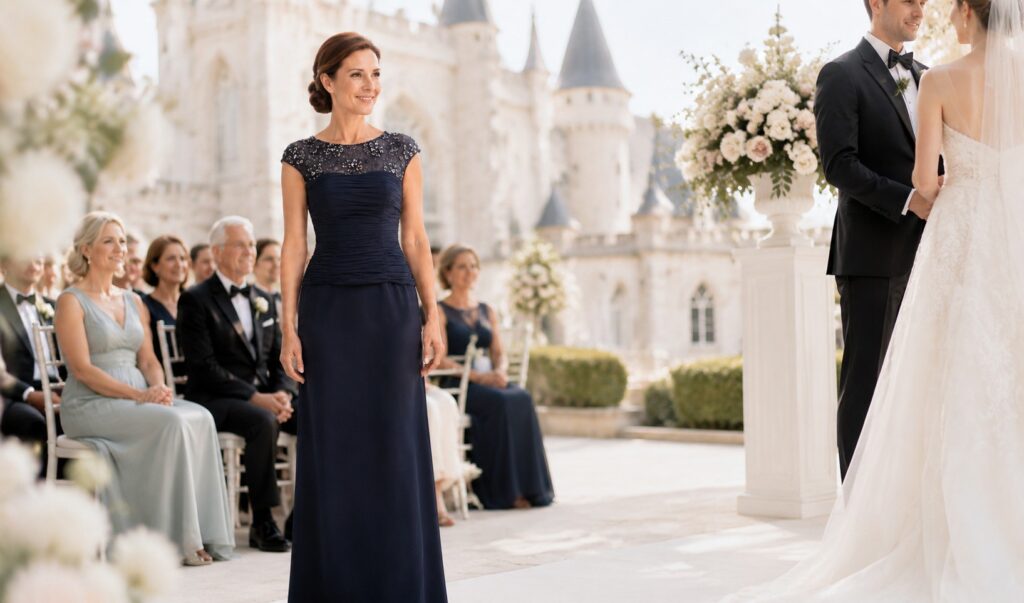
Navy is a perennial favorite for good reason: it photographs well, feels formal without looking severe, and works across seasons. Dusty blue, sage, taupe, burgundy, slate gray, and muted rose are similarly easy choices for outdoor celebrations.
The venue can narrow things down. Sage and dusty rose feel at home in a garden; dusty blue and soft neutrals suit coastal settings; burgundy and bronze work beautifully against an autumn vineyard or estate backdrop.
Black isn’t automatically off-limits. It can look elegant at a formal evening or black-tie wedding. For a sunny daytime garden or beach ceremony, however, a softer shade often feels more natural.
Dress for Your Shape—and Your Comfort
An A-line is popular because it gives the body room to move without losing its shape. Empire waists can work well if you prefer less definition through the midsection, while wrap dresses create an adjustable waist and a clean neckline. Fit-and-flare silhouettes can balance fuller hips, and a streamlined midi often suits petite frames better than a very full floor-length skirt.
For plus-size shoppers, draped A-lines and wrap silhouettes are worth trying, particularly when the fabric has enough weight to fall cleanly rather than cling.
Treat those as fitting-room starting points, not rules. A good tailor can often do more for a dress than a supposedly “flattering” label. Adjusting the shoulder, sleeve, waist, or hem by an inch can completely change the proportions.
Plan for Wind and a Cooler Evening
Outdoor temperatures can shift quickly once the sun goes down. A lightweight silk wrap or fine pashmina is easy to carry and works with most formal dresses. For a more structured look, a cropped tailored jacket can be especially smart with a midi mother of the bride dress or jumpsuit.
Wind deserves attention, too. Very light skirts, loose scarves, and oversized sleeves may look romantic in still photos but become distracting in a gusty ceremony. If the venue is exposed or coastal, a dress with a little weight and structure is often easier to wear.
Mother of the Groom Dress FAQs
When should I start shopping?
Around six to nine months before the wedding is comfortable, particularly if the dress needs to be ordered or altered. Wait until the venue, dress code, and general color direction are clear.
Do the mothers of the bride and groom need to match?
No. Coordination matters more than matching. Similar formality and complementary colors will look cohesive in family photographs without making the outfits feel planned as a set.
Can the mother of the groom wear a pantsuit?
Absolutely. A beautifully cut pantsuit or evening jumpsuit can be every bit as appropriate as a gown, particularly at a modern outdoor wedding. Fabric and tailoring determine how formal it feels.
One Last Styling Rule
Wedding stylist Julie Sabatino has long emphasized dressing appropriately for the celebration while still feeling like yourself—a useful philosophy for the mother of the groom, too. The outfit shouldn’t require constant adjusting or make you afraid of walking across the venue.
If you can sit through the ceremony, cross the lawn, pose for photographs, hug your son, and stay on the dance floor without thinking about your dress or shoes, you’ve probably chosen well.