

Choosing a wedding dress color for a beach ceremony is about more than deciding between white and ivory. Sunlight, sand, water, and even the time of day can change how a gown looks in person and in photographs. A shade that appears soft indoors may look much brighter under direct sun, while subtle lace details can disappear against an intensely white base.
Here’s how to choose a beach wedding dress color that works with both the setting and the fabric.
Soft Ivory and Off-White
For many beach brides, soft ivory or off-white is an easier choice than stark white. These warmer whites still look unmistakably bridal but tend to appear softer in strong outdoor light.
Ivory also works particularly well with lace. Instead of creating a bright white-on-white effect, a slightly warmer base can make floral lace, embroidery, and other surface details easier to see in photographs.
If your ceremony takes place around midday, when sunlight is strongest, try comparing pure white and ivory outdoors before making your final decision. The difference can be much more noticeable than it is under boutique lighting.
Champagne and Nude Underlays
Champagne is another useful option for beach weddings, especially for gowns with lace or sheer layers. Rather than choosing an entirely champagne-colored dress, many brides opt for a nude or champagne underlay beneath ivory lace.
The contrast helps define the lace pattern without making the gown look heavy. It can be especially effective with illusion bodices, embroidered tulle, and lightweight lace dresses.
These warmer undertones also complement sandy beaches and golden sunlight, making them a natural choice for destination weddings and elegant resort ceremonies.
Blush and Soft Pink
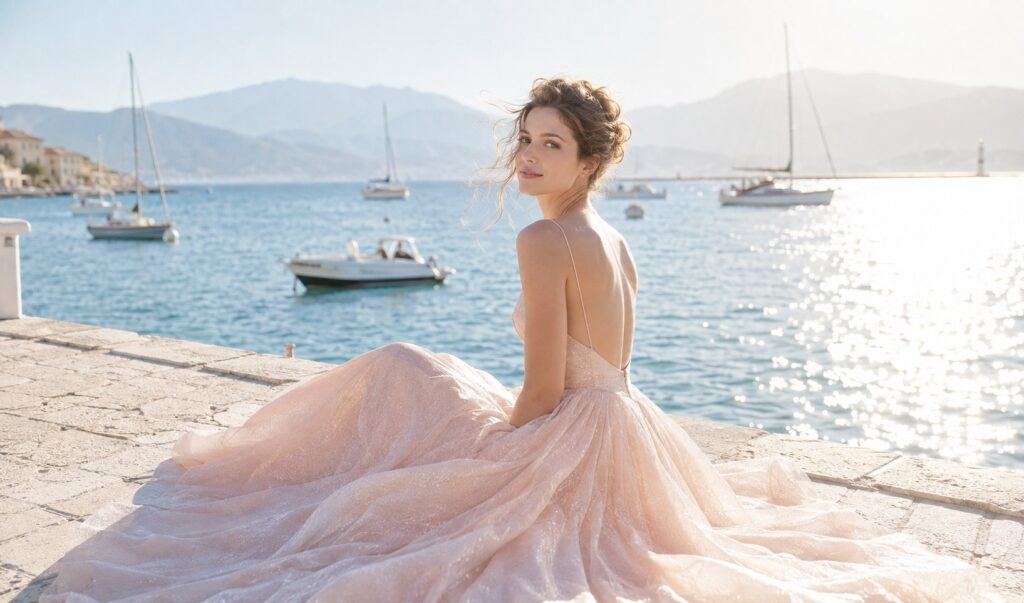
For a romantic beach wedding, blush and muted pink offer a subtle alternative to traditional white.
These shades work especially well for late-afternoon and sunset ceremonies. Warm evening light can bring out peach and rose undertones, allowing the dress to blend naturally with the softer colors of the sky.
The key is choosing a restrained shade. Pale blush or dusty rose generally feels more bridal than a saturated pink and pairs easily with ivory lace or sheer overlays.
Dusty Blue and Soft Ocean Tones
Blue wedding dresses are less traditional, but muted ocean-inspired shades can work beautifully in coastal settings. Dusty blue, pale blue-gray, and very soft blue are understated enough to avoid looking like beachwear while still offering something different from conventional bridal colors.
These shades can be particularly suitable for destination elopements, reception dresses, informal seaside ceremonies, or a second bridal look.
Avoid trying to match the ocean exactly. A muted tone usually photographs better and prevents the dress from competing with the scenery.
How Fabric Changes the Color
Fabric matters because the same color can look very different depending on its texture and opacity.
Chiffon works particularly well for beach weddings because its lightweight layers soften the appearance of ivory, blush, and champagne shades. Tulle can create a similar airy effect, especially when layered over a warmer lining.
Lace introduces another consideration. White lace over a white lining can lose some definition in bright sunlight, while ivory lace over nude, champagne, or slightly contrasting lining makes the pattern more visible.
Before buying, look at the dress near natural daylight rather than relying only on indoor fitting-room lighting.
Practical Color Tips for the Beach
Beach conditions should also influence your final choice. A brilliant optical white can show sand, dampness, and discoloration around the hem more quickly than a slightly warmer ivory or champagne tone. That does not make darker shades “sand-proof,” but minor marks may be less noticeable.
Photography is another consideration. Direct midday sunlight can make very bright whites appear harsh and may reduce visible detail in light-colored lace if exposure is not carefully handled. Softer whites and textured fabrics generally provide more visual separation.
Most importantly, consider the timing and style of your wedding. Ivory and off-white are versatile for almost any beach ceremony; champagne suits warm, sophisticated resort settings; blush works beautifully at sunset; and dusty blue offers a more contemporary coastal look.
The best beach wedding dress color does not need to imitate the sand or sea. It should simply look natural in the available light, show the details of the gown clearly, and fit the atmosphere you want to create.