
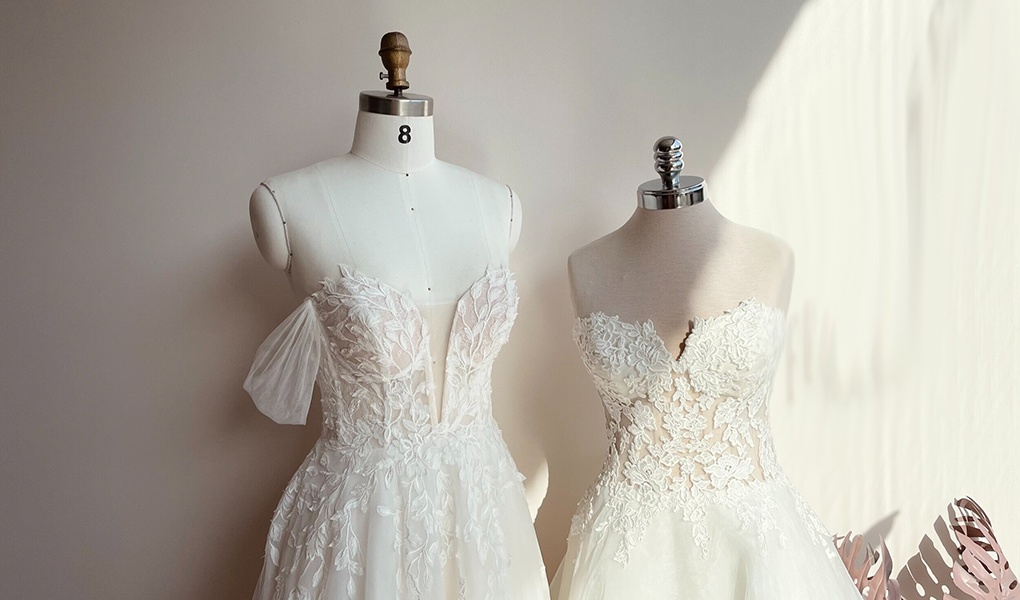
No. Wedding dress sizing is usually not the same as regular clothing sizing. In many bridal brands, you may need a wedding dress that is 1–2 sizes larger than your usual street size. For example, if you normally wear a US size 6, you might wear a bridal size 8 or 10.
That doesn’t mean your body has changed. Bridal designers and everyday clothing brands simply use different size charts.
The 1–2 size difference is a useful reference, but it isn’t a universal conversion rule. Always choose your dream wedding dress based on your bust, waist, and hip measurements and the specific designer’s size chart—not the size you normally buy.
Why Is Wedding Dress Sizing Different?
One reason is that bridal sizing and modern ready-to-wear sizing don’t always follow the same standards.
Over time, many everyday clothing brands have adopted vanity sizing, meaning the measurements associated with a size number have become more generous. That’s one reason you might comfortably wear a size 6 in everyday dresses but need an 8 or 10 when shopping for a wedding gown.
Wedding dresses are also constructed differently from most everyday clothing. A casual dress may contain stretchy fabric and allow some flexibility in fit. Wedding gowns often use more structured materials such as satin, Mikado, and lace, along with linings, boning, cups, or corsetry.
Because of that structure, even a small difference in your measurements can affect how a wedding dress fits.
This is why your street size should only be a reference point. The designer’s actual measurements are what matter.
How to Measure for a Wedding Dress
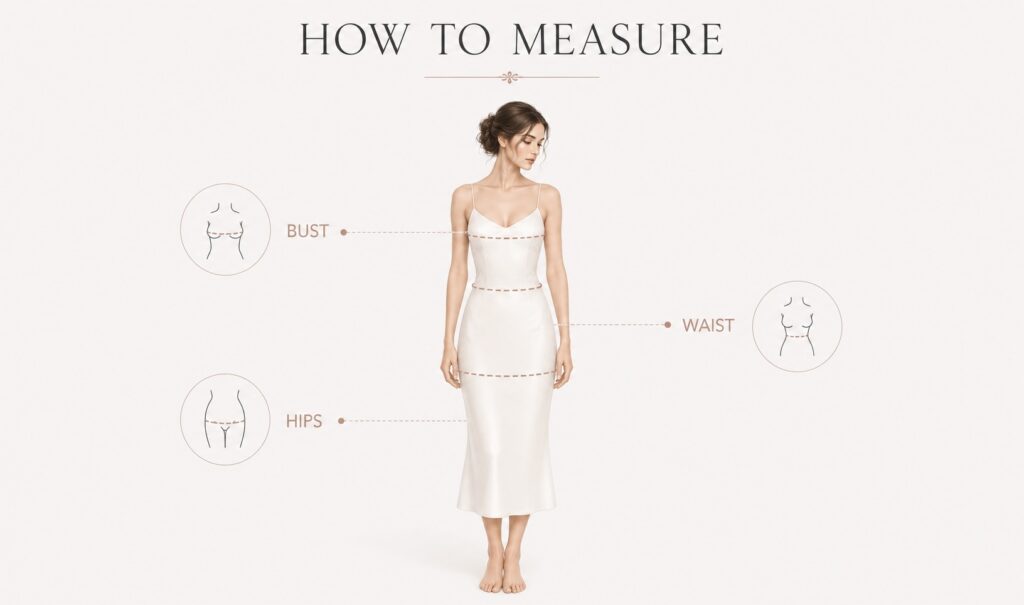
Before checking a wedding dress size chart, take three measurements: bust, natural waist, and hips.
Use a soft measuring tape and, if possible, wear the undergarments you expect to wear with your gown. Keep the tape level and comfortably snug against your body, but don’t pull it tight.
Bust
Measure around the fullest part of your bust, keeping the tape parallel to the floor.
Don’t use your bra size as a substitute. A bra size and a bust measurement are two different things.
Natural Waist
Measure around your natural waist, which is usually the narrowest part of your torso and sits above your belly button.
If you’re unsure where it is, bend slightly to one side. The crease that forms is generally your natural waist.
This is important because your natural waist may be higher than where you normally wear jeans or trousers.
Hips
Stand with your feet together and measure around the fullest part of your hips and seat.
Make sure the tape stays level rather than riding up or dropping down at the back.
Once you have all three measurements, compare them directly with the size chart provided for the wedding dress you’re considering.
What If You’re Between Wedding Dress Sizes?
It’s very common for your bust, waist, and hips to correspond to different bridal sizes.
For example:
| Measurement | Bridal Size |
| Bust | Size 8 |
| Waist | Size 10 |
| Hips | Size 8 |
In this situation, Size 10 would usually be the safer starting point because your waist requires the larger size.
The general rule is simple:
Choose the size that accommodates your largest relevant measurement, then alter the areas that are too large.
This is because taking a wedding dress in is generally easier than making a dress that is too small and significantly larger. Whether a gown can be let out depends on its construction and how much extra fabric is available inside the seams.
The same principle applies if you’re between two sizes. If your measurements are slightly too large for a size 8 but fit comfortably within a size 10, the size 10 is usually the safer choice.
And if you’re planning to lose weight before your wedding, avoid ordering a smaller dress based only on your expected future size. Order according to your current measurements unless your bridal salon, designer, or seamstress recommends otherwise. A gown with some extra room can often be taken in later; a gown that starts out too small gives you fewer options.
Instead of focusing on the number on the label, measure your bust, natural waist, and hips, check the designer’s size chart, and choose the size that accommodates your largest relevant measurement.
A well-chosen bridal size gives you something much more important than a familiar number on the tag: enough room for your dress to be altered to fit you properly.