
A wedding gown train creates one of the most memorable moments of a bridal look. A cathedral train flowing down the aisle adds movement, scale, and drama to the ceremony. However, the same train that creates a stunning entrance can become difficult to manage during the reception.
After the ceremony, a bride needs to move through a very different environment. Walking between tables, greeting guests, taking photographs, and dancing all require a gown that allows more freedom. A bustle is the hidden engineering that makes this transition possible.
A bustle is a system of buttons, hooks, loops, or ribbons that lifts and secures the train after the ceremony. When properly designed, it allows the gown to maintain its original beauty while becoming practical for the rest of the celebration.
The right bustle depends on more than the length of the train. Fabric weight, skirt construction, embellishment, and the way the bride plans to move throughout the day all influence the best solution.
American Bustle: The Visible Over Bustle
The American bustle, also called an over bustle, lifts the train upward and attaches it to the exterior back of the wedding gown. The attachment points are usually placed around the waistline or upper skirt, allowing the train fabric to fold over the existing skirt.
Because the structure is visible, the placement of the attachment points becomes part of the gown’s design. On lace wedding dresses, the folds can blend naturally with the texture of the fabric. On clean satin gowns, the bustle placement requires more precision because every line remains noticeable.
American bustles are often easier to install and adjust compared with more complex bustle systems. They work particularly well when the train itself can become part of the skirt design after being lifted.
During fittings, brides should check whether the bustle creates unnecessary pulling around the waist. A properly installed bustle should distribute the train weight evenly rather than placing stress on a single attachment point.
French Bustle: Hidden Structure and Tailored Draping
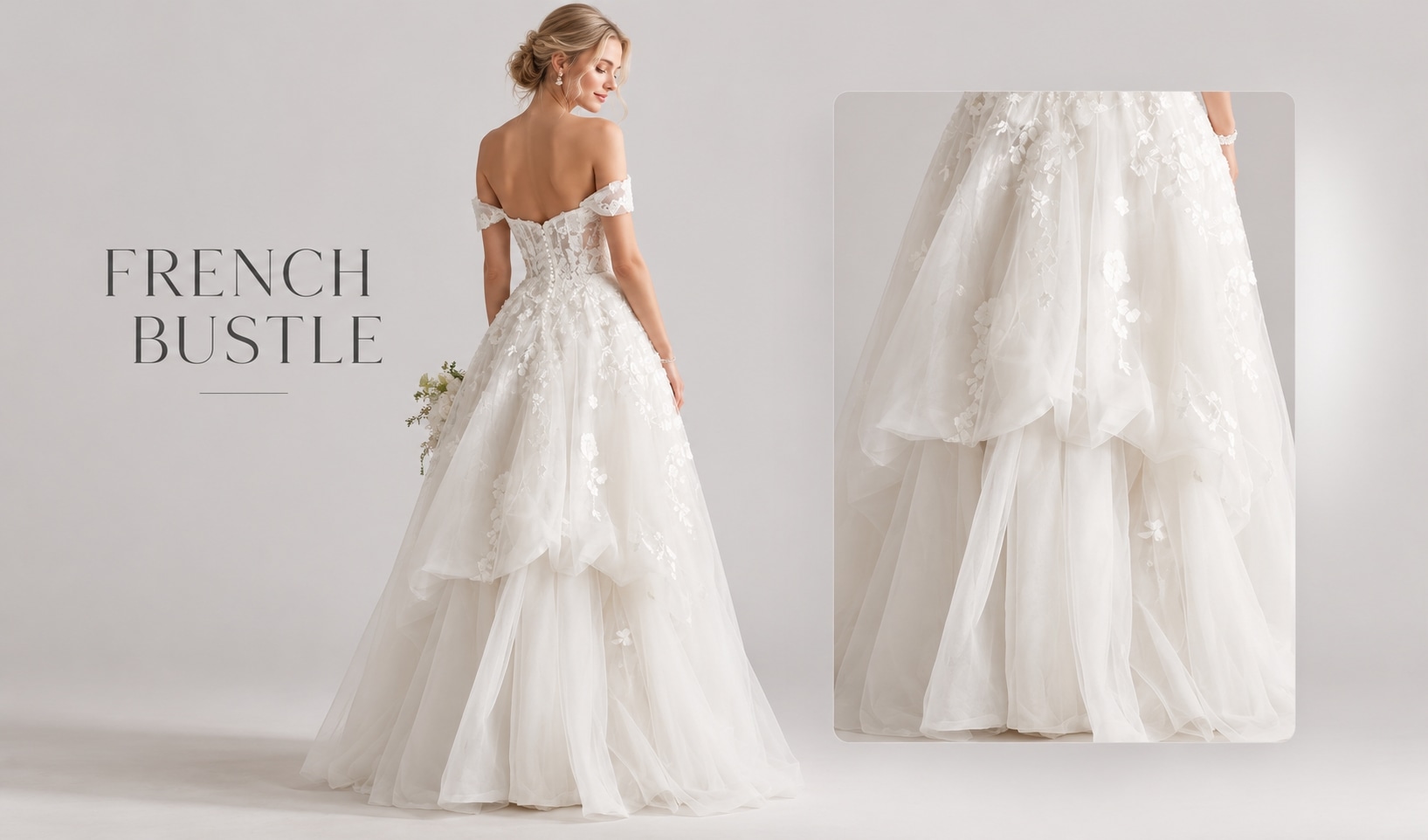
The French bustle, also known as an under bustle, secures the train underneath the skirt instead of pulling it over the exterior.
The result is a more integrated appearance. The train folds upward beneath the gown, creating soft draping while preserving the original back design. This makes French bustles especially effective for gowns where lace placement, buttons, or detailed embroidery along the back are important design elements.
French bustles rely on concealed ribbons, hooks, or loops inside the gown. Because several internal connections may be involved, the installation requires careful organization.
A useful alteration detail is the use of color-coded or numbered ribbons. During the wedding reception transition, a bridesmaid or wedding planner may need to secure the bustle quickly. Clearly marked ties prevent incorrect pairing, which can cause the skirt to sit unevenly or pull at certain points.
Ballroom Bustle: Maintaining a Full Skirt Shape
Ballroom bustles are designed for gowns with significant volume, especially traditional Ball Gown silhouettes.
The purpose is not simply to lift the train, but to preserve the round shape of the skirt. Instead of creating a noticeable folded section at the back, the train is gathered underneath so the gown maintains its original full-skirt appearance.
This requires careful weight distribution. Large amounts of fabric, layered tulle, structured satin, and heavy embellishment can place considerable pressure on the attachment points.
For a substantial train, one or two hooks are rarely enough. Professional alterations often require multiple reinforced anchor points—sometimes three to five depending on the fabric weight and train length—to prevent buttons from pulling loose or breaking during dancing.
Wrist Loop: A Temporary Option for Lightweight Trains
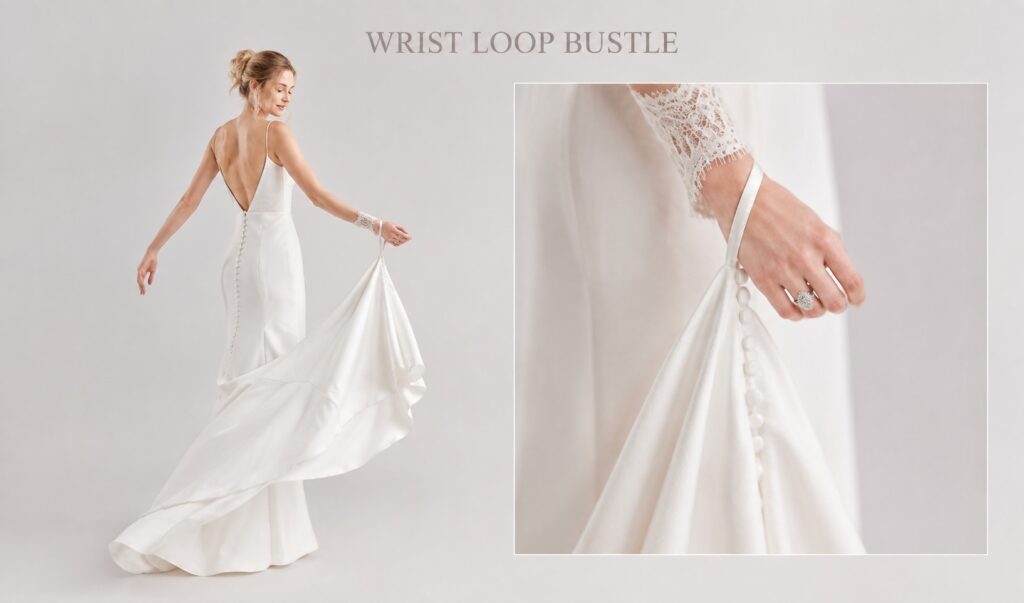
A wrist loop is a small ribbon attached beneath the train hem that allows the bride to carry the train over her wrist.
It can be useful for short periods, such as moving between locations, taking outdoor photographs, or handling a lightweight chiffon train. However, it should not be considered a replacement for a proper bustle.
Heavy satin, dense lace, or heavily beaded cathedral trains can place significant pressure on the wrist when carried for extended periods. The weight may cause discomfort, strain, or increase the risk of pulling on the hem.
For heavier gowns, a structured bustle provides better support and allows the bride to keep both hands free during the reception.
Choosing a Bustle Based on Your Gown Design
The ideal bustle depends on how the gown is built.
Ball Gowns with large skirts often require systems that can support volume and maintain the original silhouette. French and ballroom bustles are frequently considered for these designs because they integrate more naturally with full skirts.
A-Line gowns usually offer more flexibility because their skirt structure can accommodate different bustle approaches depending on the train length and fabric.
Mermaid and Trumpet gowns require additional consideration because the fitted lower skirt leaves less room for folded fabric. These gowns may need carefully placed French bustles, simpler lifting systems, or detachable trains.
The heavier the train, the more important the internal construction becomes. A gown made from lightweight tulle requires a different support strategy from a gown covered in dense lace, crystal embellishment, or heavy satin.