
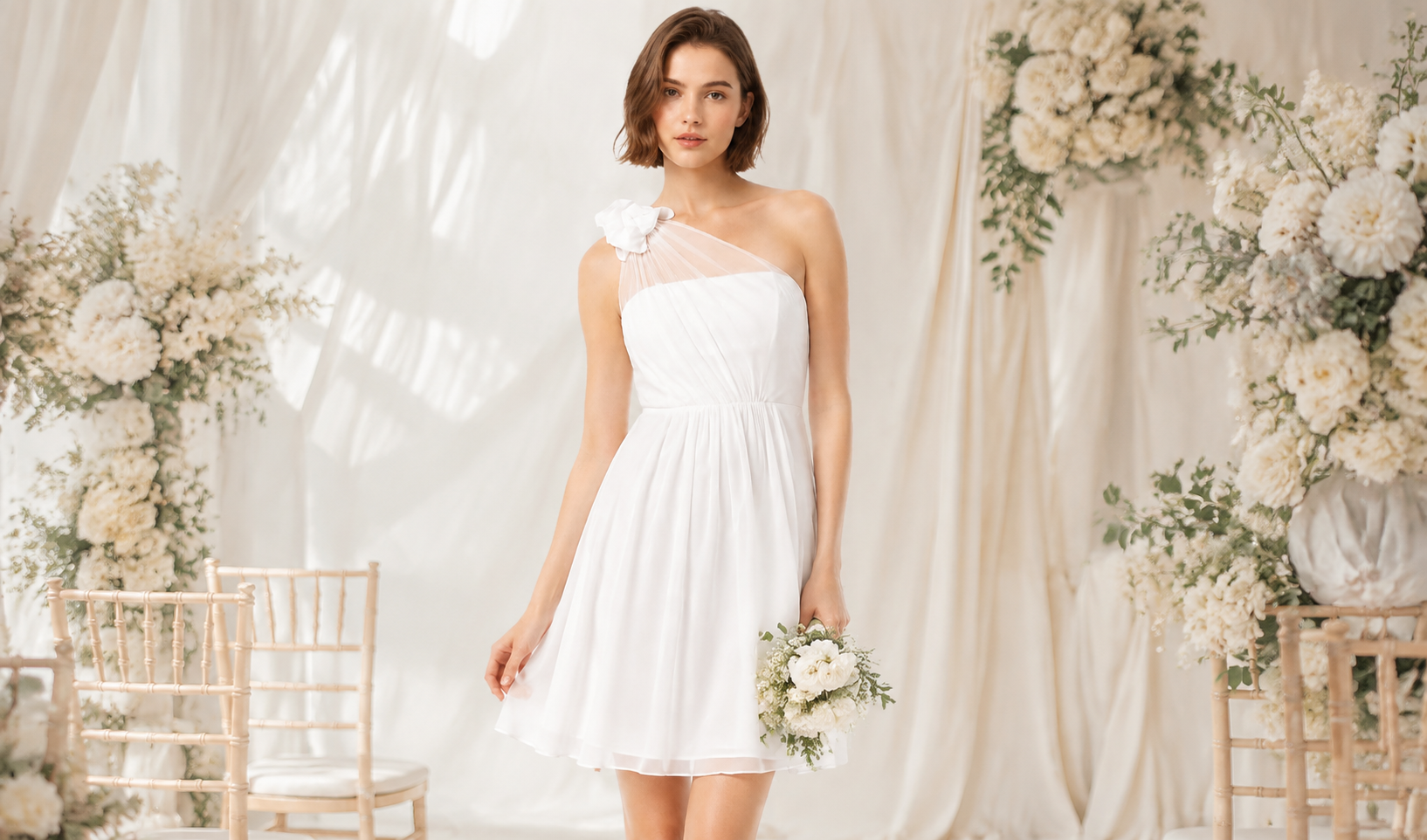
The moment after the ceremony often calls for a different kind of dress. A cathedral-length wedding dress may create the perfect aisle entrance, but it is not always the easiest outfit for dinner, dancing, and a late-night celebration.
That is where a second-look wedding dress comes in. Designed for the reception and party portion of the day, a second look gives brides the chance to choose a silhouette that feels lighter, easier to move in, and completely different from their ceremony gown.
Before choosing a second dress, focus on three things: comfort, contrast, and practicality. The best reception dress should feel like a fresh chapter of your wedding day—not simply another version of your ceremony gown.
What Should a Second-Look Wedding Dress Do?
A second wedding dress should have a purpose. For most brides, it comes down to three reasons.
More Freedom to Move
Many traditional wedding gowns feature corsetry, boning, multiple layers, or long trains. These details create a dramatic ceremony look, but they can become challenging during dinner, dancing, and a long reception.
A good second look should allow you to:
- Sit comfortably through dinner
- Walk between tables easily
- Dance without constantly adjusting the dress
Comfort is especially important if your reception includes a packed dance floor or an after-party that continues late into the night.
Create a Real Style Change
The most memorable second looks create contrast with the main wedding gown.
Popular transformations include:
- Ball gown → sleek mini dress
- Long-sleeve gown → strapless reception look
- Structured satin → fluid silk or chiffon
- Classic white → champagne, blush, or metallic tones
The second dress does not need to be more dramatic than the ceremony gown. It simply needs to show a different side of your bridal style.
Fit Naturally Into Your Wedding Timeline
The timing of your outfit change can affect how practical your second look is.
Before the reception entrance:
This creates the biggest “second reveal” moment and works well for brides who want guests to immediately notice the transformation.
Before the first dance:
A good option if you want your main gown featured in ceremony photos but prefer a lighter dress for the reception.
Later during the party:
Ideal for brides who love their ceremony gown but want something easier for dancing and celebrating.
Popular Second-Look Wedding Dress Styles
Short Reception Dresses: Made for the Dance Floor
Mini wedding dresses remain one of the most popular second-look choices because they completely change the silhouette.
Common details include:
- Feather trims
- Statement bows
- Strapless necklines
- Fitted mini silhouettes
The most important consideration is construction. A beautiful mini dress may look perfect in photos, but if it requires constant adjusting while dancing, it will quickly become impractical.
Look for:
- Built-in shorts or bodysuit lining
- Secure bust support
- Comfortable stretch fabrics
Best for:
- Cocktail receptions
- After parties
- Dance-focused celebrations
Satin Slip Dresses: The Modern Minimalist Choice
A satin slip dress creates one of the strongest contrasts from a traditional wedding gown. Instead of volume, layers, and structure, this style relies on clean lines and fluid movement.
Popular details include:
- Bias-cut silhouettes
- Thin straps
- Open backs
- Draped satin fabric
The beauty of a slip dress comes from the way the fabric moves with the body. However, satin also follows the natural shape closely, so many brides consider seamless shapewear or strategic lining for a smoother finish.
For a more elevated look, heavier satin or silk blends often photograph better than very lightweight fabrics, especially under reception lighting.
Best for:
- City weddings
- Rooftop receptions
- Modern minimalist celebrations
Sparkle Reception Dresses: Designed for Evening Light
A sparkling second look brings instant energy to the reception. Sequins, crystals, and beaded details catch movement beautifully under ballroom lighting, making these dresses especially popular for evening celebrations.
Popular details include:
- Full sequin coverage
- Crystal embellishments
- Beaded patterns
- Fringe details
These styles work particularly well when the reception itself is part of the entertainment. The dress becomes part of the atmosphere rather than just another outfit.
Best for:
- Ballroom weddings
- Hotel receptions
- Late-night celebrations
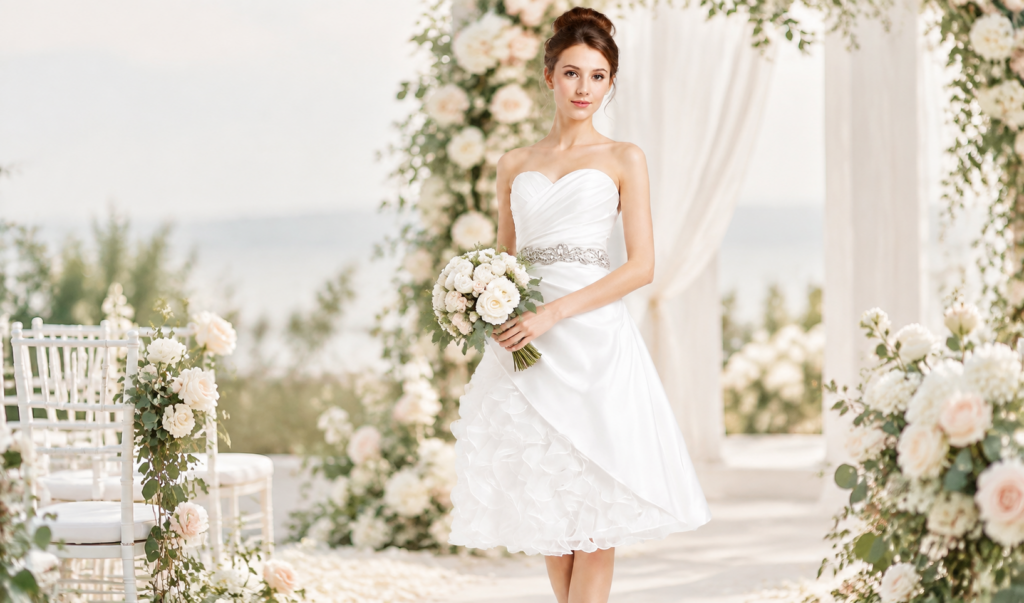
Convertible Wedding Looks: One Dress, Two Moments
For brides who want flexibility without purchasing two completely separate gowns, convertible options offer a practical solution.
Popular transformations include:
- Removing an overskirt
- Detaching sleeves
- Adding or removing a cape
- Removing a dramatic train
This option works especially well for brides whose ceremony gown already has statement details. A removable layer can transform a formal aisle look into something much easier for the reception.
How to Style Your Second-Look Wedding Dress
A second dress often works best when paired with a few additional changes.
Shoes
Many brides switch from formal ceremony heels to something easier for the reception:
- Block heels
- Comfortable sandals
- Bridal sneakers
- Fashion boots
The right shoes can completely change how long you can comfortably stay on the dance floor.
Hair and Accessories
The reception look is a chance to adjust the details.
Common changes include:
- Cathedral veil → statement earrings
- Formal updo → loose waves or ponytail
- Minimal jewelry → bold accessories
A simple hairstyle change can make the second outfit feel like a completely new bridal moment.
Frequently Asked Questions
Is a second wedding dress worth it?
A second wedding dress is worth considering if your ceremony gown limits movement or you want a noticeable style change for the reception. Many brides choose one for comfort, easier dancing, or a more relaxed party look.
When should I change into my second wedding dress?
Most brides change before the reception entrance, before the first dance, or after formal dinner events. The best timing depends on your photography schedule and how comfortable your main gown is.
What is the most popular second-look wedding dress style?
Short reception dresses and satin slip dresses are among the most popular second-look styles. They create a clear contrast from traditional wedding gowns while offering more freedom of movement.
Before ordering a second-look wedding dress, test it the way you will wear it on your wedding night: sit, walk, raise your arms, and dance. A reception dress should not only photograph beautifully—it should work for the hours when the celebration truly begins.