
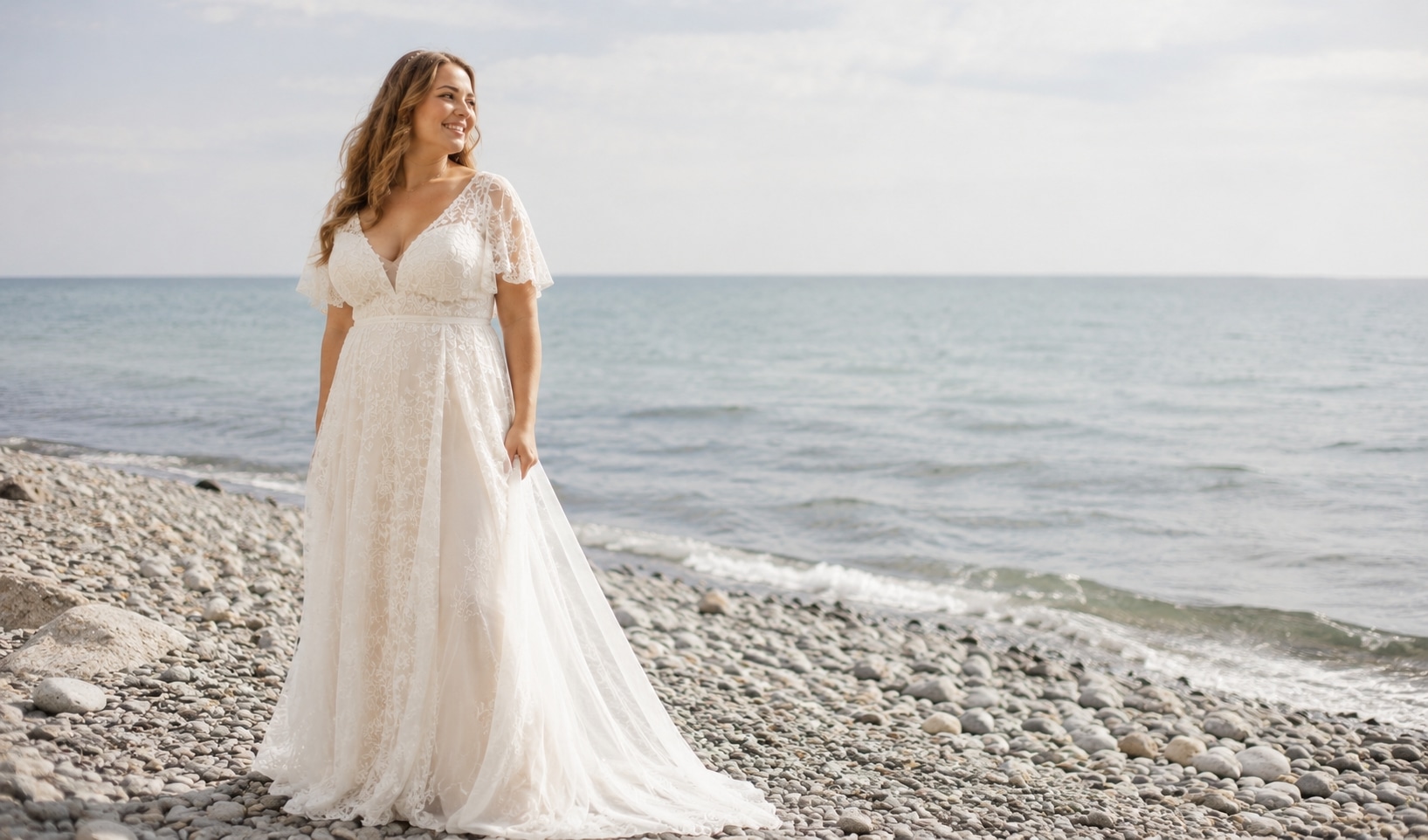
Finding a flattering plus size wedding dress has less to do with hiding certain parts of your body than you might think. A beautiful fit usually comes down to proportion, support, and how the fabric falls on your frame.
This is also why silhouette alone doesn’t tell the whole story. An A-line gown may look gorgeous on one bride and disappointing on another, even when they wear a similar size. The difference often lies underneath: the structure of the bodice, the placement of the waist seam, the amount of bust support, and whether the fabric skims or clings.
Look Beyond the A-Line Label
A-line gowns are popular with curvy brides for good reason. A fitted bodice paired with a skirt that gradually opens from the waist creates an easy, balanced shape without hugging the stomach or hips too closely.
But pay attention to how the gown is constructed. Soft fabric with very little structure can collapse against the body, while a lined bodice with boning gives the waist more definition and supports a fuller bust.
For brides who prefer less emphasis around the stomach, an empire waist is worth trying as well. The seam sits beneath the bust, allowing the skirt to fall over the midsection rather than fitting closely around it. Avoid excessive gathering under the bust, though; too much volume can make the dress feel heavier rather than more fluid.
The Bodice Does More Work Than You Think
When trying on a plus wedding dress, notice what happens when you sit, walk, raise your arms, and move around—not just how the gown looks while you’re standing still.
Internal boning and corset construction can make a significant difference, especially for a fuller bust. A well-built bodice supports the torso, so the straps aren’t doing all the work. Properly positioned cups and wider straps can add comfort without making the gown look overly covered.
A lace-up back is another detail that can be surprisingly useful. It allows the bodice to be adjusted throughout the day and offers more flexibility when your bust, waist, and hip measurements don’t fall neatly into one standard dress size.
Necklines Should Give the Bust Some Breathing Room
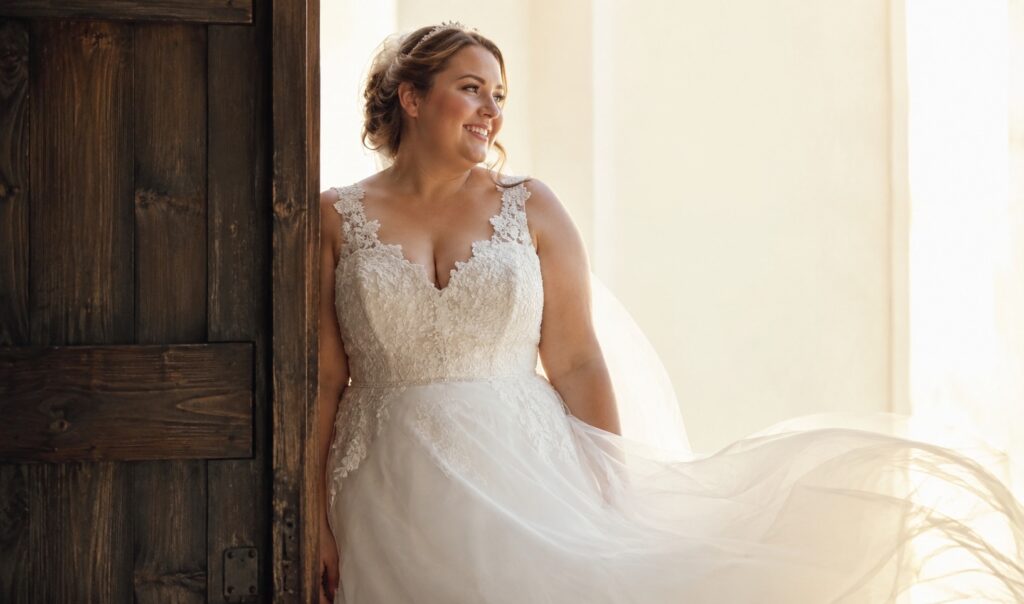
V-neck and sweetheart necklines tend to work beautifully on fuller busts because they create some openness through the chest and neckline. Rather than visually compressing the upper body, they follow its natural shape.
The cut still needs support underneath. A plunging neckline isn’t automatically more flattering than a modest one; the best version is the one that sits securely against the body without pulling, gaping, or requiring constant adjustment.
Sleeves deserve the same consideration. Flutter sleeves move softly over the upper arms, while off-the-shoulder styles draw attention toward the collarbone and shoulders. Sheer lace sleeves offer more coverage without the visual weight of an opaque long sleeve.
Pay Attention to What Happens at the Waist
Embellishment isn’t always your friend here. Large flowers, dense beadwork, thick belts, and heavy appliqués concentrated around the waist can make the middle of a gown appear bulkier.
Draping is often more effective.
Diagonal ruching across the bodice can soften the stomach area without looking like obvious “coverage.” Chiffon works particularly well when it is allowed to fall naturally, while lace motifs that travel from the bodice into the skirt keep the eye moving rather than creating a hard horizontal break at the waist.
The back matters, too. If you’re worried about a gown digging in or creating bulges around the bra line, look at the height of the back and width of the side panels. A supportive lace-up back or a little more coverage through this area can often produce a smoother fit than sizing up the entire dress.
Fit Matters More Than the Number on the Tag
One of the frustrations of shopping for a plus size wedding dress is discovering that your measurements span several sizes. You might need one size through the bust, another at the waist, and something entirely different through the hips.
Buying the largest size and altering everything else is one solution, but substantial wedding dress alterations can become expensive, particularly when the gown includes boning, lace placement, or detailed seams.
InWeddingDress offers custom sizing for its plus size wedding dresses, using individual measurements rather than asking every bride to fit into a standard size chart. For an online purchase, that can be especially helpful when your proportions don’t match a conventional sample size.
Ultimately, the most flattering gown isn’t necessarily the one that promises to make you look smaller. It’s the one that holds the bust comfortably, sits smoothly through the waist and back, and lets you move without thinking about what the dress is doing.
When those details are right, the silhouette tends to take care of itself.