
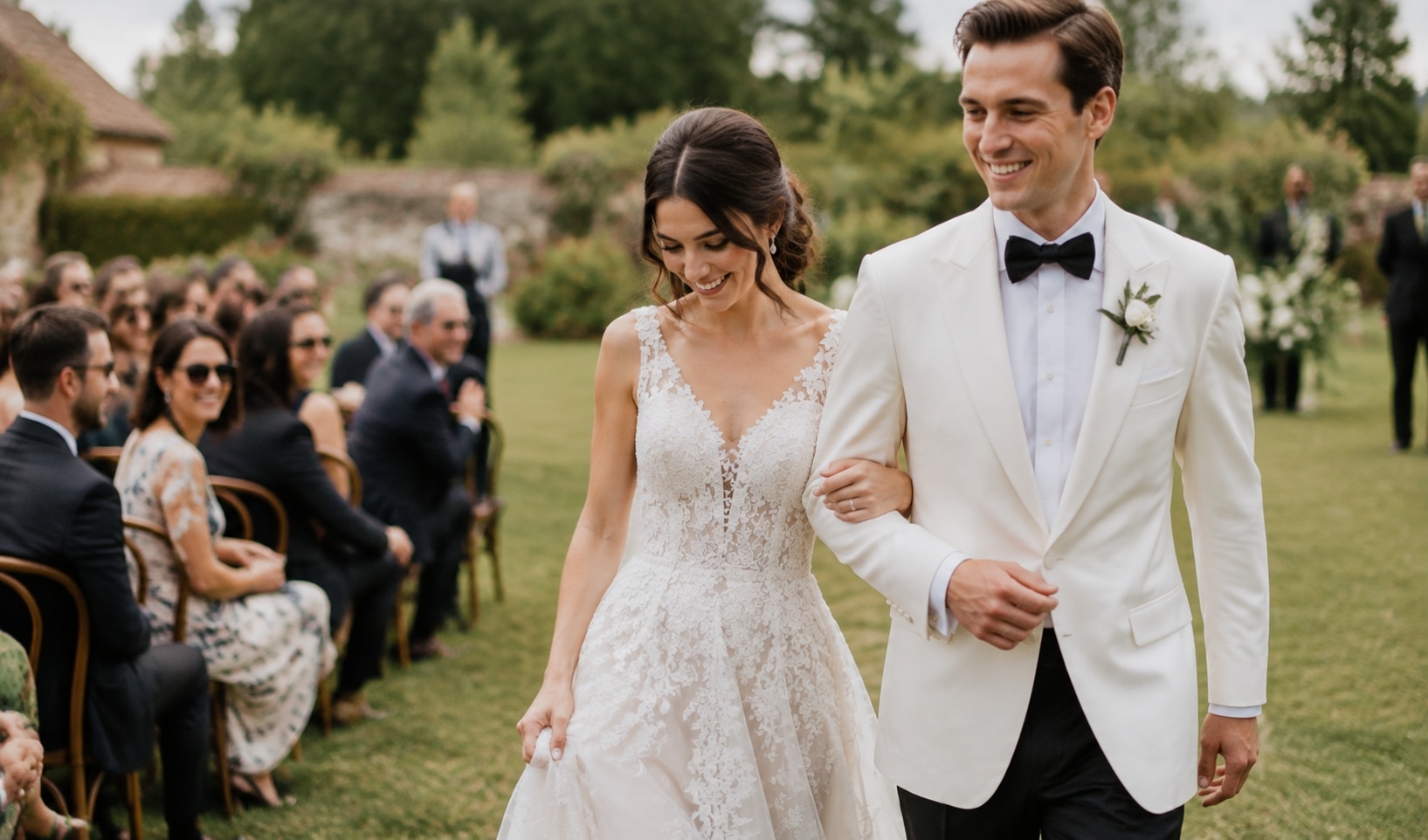
A garden wedding may look effortless, but choosing a dress for one requires a little more planning than dressing for an indoor venue. Grass, gravel paths, warm weather, changing temperatures, and uneven ground can all affect how a gown looks and feels throughout the day.
The best garden wedding dress should suit the setting without sacrificing comfort or personal style. From fabric and hemline to shoes and convertible details, here’s what to consider before choosing your gown.
Match Your Silhouette to the Terrain
Before falling in love with a dramatic train, take a closer look at your venue. A manicured lawn is very different from a damp garden, gravel path, or greenhouse with stone flooring.
For ceremonies held primarily on grass, floor-length gowns and sweep trains are usually easier to manage than chapel or cathedral trains. Longer trains can collect dirt, catch on twigs, and develop grass stains before the reception even begins.
Silhouette matters too. A-line gowns, soft column wedding dresses, and relaxed slip silhouettes offer movement without the weight and structure of a large ball gown. Tea-length and ankle-skimming dresses are also practical choices for less formal garden celebrations.
Choose Fabrics for Weather and Movement
“Lightweight” is often the first recommendation for an outdoor wedding dress, but weight is only part of the equation.
Chiffon moves easily and feels comfortable in warmer temperatures, making it particularly suitable for spring and summer weddings. Organza offers more structure while remaining relatively airy, while soft tulle can create volume without the heaviness of multiple layers of satin.
Lace is another natural fit, especially when used selectively through a bodice, sleeves, or appliqué. For hot or humid venues, however, heavily layered fabrics and dense embellishment can become uncomfortable over several hours.
If your celebration is taking place in a greenhouse or during peak summer, breathability should carry just as much weight as appearance.
Rethink the Traditional Train
A long train can be beautiful in photographs, but gardens are rarely as clean or predictable as ballroom floors.
A sweep train provides enough length to create movement behind the bride while remaining considerably easier to handle outdoors. Brides who want more drama can also consider a detachable overskirt or removable train. It creates a fuller ceremony look and can be taken off for dinner and dancing.
This approach works particularly well when the ceremony and reception take place in different areas of the same garden.
Bring Florals Into the Dress—With Restraint
A garden setting does not mean every detail of the gown needs to feature flowers. Instead, look for botanical elements that feel integrated into the design.
Three-dimensional floral appliqués, embroidered vines, botanical lace, and cascading floral details can echo the surrounding landscape without turning the dress into a literal interpretation of the venue.
Placement makes a difference. Floral appliqués concentrated around the bodice and gradually dispersing down the skirt can create a softer effect than dense embellishment covering the entire gown.
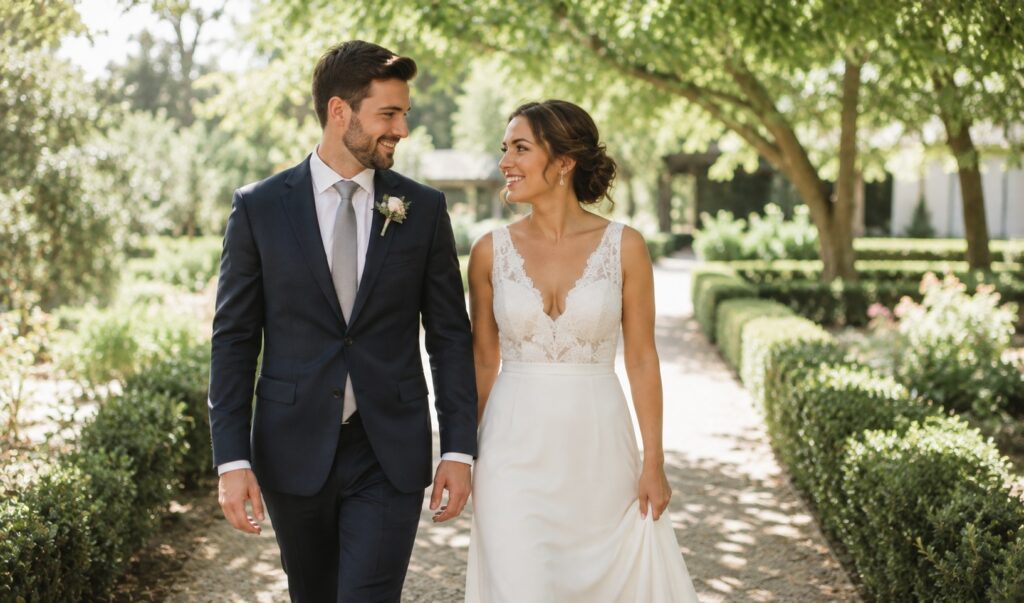
Consider Convertible Sleeves and Layers
Outdoor temperatures can shift quickly, particularly for weddings that begin in the afternoon and continue after sunset.
Detachable sleeves offer an easy way to change both the look and practicality of a dress. Sheer lace sleeves can add coverage during the ceremony and come off for the reception. Removable straps, capes, overskirts, and lightweight shawls provide similar flexibility.
Convertible elements are especially useful when you want two distinct looks without purchasing a second dress.
Don’t Overlook Your Wedding Shoes
Shoes are one of the easiest garden-wedding details to underestimate. Thin stilettos can sink into soft grass, making walking uncomfortable and potentially damaging the hem of the dress.
Block heels, wedges, bridal flats, and shoes with a wider heel base tend to perform better on lawns. If you prefer stilettos, heel protectors can provide additional stability.
Choose your shoes before finalizing alterations—the exact heel height determines where the hem falls and whether it clears the ground properly.
When Made-to-Measure Makes Sense
Garden venues often combine several surfaces: stone paths, lawns, gravel, decking, or indoor-outdoor reception areas. In this setting, getting the dress length right becomes more than a cosmetic detail.
Made-to-measure bridal services can account for your height, wedding shoes, preferred train length, and venue conditions rather than relying solely on standard sizing. Bridal platforms such as InWeddingDress also allow adjustments to details such as sleeves, hemlines, and other design elements, which can be useful when adapting a gown specifically for an outdoor celebration.
The goal is not simply to keep the dress clean. A properly adjusted hem lets you walk naturally, reduces the need to constantly lift your skirt, and helps the gown maintain its intended silhouette.
The Golden Rule for Garden Brides
Ultimately, the best garden wedding dress is one that lets you forget you’re wearing it outdoors. When the hem is calibrated to your shoes, the fabric moves naturally in the breeze, and your footwear feels secure on the lawn, you won’t spend the day lifting your skirt, watching every step, or worrying about the ground beneath you. You’ll simply be free to move, celebrate, and enjoy the setting you chose.