
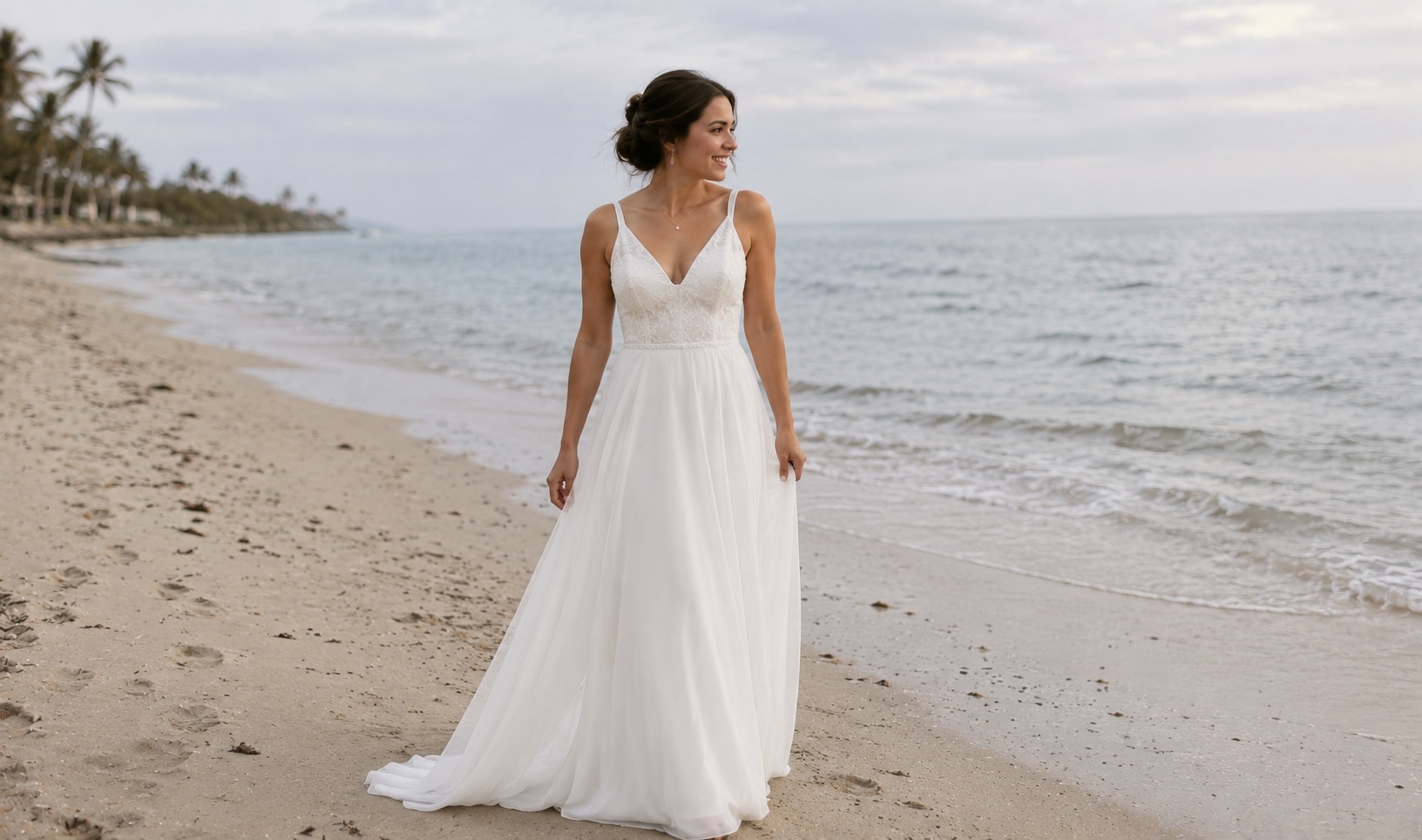
A wedding dress can feel perfect in the calm, air-conditioned setting of a bridal boutique and behave very differently once it meets a Hawaiian beach. Heat and humidity are part of the equation, but so are trade winds, soft sand, and the occasional splash of seawater. For a bride getting married by the ocean, those details matter just as much as the neckline or silhouette.
The best beach wedding dresses don’t necessarily look casual or overtly “beachy.” They simply work with the setting rather than against it.
Choose Fabrics That Feel as Light as They Look
Fabric is one of the first things worth considering for a Hawaii wedding. Chiffon, organza, tulle, and lightweight crepe tend to move beautifully without adding unnecessary weight, particularly when the dress has a simple construction and breathable lining. Silk chiffon can also be lovely—the distinction matters, since not every silk behaves the same way in warm weather.
Heavier silk satin and charmeuse require more thought. Their smooth surfaces can show perspiration or water marks, and a substantial satin gown that feels luxurious indoors may become less appealing after an hour in tropical humidity.
Layers matter, too. A dress made from six layers of lightweight tulle can still feel surprisingly warm. When trying on a gown, pay attention to what is underneath the fabric you see: lining, boning, petticoats, and multiple underskirts can make more difference to comfort than the outer material alone.
Let the Silhouette Work With the Wind
Hawaii’s trade winds can make a lightweight dress look spectacular in photographs, but there is a point at which movement becomes inconvenient. A skirt should catch the breeze; it shouldn’t require constant management.
Soft A-line gowns are particularly reliable on the beach because they offer movement without excessive volume. Sheath wedding dresses and relaxed fit-and-flare silhouettes can work equally well, especially for brides who want something cleaner and more modern.
A ball gown isn’t automatically out of the question, but substantial crinolines, stiff underskirts, and very full layered skirts are difficult to reconcile with soft sand. The same applies to extremely loose dresses with large amounts of featherweight fabric: surprisingly, too much floaty material can be just as troublesome in strong wind as a heavy skirt.
Keep the Hem—and the Train—Realistic
Train length becomes much more noticeable once a ceremony moves from a lawn or terrace onto actual sand.
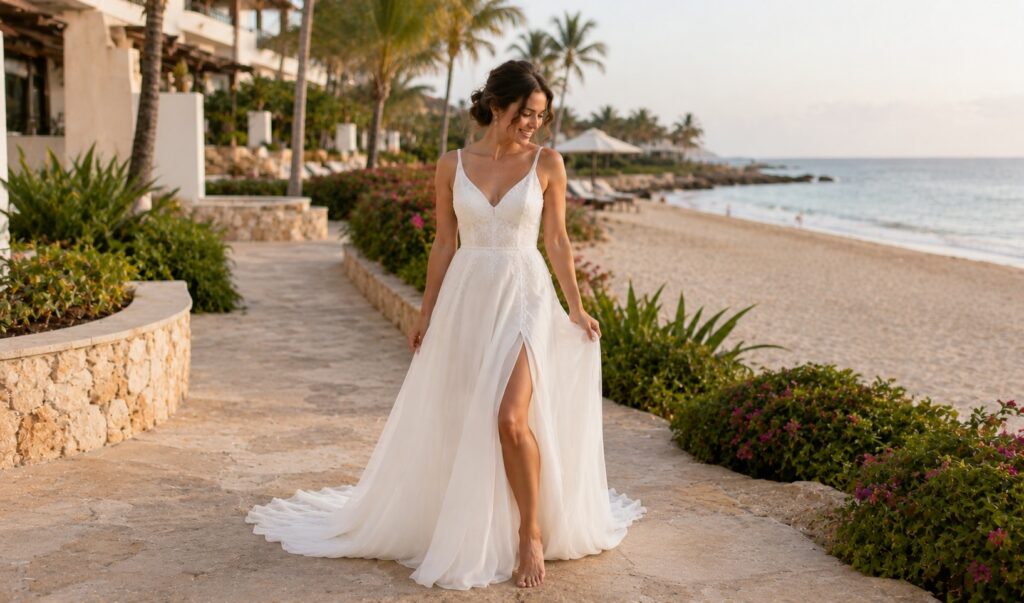
A cathedral train may photograph beautifully for a few carefully arranged portraits, but dragging it across damp or coarse sand is another matter. Lace edging, three-dimensional appliqués, and intricate beading can collect sand particularly easily. A sweep train, short train, or clean floor-length hem usually gives a bride much more freedom.
Hem length deserves equal attention. Feet and shoes sink slightly into soft sand, meaning a dress altered to skim the floor in a bridal salon can suddenly feel longer at the beach. If the ceremony will take place directly on the sand, tell your seamstress or dressmaker—and bring the shoes you intend to wear when measurements are taken.
Beach Formal Can Still Feel Polished
There is no rule that says a beach bride has to wear a bohemian lace dress. A Hawaii wedding can be sleek, minimal, romantic, or decidedly formal without relying on weight and embellishment to create impact.
A beautifully cut crepe gown, a crisp organza skirt, an architectural neckline, or restrained lace can feel every bit as special as a heavily embellished dress. The venue matters here. A ceremony at a luxury resort followed by an indoor reception leaves more room for structure than a barefoot ceremony close to the water.
If you love beading or embroidery, look for it in considered areas—the bodice, neckline, or straps, for example—rather than covering a skirt that will spend the afternoon brushing against sand.
A Better Fit Matters More on the Sand
Destination weddings make good alterations particularly valuable. There may be fewer opportunities for last-minute fittings after arriving in Hawaii, and an extra inch of skirt is considerably more annoying on sand than on a ballroom floor.
This is where custom sizing and hem adjustments can be genuinely useful rather than simply a nice extra. InWeddingDress, for example, offers a range of beach wedding dresses with customization options for measurements, color, and design details. For a beach ceremony, the practical advantage is being able to think about proportions and length when ordering instead of trying to solve everything immediately before the wedding.
Ultimately, a Hawaii wedding dress shouldn’t demand too much attention from the person wearing it. You should be able to walk across the sand, stand comfortably in the breeze, hug your guests, and stay for the dancing. The right gown will still feel unmistakably bridal—it will simply make all of those things easier.