
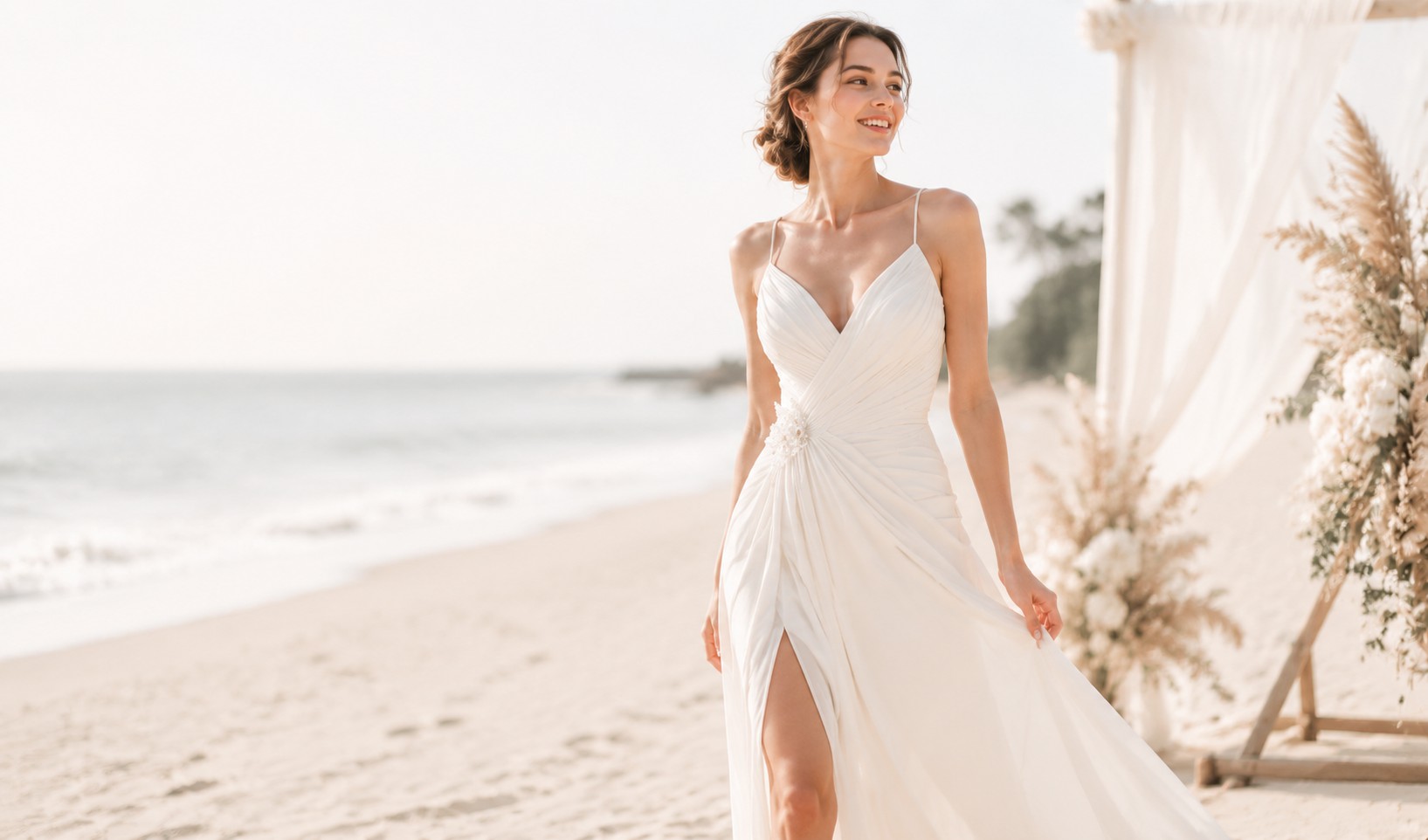
A beach wedding changes the way you think about bridal fabrics. A gown that looks flawless under the soft lighting of a bridal boutique may feel completely different when you are standing under the sun, surrounded by ocean air, humidity, and a full afternoon of photographs.
For seaside ceremonies, fabric performance becomes just as important as appearance. The dress needs to handle heat, movement, wind, and travel while still creating that effortless bridal feeling. Lightweight construction, breathability, and easy maintenance often matter more than heavy embellishment or dramatic structure.
Before falling in love with a fabric, consider how it will behave outside. Will it trap heat? Will it wrinkle after being packed in a suitcase? Will the skirt collect sand after walking across the beach? These details can make a significant difference on the wedding day.
Chiffon: The Classic Choice for a Beach Wedding
Chiffon remains one of the most popular fabrics for beach wedding dresses because of its soft movement and lightweight feel. It creates the kind of relaxed elegance that naturally fits a coastal setting—flowing skirts, gentle draping, and silhouettes that move with the ocean breeze.
However, not all chiffon feels the same. The fiber content matters.
Silk chiffon offers exceptional softness, breathability, and a beautiful fluid drape. It feels luxurious against the skin and works especially well for brides who want a more elevated, natural-fabric option. The trade-off is that silk chiffon wrinkles more easily and usually requires more careful handling, especially for destination weddings.
Polyester chiffon is more commonly used in affordable bridal gowns because it is durable, more affordable, and easier to maintain during travel. It resists wrinkles better, which makes it practical for brides flying with their dress. However, compared with silk chiffon, it may feel slightly less breathable in hot and humid conditions.
For most beach weddings, chiffon remains one of the safest choices because it balances comfort, movement, and practicality.
Silk Charmeuse and Lightweight Satin: For Brides Who Want a Sleek Look
A beach wedding does not mean giving up a sophisticated, polished aesthetic. Brides who prefer a minimalist silhouette often gravitate toward silk charmeuse or lightweight satin.
Silk charmeuse has a smooth surface and subtle shine that photographs beautifully in natural light. Its soft drape creates an elegant silhouette without requiring heavy structure. It feels especially modern in slip dresses, bias-cut gowns, and simple sheath styles.
The main consideration is maintenance. Silk fabrics are more delicate and can wrinkle more easily, which means brides planning a destination wedding should think carefully about transportation and steaming options.
Lightweight stretch satin can be a practical alternative. It provides a similar smooth appearance while offering more flexibility and better wrinkle resistance. When choosing satin for a beach ceremony, avoid heavy bridal satin designed for formal indoor weddings. Those fabrics can quickly feel warm and restrictive under direct sunlight.
Light Crepe: The Favorite for Minimalist Brides
Light crepe has become increasingly popular among modern brides who want clean lines and an understated look. Its matte finish creates a sophisticated appearance, while its natural drape allows the dress to follow the body without excessive structure.
One of crepe’s biggest advantages for beach weddings is its practicality. It travels well, photographs beautifully, and works with many silhouettes, from fitted gowns to simple A-line dresses.
For brides planning a destination wedding, lightweight crepe is often a smart choice because it combines a refined look with relatively easy care.
Organza: Romantic Volume Without a Heavy Skirt
Some brides still want movement and volume while keeping their gown suitable for the beach. Lightweight organza can offer that balance.
Unlike heavier ball gown fabrics, soft organza creates a delicate, airy shape. It works well for brides who want a romantic skirt while avoiding multiple layers of heavy fabric.
The key is choosing lightweight organza rather than highly structured versions. Too much volume can become uncomfortable in warm weather and make walking on sand more difficult.
Tulle: Beautiful in Photos, Complicated on Sand
Tulle is one of the most romantic bridal fabrics. Its soft texture and floating appearance make it a favorite for dreamy, fairytale-inspired gowns.
The challenge appears when the dress meets the beach.
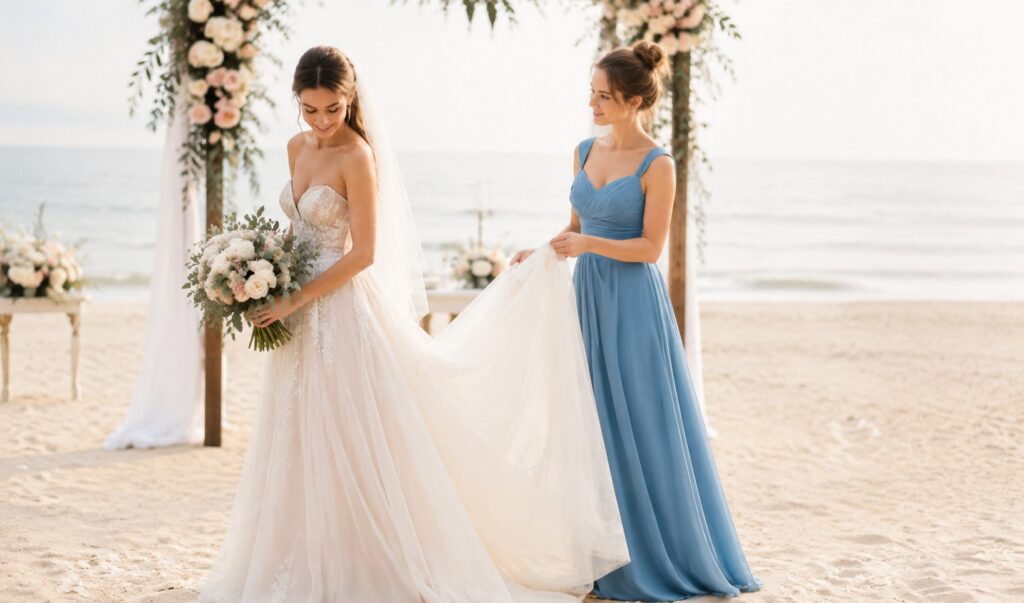
Many brides discover that long layers of tulle can collect everything along the shoreline: sand, dried grass, tiny shells, driftwood pieces, and seaweed. A dramatic tulle train may look magical in photographs, but after walking across the sand, cleaning the bottom of the gown can become a frustrating task.
This does not mean tulle should be avoided. Shorter tulle skirts, ankle-length or tea length wedding dresses, detachable overskirts, or designs without long trains can create the same romantic effect while being much easier to manage.
When shopping for a beach wedding dress, the most important question is not simply whether a fabric looks beautiful when you first try it on. Think about the entire experience: walking toward the ceremony, feeling the ocean breeze, taking photos under the afternoon sun, and wearing the dress long after the ceremony ends.
The right fabric should allow you to enjoy every part of the day—not spend it thinking about the dress.